
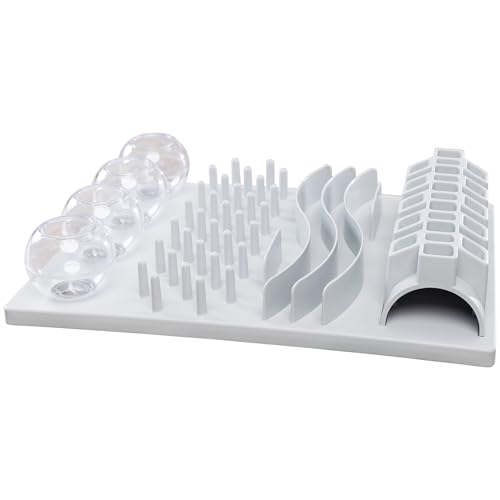
 Trixie Cat Activity Fun Board
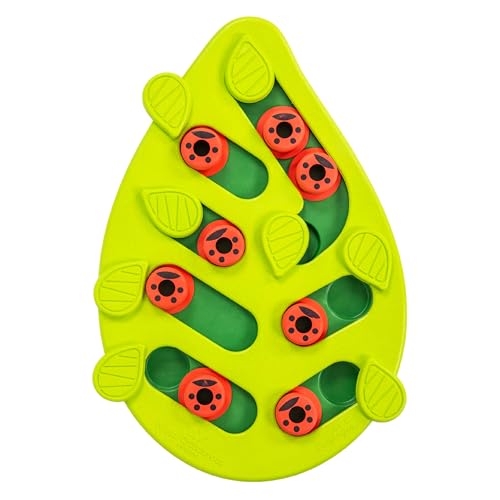 Nina Ottosson Petstages Buggin' Out Puzzle
This is a practical buying framework, not a hands-on test of every cat puzzle feeder. Puzzle feeders can add variety to supervised indoor routines, but they are not a treatment for appetite changes, weight concerns, anxiety, aggression, or medical problems. If your cat stops eating, eats much less, vomits repeatedly, seems painful, or has a sudden behavior change, contact a licensed veterinarian before treating it as an enrichment issue.
Best Overall Fit: A Shallow Puzzle Tray
A shallow puzzle tray is often the best first choice for indoor cats because it lets them paw, scoop, and investigate without needing to shove a heavy object around the room. Look for open wells, smooth edges, and removable pieces that are easy to rinse.
This style works well for dry kibble or small treats, especially when you want a short activity before work, after dinner, or during a quiet evening routine. Skip tiny, deep compartments if your cat has large paws, gives up quickly, or becomes frustrated when food is visible but hard to reach.
Best for Beginners: An Open Foraging Mat
An open foraging mat is a gentle starting point for cats who have never used a feeder puzzle. Food sits in folds, pockets, or soft textured areas, so the cat can sniff and paw without learning a complicated mechanism.
The tradeoff is cleaning. Fabric mats can collect crumbs, saliva, hair, and food dust. Choose washable materials, check drying instructions, and avoid leaving a damp mat out between sessions.
Best for Active Cats: A Treat Ball or Rolling Feeder
A rolling feeder can be useful for an indoor cat who enjoys batting toys, chasing small movements, and working for dry food. It can turn a few treats or part of a measured meal into a short supervised activity.
Compare the opening size, noise on hard floors, and whether the ball disappears under furniture. This is not the best fit for every home; some cats dislike the sound, and multi-pet households may need separate rooms so one pet does not claim all the food.
Best for Wet Food or Soft Treats: A Lick Mat
A lick mat can work for wet food, soft treats, or a small spread of a cat-safe food your cat already tolerates. It is usually less about solving a puzzle and more about slowing down a small serving while adding texture and novelty.
Cleaning access matters here. Choose simple grooves you can scrub fully, inspect flexible mats for chewing damage, and put the mat away after the session. If your cat has dietary restrictions, appetite problems, or digestive symptoms, ask your veterinarian before changing food routines.
Best for Multi-Cat Homes: Separate Simple Feeders
In a multi-cat home, the best puzzle feeder may be two simple feeders used in separate spots rather than one clever feeder placed in the middle of the room. Food-based activities can create crowding, blocking, or quiet competition even when cats normally share space well.
Use distance, separate rooms, or supervised turns if one cat is faster, bolder, or more food-motivated. A puzzle feeder should make enrichment easier to manage, not turn snack time into a contest.
Selection Criteria That Matter
Choose around your cat's body language, food type, and cleaning routine instead of assuming harder puzzles are better.
- Food fit: Dry kibble, crunchy treats, wet food, and soft treats need different surfaces and openings.
- Paw access: Cats often prefer scooping or tapping instead of pushing heavy pieces with their face.
- Difficulty: Start easy enough for early success, then add challenge only if your cat stays relaxed.
- Cleaning: Food wells, seams, fabric folds, and lick grooves should be washable enough for repeat use.
- Stability: A feeder that slides too much can frustrate some cats and excite others into flipping it.
- Noise: Rolling toys and hard plastic pieces may be too loud for nervous cats or small apartments.
- Supervision: Watch for chewing, guarding, swallowing non-food pieces, or competition with other pets.
Comparison Framework
Use the feeder category to narrow your choice, then check whether it fits the cat, the room, and the cleanup routine.
- Shallow puzzle trays: Best first choice for many cats because the food is reachable and the parts are easy to see.
- Foraging mats: Best for gentle sniffing and pawing, but only if you can wash and dry the fabric well.
- Treat balls: Best for active cats who enjoy batting toys, with extra attention to noise and furniture gaps.
- Lick mats: Best for wet food or soft treats in short sessions, but not for cats who chew flexible material.
- Separate feeders: Best for multi-cat homes where speed, confidence, or food motivation differs by cat.
Who Should Skip a Cat Puzzle Feeder
Skip a puzzle feeder if your cat becomes tense around food, stops eating normally, chews plastic or silicone, swallows non-food pieces, guards food from other pets, or seems more frustrated than engaged. A simpler play session, wand toy, window perch, or quiet feeding routine may be a better fit.
Do not use a puzzle feeder to manage concerning appetite, weight, vomiting, pain, litter box changes, aggression, or sudden behavior changes without professional guidance. Food and behavior changes in cats can be subtle, so a veterinarian or qualified behavior professional is the right next step when something feels off.
How This Fits With Indoor Enrichment
A puzzle feeder is one small part of an indoor enrichment routine. Our guide to choosing pet puzzle toys for supervised enrichment explains broader puzzle-toy criteria for both dogs and cats, while a simple pet toy rotation bin can help keep indoor activities fresh without leaving every toy out all day.
If the feeder will sit near bowls, mats, or storage, setting up a low-mess pet feeding station can help with placement, cleaning, and keeping food areas manageable.
The Bottom Line
For many indoor cats, start with a shallow puzzle tray or open foraging mat before moving to rolling feeders or more complex pieces. Choose a lick mat for soft food only when cleaning is easy and your cat does not chew the material.
The right cat puzzle feeder should make a short indoor routine more interesting without adding stress, competition, or a messy cleanup problem you will stop using after a week.