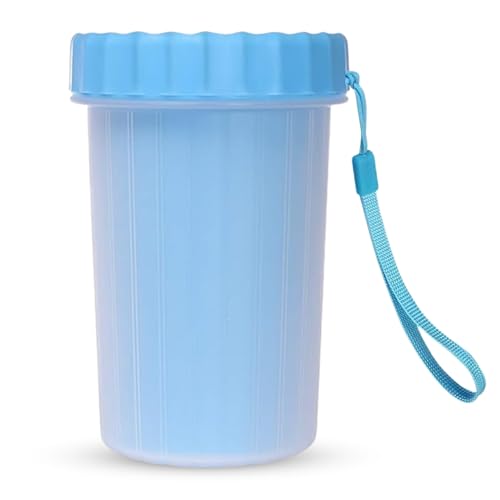
 Paw Plunger
 Aquapaw Dog Bathing Glove
This guide is for ordinary mud, sand, and surface dirt on intact paws after routine walks. A cleaning tool cannot diagnose or treat redness, cuts, swelling, limping, persistent licking, embedded debris, unusual odor, or pain. Pause paw cleaning and contact a licensed veterinarian when those signs are present.
Best First Comparison for Ordinary Mud: Dexas MudBuster
Compare the MudBuster when paws regularly come home coated in wet soil. Its cup format surrounds the paw with water and flexible silicone fingers, so it can lift dirt from several sides without requiring a stream of running water at the doorway.
Fit matters more than capacity. Too narrow can crowd toes; too deep can wet more leg than necessary. Measure the paw at its widest point and use the current manufacturer chart rather than guessing from breed or body weight. Empty and wash the cup after the routine, then let every part dry fully.
Best Comparison for a Stable Handle: Paw Plunger
The Paw Plunger is worth comparing when you want a dedicated handle while guiding the paw into a rinse cup. A handle can help keep the container upright near the door, particularly when the other hand is supporting the dog's leg.
It is still a deep container, so confirm both opening width and internal depth. Skip it if your dog stiffens, pulls away, or becomes distressed during the motion; a plain damp towel gives you more control and less enclosure.
Best Comparison for Dogs That Dislike Cups: Aquapaw Glove
Compare the Aquapaw glove format when your dog accepts gentle hand contact but dislikes lowering a paw into a cup. The silicone surface can support a wipe-and-rinse routine at a sink, tub, or outdoor tap while leaving the paw visible.
This is a broader bathing tool, not the most compact doorway option. It needs a water connection and careful drying, and it will be excessive for a lightly damp paw that a washable towel can handle in seconds.
Selection Criteria That Matter
- Paw opening: Measure the widest part of the paw while the dog is standing. Leave room for toes and nails without choosing a cup so loose that it is awkward to control.
- Usable depth: Match depth to the muddy area. A deeper cup can clean above the paw but also wets more fur and takes more drying.
- Contact material: Flexible silicone should bend easily and have no sharp seams. Stop if it catches fur or your dog shows discomfort.
- Disassembly: Removable inserts make it easier to find trapped grit and clean the parts separately.
- Drying: Look for a simple shape that can drain and air-dry fully; closed damp tools are unpleasant to store.
- Grip and stability: A textured body, wide base, or handle can help prevent spills while you support one paw.
- Portability: For car use, account for clean water, dirty-water containment, a towel, and a leak-resistant storage bag—not just the cup.
- Dog tolerance: Introduce an empty tool first and keep the interaction brief. Do not hold down or force a fearful dog.
Quick Comparison Framework
- Silicone paw-cleaning cup: strongest fit for wet mud around toes; requires sizing, water changes, disassembly, and drying.
- Handled paw washer: easier to steady for some owners; bulkier to store and still encloses the paw.
- Silicone glove or mitt: keeps the paw visible and suits wipe-style handling; usually needs a sink, hose, or separate rinse.
- Absorbent microfiber mitt: simple for damp paws and drying; less effective when grit is packed between toes.
- Pet wipe: convenient for a small surface mess or an outing bag; disposable and often inadequate for heavy mud.
- Plain towel: cheapest and fastest for light dampness; often the better choice when a special tool adds no real benefit.
Who Should Skip a Paw Cleaner
Skip a cup if your dog strongly resists enclosed paw handling, if the right size is unclear, or if the walk usually leaves only a little moisture. A shallow bowl of plain lukewarm water and a towel—or just the towel—may be simpler. Avoid adding soaps, essential oils, medicated products, or household cleaners unless a veterinarian has advised an appropriate product for your dog.
Do not use a paw-cleaning tool over broken skin or to investigate something lodged in the paw. Limping, bleeding, swelling, heat, pain, repeated licking, damaged nails, chemical exposure, or a sudden change in walking deserves prompt advice from a licensed veterinarian.
Build a Low-Mess Doorway Routine
Set the cleaner on a washable mat before the walk, place a dry towel within reach, and prepare clean lukewarm water. On return, use the least handling needed for the mess, change visibly gritty water between paws, dry carefully, and rinse the tool according to its label. Keep the dirty water away from food and water bowls.
For the full setup, use our pet doorway cleanup station guide. If the mess is light or you need a small car-bag option, compare pet wipes for quick cleanup. A washable entryway rug can catch drips while you work.
The Bottom Line
Start by comparing the Dexas MudBuster for routine wet mud, Paw Plunger when a handle helps you steady the cup, and the Aquapaw glove when visible hand-led contact fits your dog better than a cup. Choose by measured paw fit, cleanup effort, and calm tolerance—not by breed labels or promises of perfectly clean paws.
For many short walks, a washable towel remains the best tool. A reusable cleaner earns its storage space only when it makes the real doorway routine easier.