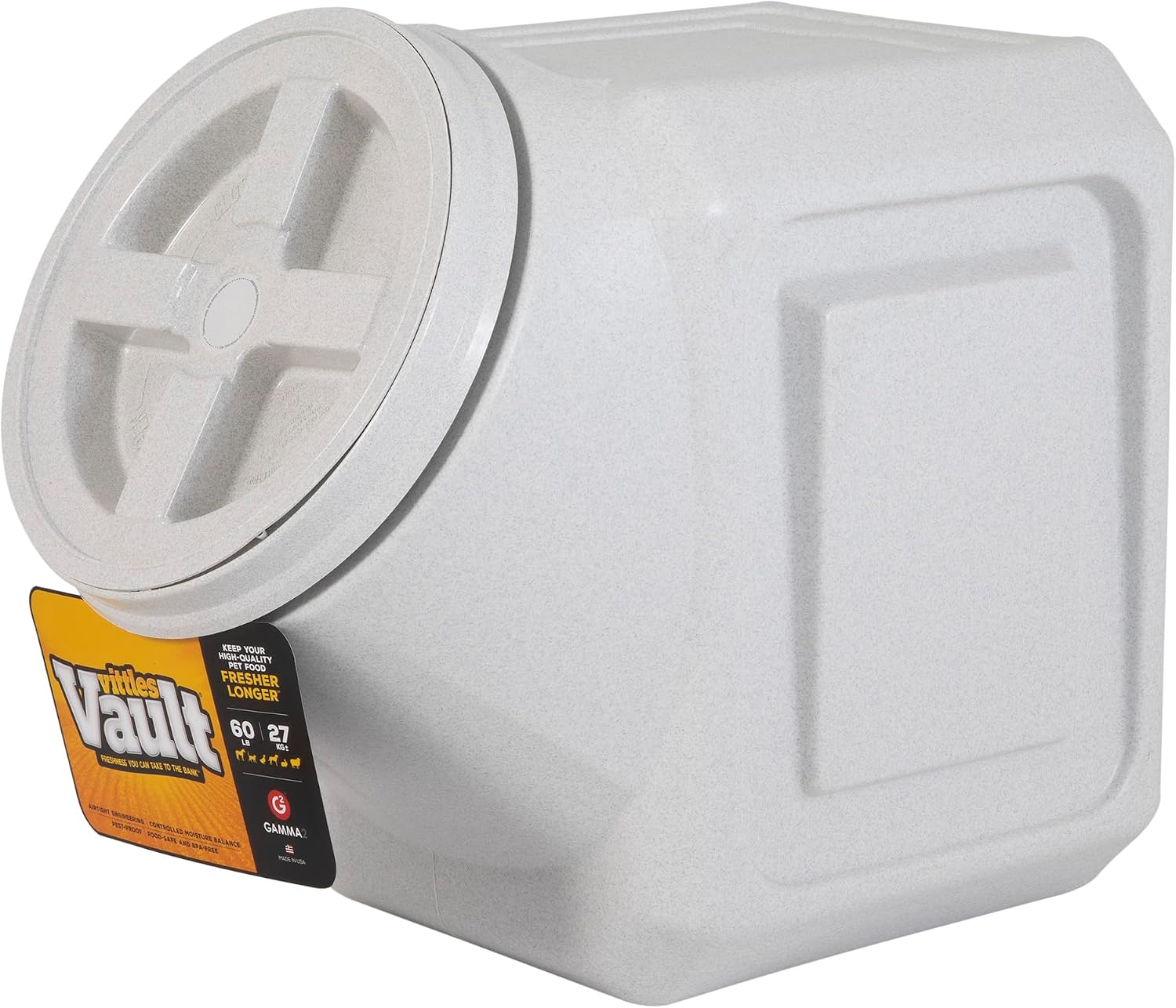
We did not hands-on test or rank every travel container. This recommendation is based on the visible product format and the practical criteria below, not prices, ratings, review counts, or claims that a container improves a pet’s health.
Quick Comparison: Which Format Fits Your Trip?
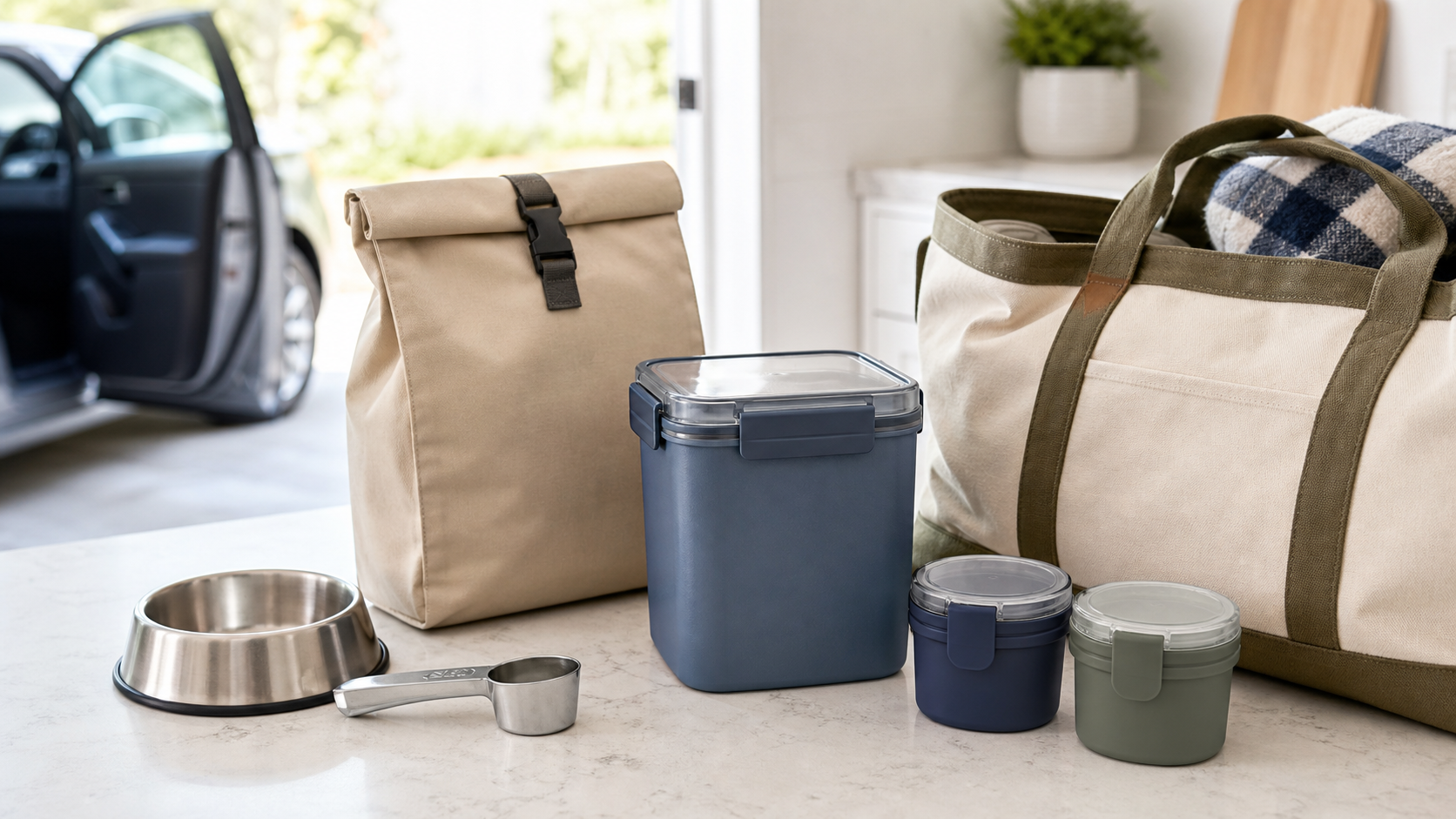
- Rigid all-in-one canister: best when you want a protective container and bowls in one stack and have room for its fixed shape.
- Roll-top food bag: best when packed size and low weight matter, provided the closure is secure and the material can be cleaned and fully dried.
- Individual portion containers: best when a sitter or travel companion needs a clearly organized routine. They create more pieces to wash and track.
- Compact screw-top canister: best for familiar dry food when you already carry separate bowls and a scoop.
- Original food bag inside a tote: best when the bag is already small, closes securely, and will be protected from crushing, moisture, and pet access.
Selection Criteria That Matter
- Useful capacity: pack according to the pet’s existing feeding instructions, plus only the practical reserve your trip plan calls for. Do not use container size to decide portions.
- Closure: check the maker’s instructions for zippers, roll tops, latches, or threaded lids. Pack the closed container upright when possible and keep it away from curious pets.
- Packed dimensions: measure the space in the car, carrier setup, suitcase, or weekend tote. A soft bag shrinks as it empties; a rigid container protects food but keeps its full footprint.
- Material and cleaning: use a container intended for food contact and follow its care directions. Wide openings and removable seals are easier to inspect, wash, and dry.
- Label retention: photograph or retain the original package label, lot code, best-by date, ingredient information, feeding instructions, and manufacturer contact details.
- Scoop organization: a dedicated clean scoop prevents guesswork and loose crumbs. Confirm that it fits through the opening and store it so the handle stays clean.
- Identification: label the pet’s name and food when multiple pets or containers are traveling. Color alone may not be clear to every sitter or family member.
Comparison Framework
Rigid versus soft: rigid canisters resist crushing and often stand neatly in a car or rental kitchen, while soft bags fit irregular luggage spaces and collapse after use. One container versus portions: a single canister creates fewer parts, while meal-by-meal containers reduce measuring during the trip. Integrated bowls versus separate gear: an all-in-one stack is convenient, but familiar standalone bowls may be steadier and easier for your pet to use.
For most weekend car trips, start with the setup you already own. A new container is worthwhile only when it solves a real closure, organization, cleaning, or luggage-space problem.
Keep the Original Food Information With You
Do not let repacking separate the food from information you may need. Keep the original bag if it fits, or save clear photos of the front and back label, lot code, best-by date, and feeding directions. If a recall or product question comes up, a plain unlabeled container is not enough.
Pack familiar food rather than using travel as a reason to make an abrupt diet change. Questions about portions, prescription diets, allergies, appetite changes, vomiting, diarrhea, or other health concerns belong with a licensed veterinarian.
Cleaning and Packing Routine
Wash and fully dry the container before filling it, especially if it held a different food previously. Close it according to the manufacturer’s directions, place it where it will not be crushed or heated excessively, and keep it inaccessible to pets during travel. Pack the scoop and bowls in a clean separate pouch if they do not attach to the container.
After the trip, empty crumbs, wash the container as directed, and dry every lid, seal, fold, and bowl before storage. Do not continuously top off an unwashed travel container with new food.
Who Should Skip a Dedicated Travel Food Container?
Skip one when the original food bag is already compact, securely closable, and easy to protect inside a tote. Also skip an all-in-one kit if your pet needs a particular bowl shape, the container will not fit your luggage, or several small parts are likely to be lost. A clean food-safe canister you already own may be the calmer, cheaper choice.
Do not use travel storage to solve diet, appetite, weight, or digestive concerns. A portable container is an organization convenience, not a nutrition or health solution.
How This Fits the Rest of the Travel Kit
Keep dry food separate from water bottles, damp towels, wipes, cleaners, and used bowls. Our pet outing kit guide explains the clean, wet, and cleanup zones, while the small-kitchen pet food storage guide covers larger containers that stay at home.
The Bottom Line
The Gamma2 Travel-tainer is the strongest all-in-one starting point when a fixed-size canister and included bowls suit the trip. Choose a roll-top bag when packability matters more, portion containers for a clearly separated routine, or the protected original bag when buying another product would add no real benefit.