
 Ruffwear Crag EX Leash
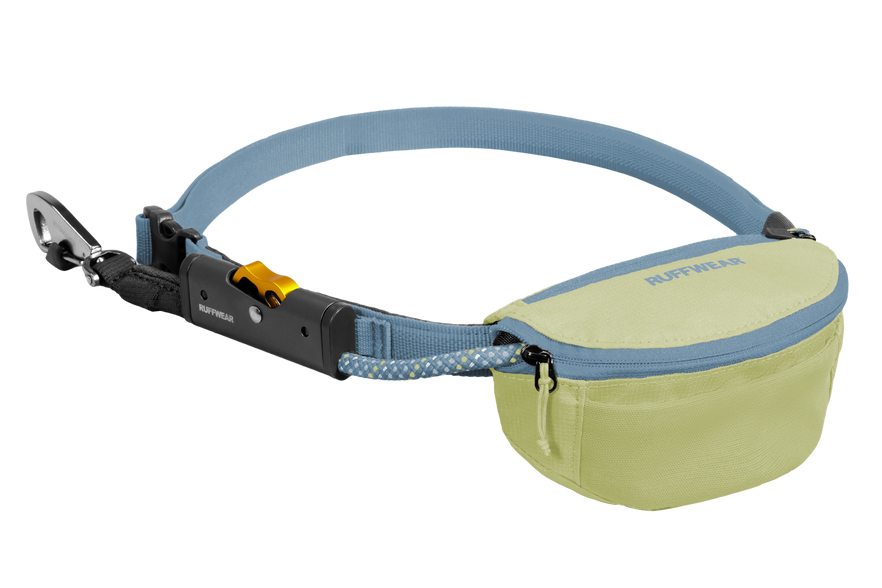 Ruffwear Hitch Hiker Leash
This is a selection guide, not a hands-on test or a leash-training plan. A hands-free leash is a convenience item; it does not prevent pulling, falls, escapes, or unsafe interactions. If your dog lunges, bolts, redirects, bites, panics, or pulls hard enough to affect your balance, use a setup you can control comfortably and ask a certified trainer or qualified behavior professional for individual help. Contact a veterinarian about pain, coughing, breathing trouble, limping, or sudden behavior changes.
Why the Ruffwear Roamer Is Our Best Starting Point
The Ruffwear Roamer is a useful first comparison because its handle can be worn around the waist or used in the hand. That flexibility matters on real walks: hands-free carry may suit an open, familiar stretch, while a hand-held grip gives you a simpler option near crossings, other dogs, or crowded sidewalks.
Its elastic section can soften small changes in pace, but stretch is not automatic control. Check that the chosen length keeps your dog out of traffic and does not create a trip loop when the leash relaxes. Owners who prefer a completely predictable leash length should skip the bungee style and choose a fixed-length convertible leash instead.
Selection Criteria That Matter
- Carry style: Waist belts tend to stay stable; crossbody leashes can be quicker to put on; convertible handles give you a hand-held fallback.
- Belt or strap range: Measure over the clothing you actually wear, including a winter coat, and avoid a fit that sits on your abdomen uncomfortably.
- Leash length: Choose enough room for a natural stride without leaving a low loop that can catch your legs, a stroller wheel, or street furniture.
- Traffic handle: A reachable short handle is useful for brief, close positioning. It should not drag or sit so near the clip that you must bend awkwardly.
- Stretch: A bungee section can reduce small jolts but may feel imprecise and can store energy when a dog surges.
- Hardware: Check the clip, rings, stitching, adjusters, and maker guidance for the dog's size. Inspect them routinely for wear.
- Cleaning: Mud, grit, and salt collect around elastic and hardware. Follow the maker's washing guidance and dry the leash fully.
- Visibility: Reflective details may improve visibility in some conditions, but they do not replace attentive handling, lighting, or a sensible route.
Hands-Free Leash Comparison Framework
There is no universally best leash style. Match the construction to the walk and to how much direct hand control you want.
- Convertible waist or hand-held leash: Best all-around variety for familiar daily routes because you can change carry style without swapping gear.
- Fixed waist-belt leash: Best for owners who value a stable belt and do not need crossbody carry; check belt comfort and quick-release design.
- Crossbody leash: Best for quick on-and-off use and owners who dislike pressure around the waist; it may shift across loose clothing.
- Bungee leash: Best for modest pace changes with a manageable dog; less suitable when you want a fixed distance and immediate feedback.
- Leash with storage pockets: Best when you only need waste bags and keys; a separate walking bag is usually better for water, wipes, or a phone.
Fit the Leash to the Dog and Route
Read the manufacturer's size or weight guidance, but do not treat a stated limit as proof that the leash suits every dog below it. A small dog who zigzags can create a different trip risk from a larger dog who walks steadily. Body size, pace, handling needs, hardware condition, and the environment all matter.
For short neighborhood walks, prioritize a leash that stays off the ground and lets you reach a handle quickly. A well-fitted everyday harness may be a comfortable attachment choice for some dogs, but use only combinations the product makers support and check the fit before every walk.
When a Standard Leash Is the Better Choice
Skip a hands-free leash when your dog is new to you, still unpredictable on the route, prone to sudden lunging, or strong enough to pull you off balance. A standard hand-held leash can also be simpler in busy parking areas, narrow sidewalks, crowded events, and places with frequent dog encounters.
Hands-free walking also deserves extra caution with strollers. A leash can wrap around wheels or transfer a sudden pull to your body while your hands are occupied. Keep the dog and stroller paths separate, practise in a quiet open area, and choose another arrangement if you cannot manage both comfortably.
Who Should Skip This Product Category
Skip hands-free leashes if you have balance, back, hip, or mobility concerns that could be aggravated by a pull at the waist or torso. Ask an appropriate health professional about your own needs. Skip them for dogs with escape attempts, serious pulling, reactivity, aggression, or panic until a qualified professional helps you choose a safer handling plan.
Also skip a new leash as the main solution when the current harness or collar does not fit, hardware is damaged, or the dog seems painful. Equipment cannot diagnose or treat a health or behavior problem.
Setup and Care Tips
Practise clipping, adjusting, changing from hands-free to hand-held, and reaching the traffic handle indoors without the dog attached. Then try a quiet, familiar route. Keep the leash clear of your feet, check that buckles and rings stay closed, and avoid attaching keys or heavy accessories where they can bounce against the dog.
After wet or muddy walks, rinse or wipe the leash as its care label allows and let it dry open. Replace it if elastic stays stretched, stitching frays, a clip sticks, or hardware bends or cracks.
Related Walking Guides
Build the rest of the setup around the same route. Compare everyday dog harnesses for fit and attachment options, then use a dog walking bag if waste bags and pockets built into a leash are not enough.
For water, wipes, and errands beyond the block, see the grab-and-go pet outing kit and pet travel water bottle guide.
The Bottom Line
Start with a convertible model such as the Ruffwear Roamer if your dog is already manageable on ordinary walks and you want both waist-worn and hand-held options. Choose by fit, length, handle placement, stretch, hardware, and cleaning—not by a vague promise of more control.
A standard leash is the better purchase when direct hand control, predictable length, balance, or a busy route matters more than keeping both hands free.