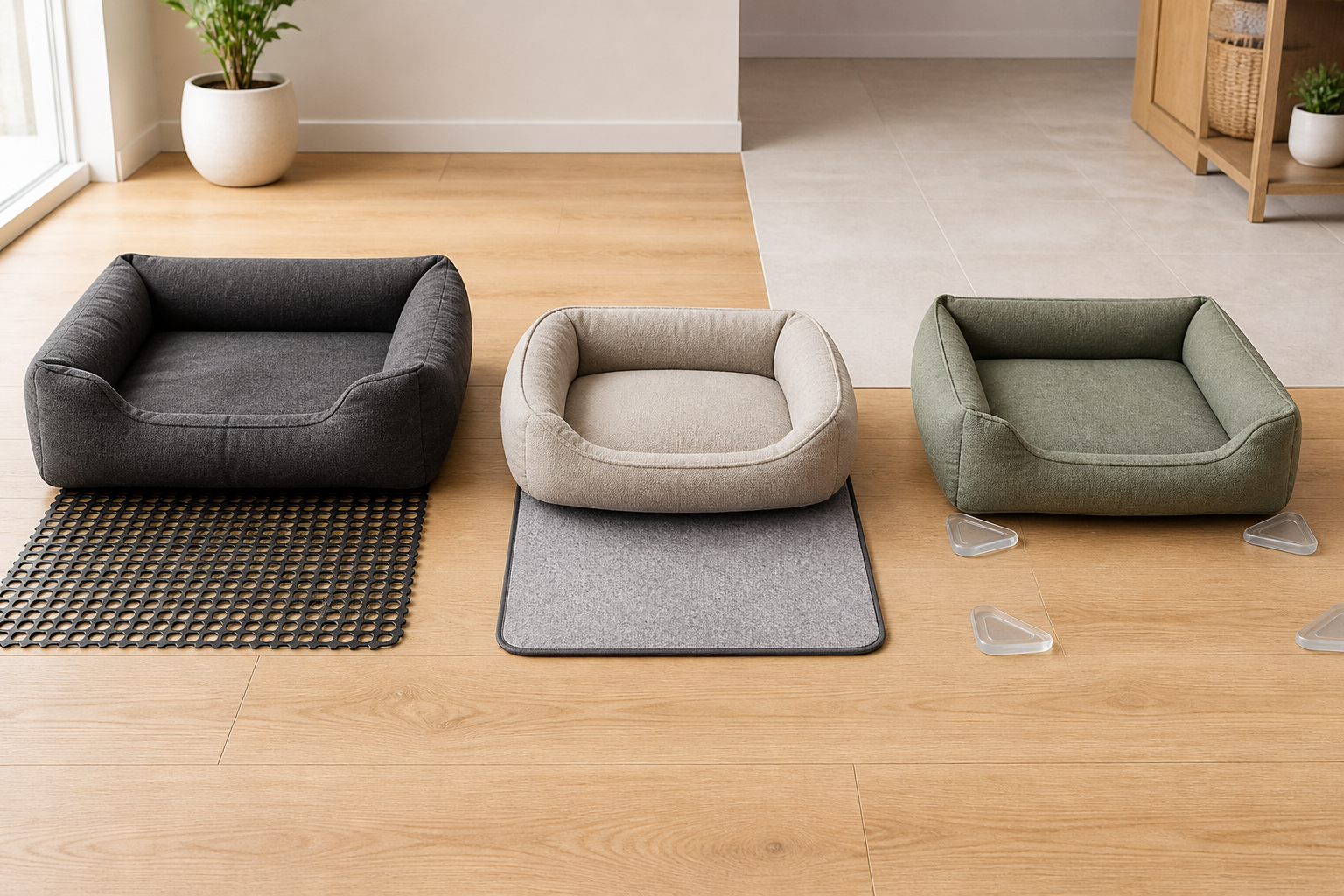
This is a category comparison, not a hands-on test or a universal grip ranking. Results depend on the bed base, dust, moisture, pad size, pet movement, and floor finish. Test the setup gently by hand, supervise early use, and inspect beneath it often.
Quick Comparison: Match the Underlay to the Bed
Open-grid mesh: simple to cut and reposition
A thin mesh pad suits many flat-bottom beds when it can be trimmed smaller than the bed footprint. Openings can make the layer easier to air and shake clean, but material chemistry matters: only use it when the maker documents compatibility with sealed wood, laminate, vinyl, or tile as applicable.
Felt-and-rubber: broader contact with extra thickness
A dual-surface pad can give a wide, structured underlay beneath a large flat bed. The tradeoff is thickness. A pad that ends near the bed edge or creates an uneven step may curl, show, collect debris, or become a paw and foot catch point.
Corner grips: minimal coverage for defined contact points
Small silicone grips can suit a bed with firm corners and a base that stays flat between them. They are a poor fit for a soft cushion that bunches or a pet that can reach, pull, or chew loose pieces. Confirm whether the product uses adhesive and whether removal can leave residue.
Measure the Bed's Actual Contact Area
Turn the bed over and measure the flat area that truly touches the floor, not the widest bolster or fabric overhang. A full pad should usually finish slightly inside that contact area so no edge is exposed. If cutting is allowed, follow the product directions and round sharp corners rather than leaving projecting strips.
Also note seams, zippers, handles, rubber dots, and uneven fill. An accessory pad cannot correct a warped base. Put the bed in its normal location and check nearby doors, chair legs, cords, vents, and walking paths before adding any thickness.
Selection Criteria That Matter
- Floor compatibility: Follow both the floor maker's care guidance and the pad maker's stated compatible surfaces.
- Complete coverage: Keep the underlay within the bed footprint so pets and people cannot catch an exposed edge.
- Bed-base fit: Broad pads need a flat contact surface; corner pieces need firm, predictable contact points.
- Material and residue: Check for warnings about discoloration, plasticizer transfer, adhesive residue, or use on recently refinished floors.
- Moisture: Lift the bed and pad for cleaning and drying. Do not trap spills, urine, condensation, or damp fabric against flooring.
- Cleaning: Choose a pad you can shake, wipe, rinse, or wash according to its label, then dry fully before replacing it.
- Trimming: Cut only when the maker permits it; damaged or unraveling edges are a reason to replace the pad.
- Routine inspection: Recheck for curling, tears, exposed pieces, residue, floor changes, and renewed bed movement.
Who Should Skip a Non-Slip Pad
Skip a loose underlay when your pet chews bedding, pulls at edges, or eats non-food material; when the pad cannot stay fully concealed; or when the flooring maker advises against rubber, latex, PVC, adhesive, or similar contact materials. A bed with its own intact, floor-compatible grip base may not need another layer.
Do not use a pad as a mobility aid or safety guarantee. If a pet slips while walking, hesitates to stand, appears painful, or has a sudden change in movement, contact a veterinarian. Move the bed to a more stable, accessible location while seeking guidance rather than relying on a gripper accessory.
The Bottom Line
Choose open-grid mesh for an easily measured, cut-to-fit layer; felt-and-rubber for broad contact when a little extra thickness is acceptable; or corner grips only for firm bed corners that keep every piece covered. Floor compatibility, hidden edges, moisture checks, and cleaning access matter more than bold grip language.
For the wider comfort setup, compare low-profile dog beds, easy-clean crate mats, or elevated beds that leave floor access.