 One-cup clip-on scoop
 Straight-sided measuring cup
This is a product-selection framework, not a hands-on test and not nutrition advice. A scoop helps repeat a chosen volume; it does not determine how much an individual pet should eat. Follow the current food package and any instructions from your licensed veterinarian. Ask your veterinarian before changing portions for weight, illness, medication, growth, pregnancy, or another health concern.
Best Starting Point: A Clearly Marked Scoop That Matches One Meal
Start with the amount you normally need for one meal, then choose a measure that reaches that amount without several awkward partial scoops. A one-cup tool is usually easier to read for small servings, while a two-cup scoop can reduce repetitions for larger meals or multi-pet routines.
The important part is a visible line at the amount you actually use. Raised markings molded into the bowl may last longer than printed marks, but low-contrast plastic can be hard to read in a dim pantry. If another person sometimes feeds your pet, make the target line unambiguous and leave the written instructions near the food.
Best for Food-Bag Storage: A Clip-On Scoop
A clip-on scoop combines a bag clip, handle, and measuring cup. It can keep the tool with the food and reduce countertop clutter, especially when you store food in its original bag. Collapsible versions also take less room in a drawer.
The tradeoff is extra folds and joints to wash. Check whether the clip closes the bag securely, whether the cup opens fully without wobbling, and whether food dust collects in the hinge. A separate solid scoop is the calmer choice when the clip feels flimsy or the folds are difficult to dry.
Best for Smaller Repeatable Servings: A Straight-Sided Measuring Cup
A dedicated kitchen-style dry measuring cup can be easier to fill to a level rim than a tapered scoop. It is a practical option when the package instruction uses a standard cup measure and the cup fits comfortably through the bag or bin opening.
Keep that cup dedicated to one pet food, label it if several foods are stored nearby, and do not assume a drinking cup or unmarked container equals a standard measuring cup. Volume also is not the same as weight: use a scale only when the food maker or veterinarian provides instructions in weight units.
Best for Scale-Based Instructions: A Lightweight Cup Plus a Kitchen Scale
Some owners prefer a small cup for transferring dry food into a bowl set on a digital kitchen scale. This can be more repeatable when the package gives grams, but only if the scale is used correctly and the target amount comes from an appropriate source.
Choose a cup that is light, stable when set down, and easy to empty. Learn the scale's tare function so the bowl is not included in the food weight. Keep the scale dry and away from curious pets, and do not invent a gram target by converting a generic online recommendation.
Selection Criteria That Matter
- Useful capacity: Match the tool to one normal meal rather than buying the largest scoop available.
- Readable units: Confirm whether the marks show cups, fractions, milliliters, or ounces and whether those units match the instructions you follow.
- Leveling: A defined rim and visible fill line make a repeatable volume easier than a heaped scoop.
- Container fit: Measure the food-bin opening and depth; a wide bowl or short handle can be frustrating in a narrow, deep container.
- Material and seams: Smooth, intact surfaces are easier to clean. Replace cracked, rough, warped, or heavily scratched plastic.
- Cleaning: Check the maker's dishwasher guidance and make sure hinges, collapsible folds, and hollow handles can dry fully.
- Storage: Decide whether the scoop can stay clean inside the bin, clip to the bag, hang nearby, or needs a drawer spot.
- Shared routines: Label the tool and post clear feeding instructions when family members or pet sitters share meals.
A Simple Comparison Framework
- Choose a two-cup long-handle scoop for a deep bin and larger dry-food servings.
- Choose a one-cup solid scoop for more visible fractions and less risk of accidentally heaping a small serving.
- Choose a clip-on scoop for an original-bag setup when compact storage is more important than easy washing.
- Choose a straight-sided measuring cup when the level rim matches the volume instructions you use.
- Choose a light transfer cup and scale only when your instructions are already given in grams.
Who Should Skip a New Scoop
Skip a specialty scoop if a clean, dedicated measuring cup already matches the feeding instructions and fits the container. Also skip a large two-cup model when the normal meal is a small fraction that is hard to see accurately. Buying another tool will not fix unclear instructions, overfilled bowls, or family members feeding the pet twice.
A measuring tool is a routine aid, not a treatment for appetite or weight concerns. Contact a licensed veterinarian if your pet suddenly eats much more or less, loses or gains weight unexpectedly, vomits repeatedly, has difficulty chewing or swallowing, or needs an individualized feeding plan.
Build a Cleaner Feeding Routine
Keep the original food label, lot code, best-by date, and feeding directions available. If you use a separate bin, our guide to pet food storage containers for small kitchens explains why keeping the original bag inside can be useful. Wash and fully dry the scoop on a routine that makes sense for the food and product instructions.
Store the scoop so its bowl and handle do not pick up sink splashes, countertop residue, or moisture. For the rest of the setup, use the low-mess pet feeding station guide. New pet owners can also see which feeding items belong in the broader starter pet supplies list.
The Bottom Line
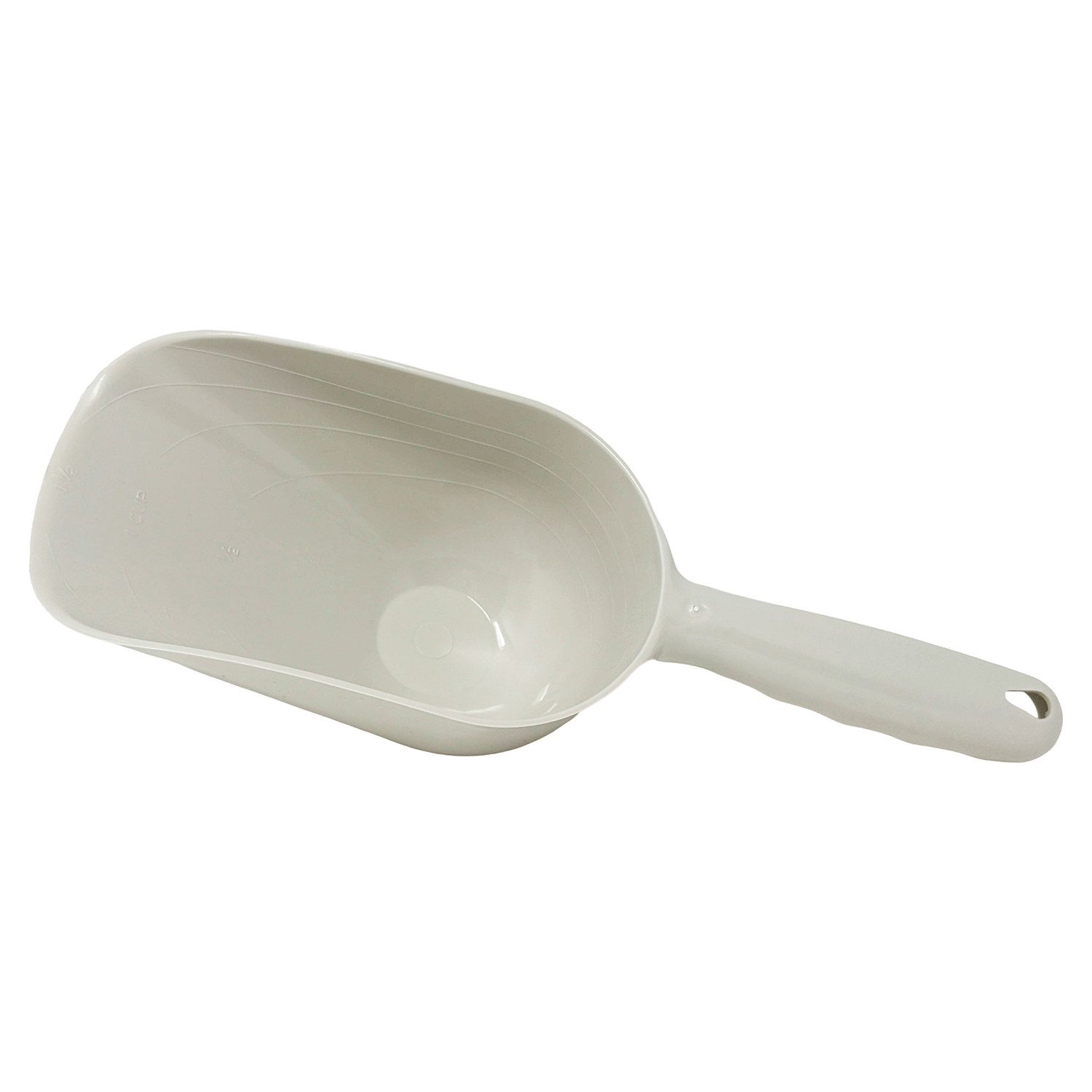
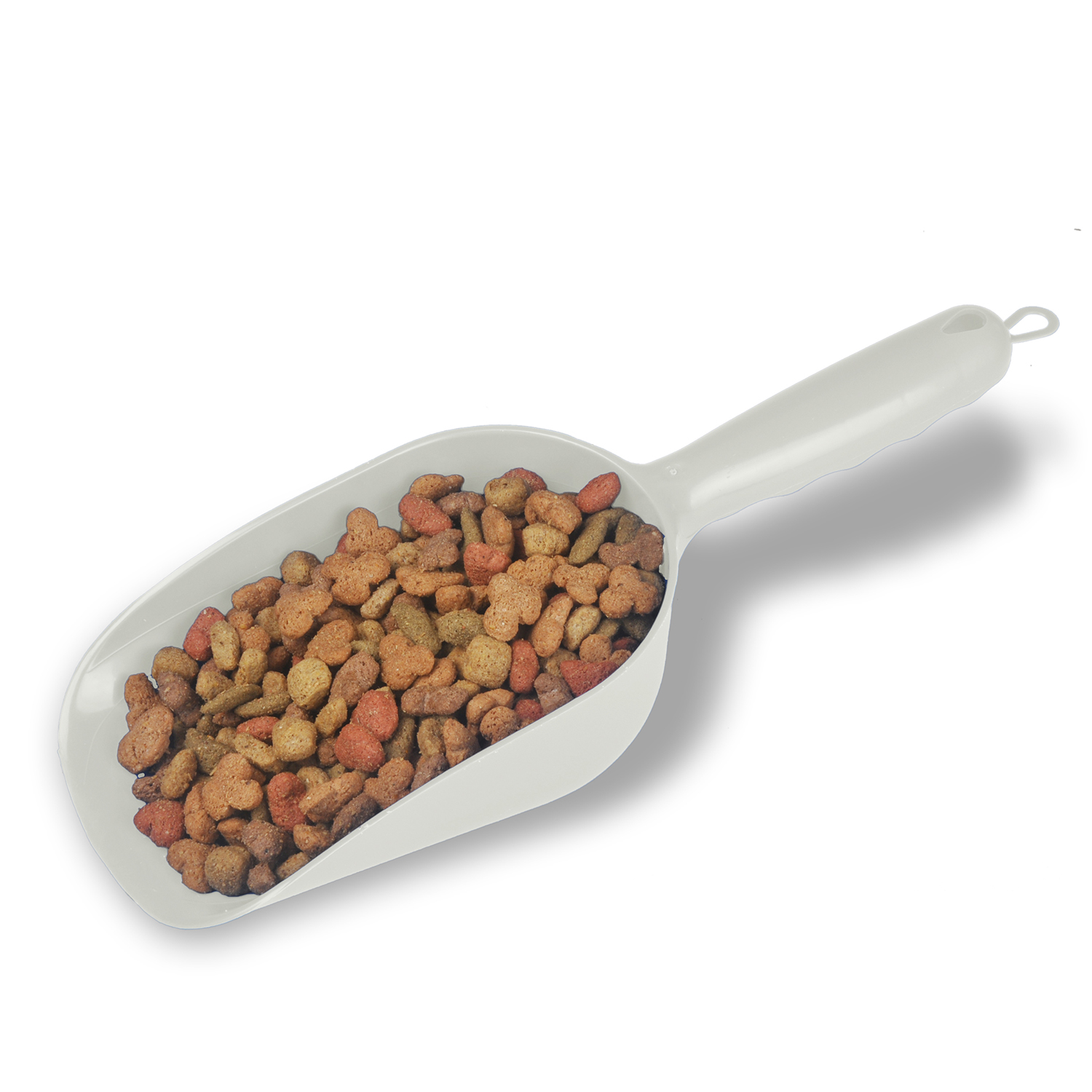
The Van Ness 2-Cup Food Scoop is a sensible full-size model to compare when you use dry food, need a long handle, and regularly measure larger servings. For smaller portions, a clearly marked one-cup or straight-sided measuring cup is usually easier to read. Choose a clip-on version only when its storage benefit outweighs the extra cleaning seams.
Whichever tool you use, let the package or your veterinarian determine the target amount. The scoop's job is simply to make that established routine cleaner, clearer, and easier to repeat.