This is a category-level buying framework, not veterinary advice, a durability ranking, or a promise that chewing will stop. Puppies vary in size and chewing style, and product instructions change. Stay close enough to remove the toy immediately.
Quick Comparison
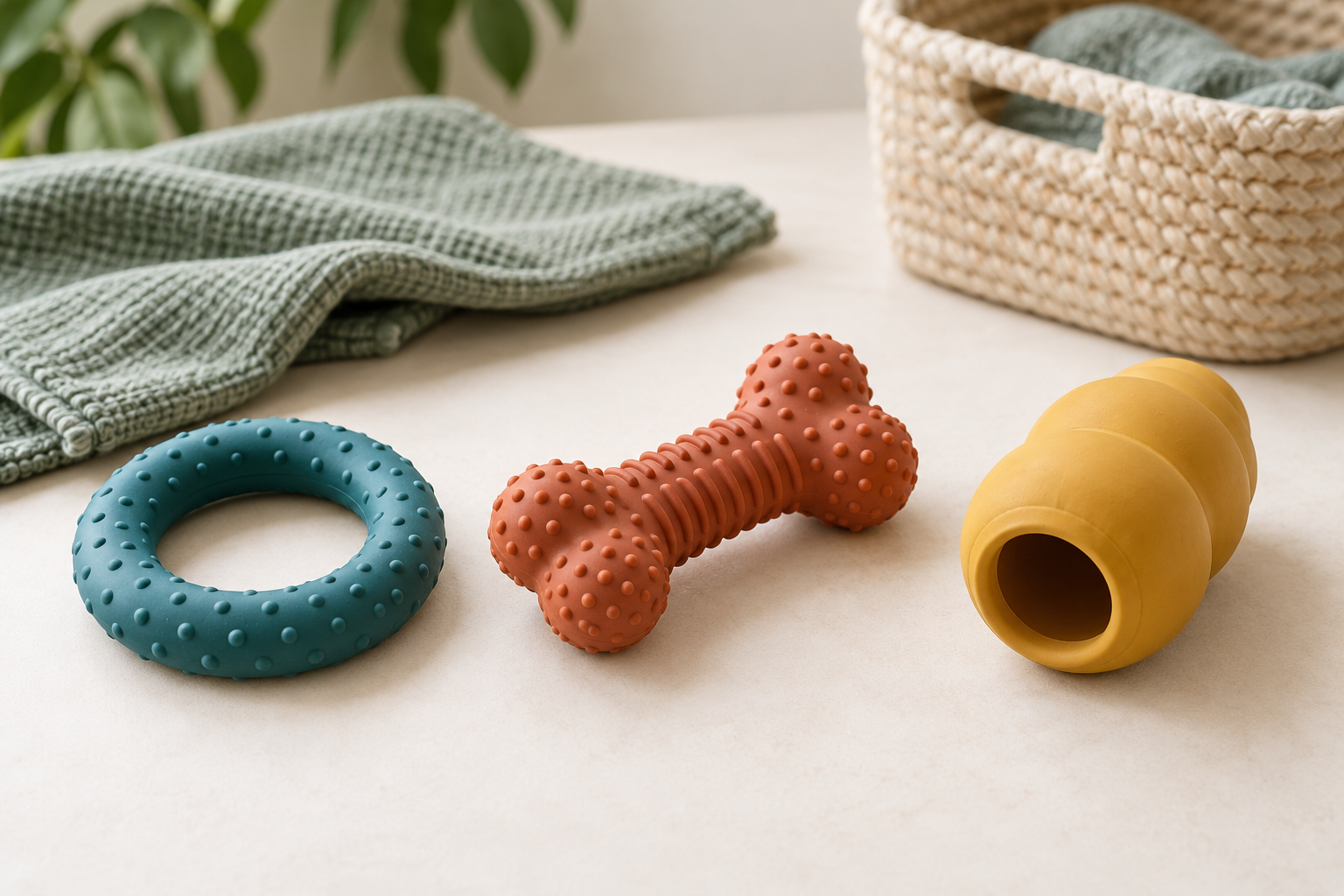
Flexible rings: simple shape and visible edges
An open ring can be straightforward to hold, rinse, and inspect. Compare its complete outer and inner dimensions, flexibility, molding seam, and current maker size guidance. Skip any ring that could pass too far into the puppy's mouth or has a damaged edge.
Textured rubber toys: more grooves to inspect
Raised texture changes the surface but also creates more crevices for debris and damage checks. Look closely at every ridge and end. Do not assume texture cleans teeth, relieves pain, or makes a toy more durable.
Hollow fillable toys: more cleaning access to verify
A broad opening can support inspection and cleaning when the maker permits it. Confirm that you can see and clean the interior and that the opening cannot catch the puppy's jaw. Follow veterinary guidance for anything edible; the toy itself is the buying decision here.
Selection Criteria That Matter
- Current size guidance: Match the exact listing and packaging to the puppy's present size; do not buy solely for expected adult size.
- Whole-toy dimensions: Check length, width, ring opening, and fill opening. If fit is uncertain, ask a veterinarian.
- Construction: Prefer a simple format with no accessible caps, strings, squeaker pieces, glued decoration, or detachable parts.
- Cleaning: Follow current maker directions and choose an interior and surface you can fully reach, rinse, and dry.
- Handling: The toy should be easy for the person to retrieve without chasing or grabbing from the puppy's mouth.
- Returns: Read current return terms before opening or using the toy because size and material feel are difficult to judge online.
Inspect Before, During, and After Each Session
In good light, bend and rotate the clean toy. Look for cracks, splits, deep tooth cuts, lifted texture, enlarged openings, missing material, stickiness, or a changed shape. End the session if the puppy settles into forceful dismantling or the toy changes. Discard damage according to maker guidance; do not glue, tape, trim, or patch it.
If any piece may have been swallowed, or the puppy has mouth bleeding, marked pain, repeated vomiting, choking, trouble breathing, unusual lethargy, or distress, remove access and contact a veterinarian or emergency veterinary service promptly. Do not wait for another product to solve it.
Who Should Skip These Toys?
Skip the purchase when the puppy repeatedly tears or swallows toy material, guards objects, cannot be calmly interrupted, or has an existing mouth, tooth, jaw, digestive, or other health concern. A veterinarian or qualified trainer can help with an individual plan; this page does not provide behavior modification.
Also skip a new toy when an existing correctly sized toy is intact, easy to clean, and works during supervised sessions. A chew toy is an optional convenience and enrichment item, not a health treatment or a requirement.
The Bottom Line
Start with a simple, correctly sized format whose entire surface you can inspect. Choose texture or a hollow design only when its extra crevices and openings remain easy to check and clean. Verify the current listing, supervise every session, and remove the toy at the first meaningful damage.