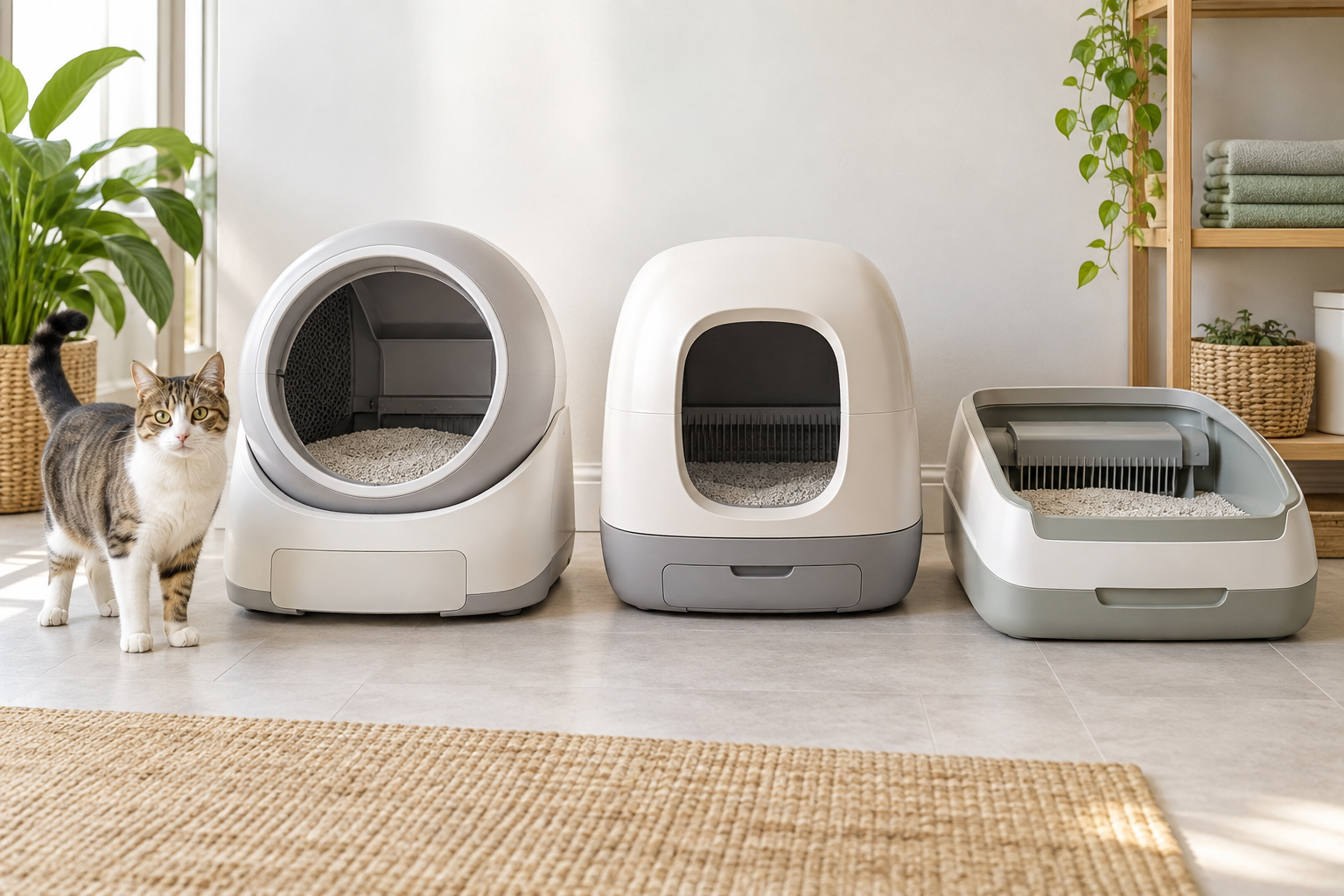
Quick Comparison
Open rotating: reduces the visual barrier at entry, but the rotating chamber still limits usable space and needs maker-approved litter. Enclosed rotating: can contain the mechanism and waste drawer in one body, but the entrance, interior, footprint, and disassembly deserve careful measurement. Open raking tray: looks more like a conventional pan, but the rake path, disposable trays or refills, and litter restrictions can add upkeep. Manual box: remains the simpler choice when direct scooping, low entry, low noise, easy washing, or a lower purchase cost matters most.
Selection Criteria That Matter
- Cat eligibility: use the maker's current minimum age, weight, mobility, and other restrictions. Do not use a machine for a kitten or cat outside those limits.
- Usable interior: compare the space the cat can actually stand and turn in—not just the product's exterior dimensions. Measure entry height and width too.
- Cycle controls: read how presence is detected, how long cycling is delayed, how a cycle stops, and whether automatic operation can be disabled during introduction.
- Litter compatibility: confirm allowed litter type, depth, granule size, and fill line. An incompatible litter can interfere with sifting or raking.
- Waste handling: inspect drawer capacity, liners or trays, seals, emptying access, and ongoing consumables without treating any design as odor-free.
- Deep cleaning: check which parts detach, which parts cannot be immersed, drying time, seam access, and whether the unit fits the cleaning space you have.
- Power and failure mode: know what the box does after an outage, sensor alert, jam, full drawer, or network loss. Keep a plain manual box available.
- Noise and placement: allow a level, dry location with the maker's required clearance and a nearby outlet that does not put a cord across a walkway.
- Returns and warranty: introduction may fail even when measurements look right. Read trial, return-shipping, consumable, parts, and warranty terms before opening or discarding packaging.
Automation Still Needs Daily Checks
Introduce the new box according to its current instructions and keep an acceptable manual option available during the transition. Observe your cat's comfort from a distance; never force entry. At least daily, check that waste moved as intended, litter depth is correct, the entry and interior are clean, and no fault, blockage, leak, or loose part is present.
Empty and deep-clean on the maker's schedule, using only allowed methods. Disconnect power before service when the manual says to do so, dry components fully, and inspect sensors and moving areas without bypassing safeguards. Usage counters or app notices are maintenance prompts, not medical assessments and not substitutes for looking at the box and your cat.
Who Should Skip a Self-Cleaning Litter Box?
Skip or delay automation when your cat falls outside the maker's limits; has difficulty entering, turning, or using an enclosed space; is frightened by motion or noise; needs close observation of litter-box output; or when the household cannot manage deep cleaning, consumables, troubleshooting, electricity, and a backup box. A large, accessible manual box may be the better tool.
A litter box is not a health monitor or treatment. Contact a veterinarian promptly about straining, repeated unproductive box visits, crying, blood, sudden changes in urination or stool, or avoiding the box—especially if a cat may be unable to urinate. Do not wait for an app alert.
Related Guides
For the broader cleanup path, browse the cleanup and odor-control guide collection. Compare covered and open boxes, choose clumping or non-clumping litter, or reduce scatter with our guide to cat litter mats.
Bottom Line
The best self-cleaning litter-box format is the one your cat can comfortably use, whose current limits and litter rules you can follow, and whose drawer, moving parts, and deep-clean routine fit your household. Compare open rotating, enclosed rotating, and open raking formats—but keep daily observation and a simple manual fallback in the plan.