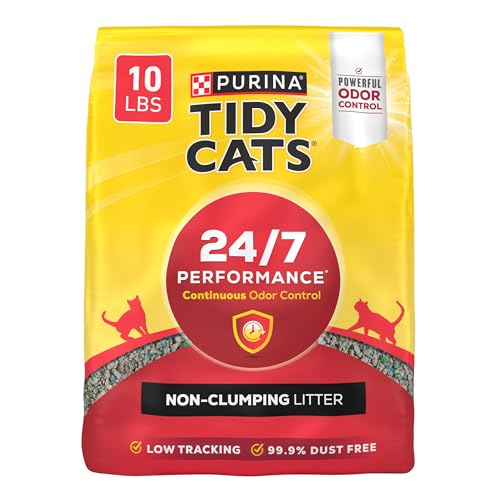
 Tidy Cats 24/7 Non-Clumping Litter
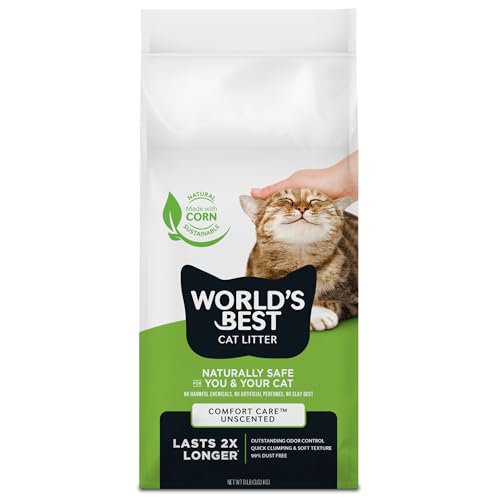 World's Best Original Unscented
This comparison is based on format and routine, not hands-on testing. Litter is a cleanup supply, not a treatment for urinary, digestive, mobility, stress, or litter-box problems. A sudden change in box use deserves attention rather than a quick product assumption.
The Quick Difference
Choose clumping litter when you want urine to form removable clumps, expect to scoop at least daily, and prefer targeted removal with periodic complete box cleaning.
Choose non-clumping litter when you prefer a simpler absorbent granule, accept that urine is not lifted out as a firm clump, and can replace the litter bed according to the maker's directions before saturation becomes a problem.
Both formats come in different materials, grain sizes, weights, dust levels, and scented or unscented formulas. “Clumping” alone does not tell you whether a particular bag will fit your cat or home.
Option A: Clumping Cat Litter
Clumping formulas bind wet granules into a mass intended to be removed with a slotted scoop. Clay is common, but some plant-based litters also clump. Read the label rather than assuming the material from the format.
Who Clumping Litter Fits
- Daily scoopers: urine and stool can be removed during the same routine instead of waiting for the next complete change.
- Owners who want targeted cleanup: intact clumps let you remove the used area while leaving the surrounding clean litter.
- Multi-box homes: individual boxes can be checked and refreshed without emptying every box at once, subject to each product's directions.
- People who can manage the weight: many clay bags and filled boxes are heavy, so package size and lifting route matter.
Clumping Tradeoffs
Soft or fragile clumps can break during scooping and leave damp granules behind. Fine material may track beyond the box, and some formulas create more visible dust than others. Clumps also reduce the litter level, so topping up and periodically emptying, washing, and drying the box still belong in the routine.
Option B: Non-Clumping Cat Litter
Non-clumping litter absorbs moisture through the litter bed without forming scoopable urine clumps. Stool is removed routinely, while the litter is stirred, refreshed, or fully replaced only as the current product directions specify.
Who Non-Clumping Litter Fits
- Owners comfortable with full changes: the routine is straightforward when complete replacement and box washing fit the schedule.
- Cats that clearly accept the texture: some cats prefer a particular granule feel, but individual preference matters more than broad format claims.
- People comparing lower upfront bag cost: evaluate the amount used per full change as well as the shelf price.
- Households using a system that specifies it: follow the litter-box maker's compatibility directions rather than mixing formats casually.
Non-Clumping Tradeoffs
Because absorbed urine does not leave as a solid clump, judging when the litter bed needs replacement can be less targeted. A neglected box can become unpleasant even if the surface looks dry. Full changes use more litter at once and require a practical lifting, trash, washing, and drying route.
Side-by-Side Decision Guide
- Scooping: clumping litter supports removal of urine clumps and stool; non-clumping litter generally allows stool removal but relies more on whole-bed maintenance for urine.
- Complete changes: both require periodic box cleaning. Non-clumping formats commonly make complete replacement a larger part of routine care.
- Tracking: fine, light granules may travel farther, but texture and weight vary within both groups. Inspect the actual product rather than choosing by format alone.
- Dust and fragrance: label wording differs by formula. “Low dust” does not mean dust-free, and a strong fragrance is not a substitute for cleaning.
- Cost: compare usable days per bag, box depth, top-ups, wasted broken clumps, and full-change volume—not just package price.
- Cat acceptance: texture, scent, box cleanliness, location, box style, and prior routine can all matter. Give the cat a reasonable transition and avoid abrupt assumptions.
Setup and Maintenance Issues
- Follow the package depth: too little litter can expose the box floor; overfilling wastes material and may increase spillover.
- Use the right scoop: slot width should release clean granules without breaking or losing small clumps. A rigid edge may help on a flat box but can damage some liners.
- Keep a predictable schedule: scoop stool and clumps as directed, inspect the whole box, and plan full washes rather than waiting for odor.
- Wash and dry fully: follow the box and litter makers' care directions. Avoid mixing household cleaners in or around the box.
- Retain package information: keep the product name, lot details, and directions until the bag is finished, especially if you decant litter into a bin.
- Plan disposal: do not flush litter unless both the product directions and local wastewater guidance explicitly allow it.
- Give each cat access: box number, placement, entry height, and cleanliness can matter more than a material switch. Keep routes quiet and unobstructed.
Who Should Skip Each Format?
Skip a clumping formula when the product directions do not fit the cat's life stage or your box system, the bag or filled box is too heavy to handle safely, or clumps repeatedly crumble in your real cleanup routine. Compare another clumping material or a non-clumping setup instead of tolerating an unworkable product.
Skip a non-clumping formula when you cannot keep up with its required full-change schedule, have no practical route for lifting and disposing of the used bed, or struggle to judge when absorbed litter needs replacement.
Skip any formula your cat consistently avoids. Do not force a scented, coarse, sharp, dusty, or otherwise disliked texture merely because it is convenient for the household. Make changes gradually when appropriate and keep at least one familiar, accessible box during the comparison.
When a Litter Change Is Not the Next Step
Contact a veterinarian promptly about straining, repeated box visits with little output, crying in the box, blood, pain, vomiting, marked lethargy, or sudden urination or defecation changes. Sudden avoidance can have medical or environmental causes; a different bag of litter should not delay professional advice. For persistent non-medical box problems, ask a qualified cat behavior professional for individual help.
Useful Next Steps
For the daily tool, use our litter scoop comparison to match slot width and basket depth to the granules. Add a litter mat chosen for the exit path if tracking is the main household problem.
If carrying scoop waste outdoors after every cleanup is impractical, compare compact litter disposal systems. These are convenience tools; they do not replace timely scooping or full box care.
Bottom Line
Clumping litter favors targeted daily removal. Non-clumping litter favors a simpler absorbent format with a more complete replacement routine. Start with cat acceptance, then compare the real work: scooping, lifting, tracking, disposal, box washing, storage, and cost per change.