Quick Answer
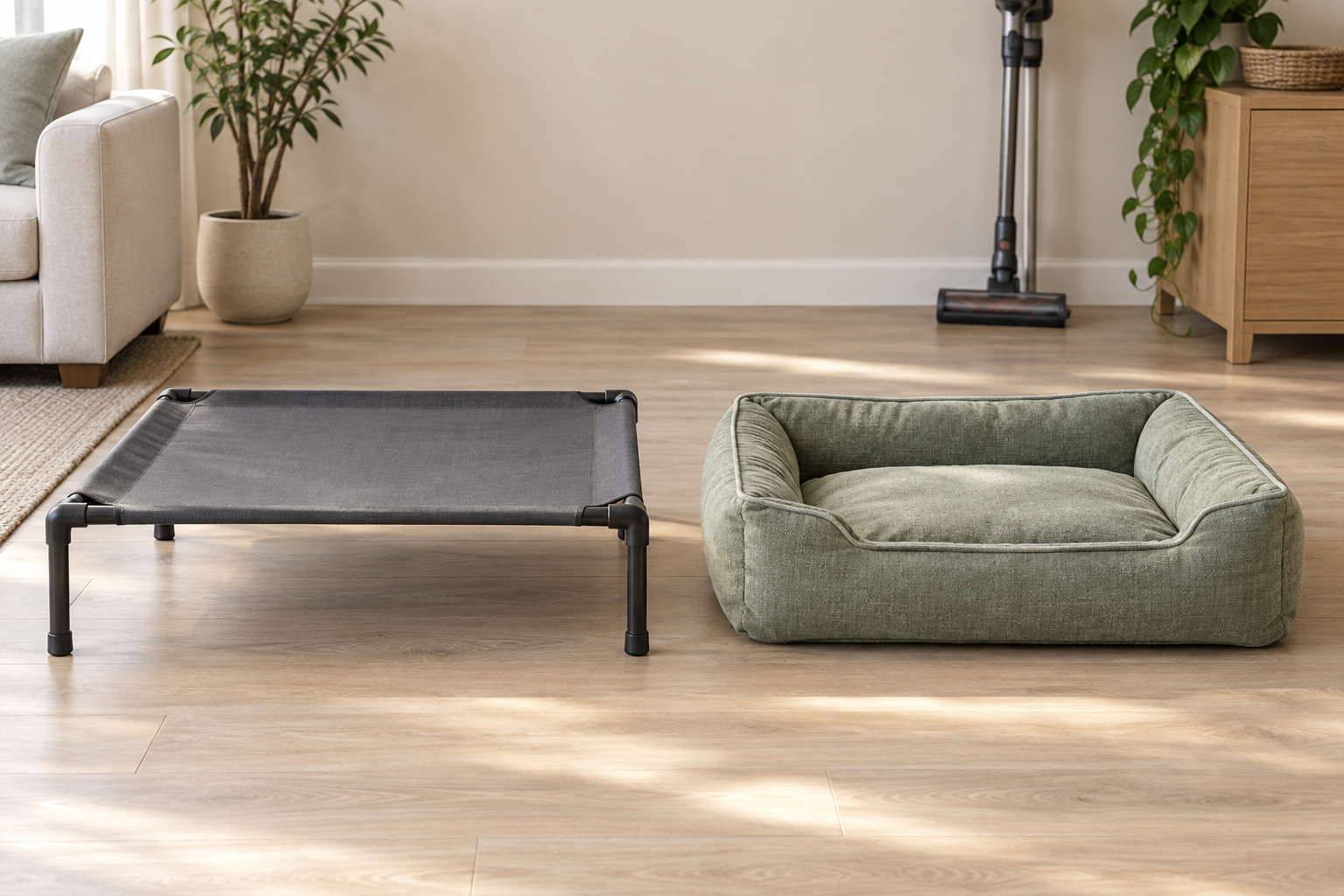
Choose an elevated cot when the frame leaves enough clearance for the tallest part of your usual broom, mop, or vacuum head, the complete deck supports your dog's normal resting positions, and the entry height is comfortable. It is most useful when moving a bulky bed is the part of cleaning you want to avoid.
Choose a floor-level bed when your dog prefers a cushioned or edged surface, low entry fits the routine, and the bed is light enough to move. Favor a removable cover or fully washable construction that fits your machine and drying space.
Choose neither yet if you have not measured the dog, bed location, walkway, cleaning tool, washer, and storage area. A bed that is easy to wash but awkward to move—or easy to sweep under but uncomfortable to enter—does not solve the whole routine.
Measure These Before Shopping
- Usable sleep area: compare the interior deck or cushion, not the outside frame. Observe the space your dog uses when curled and stretched without forcing a position.
- Entry height: record the top of the taut deck or compressed bed surface. Do not treat a product label such as low-profile as a measurement.
- Floor clearance: for a cot, compare the lowest bar, brace, and fabric sag with the tallest point of the cleaning tool, including a swivel joint.
- Full footprint: include cot legs, projecting corners, bolster walls, and room to walk around the bed without creating a trip point.
- Stated limit and construction: follow the maker's current size and weight guidance. Check frame joints, feet, deck attachment, seams, zippers, insert, and non-slip base.
- Laundry fit: check whether the whole bed or only the cover is washable, then compare its dimensions with your washer and drying space.
The Practical Tradeoffs
- Under-bed access: a cot may let a compatible tool pass beneath without moving it. A floor bed usually has to be lifted, folded, or carried aside.
- Surface cleaning: a cot deck may wipe or wash simply, but tensioned fabric and frame joints need inspection. A covered floor bed creates separate cover, liner, insert, zipper, and drying tasks.
- Entry: floor-level beds minimize step-up height. An elevated frame adds a measured rise and a firm edge that may not fit every dog.
- Stability: cots depend on level feet, intact joints, correct assembly, and deck tension. Floor beds depend on a base that stays put and an insert that does not bunch or slide.
- Storage: some cots disassemble or fold, but frames and loose parts still need space. A flat mat may store easily; thick cushions and bolsters can be bulky.
- Noise and floor contact: cot feet can shift or sound different on hard floors. A floor bed has more contact area and can trap hair or grit underneath if it is rarely moved.
Neither format is inherently cleaner, cooler, more supportive, or better for health. The useful comparison is whether the exact construction fits the dog, room, cleaning tools, laundry routine, and maker instructions.
Build the Cleaning Routine Before Buying
For a cot, decide whether daily cleaning happens underneath, around the feet, or after moving the frame. Confirm that the tool can turn between legs and braces. Follow the instructions for removing and washing the deck, and let every washable part dry fully before reassembly. Inspect fasteners, fabric attachment points, seams, and feet after cleaning or moving it.
For a floor-level bed, plan where the bed will sit while you clean the floor and where the cover or whole bed will dry. Remove loose hair before washing, follow the care label, and do not assume the foam or fill can enter a washer because the cover can. Refit the cover smoothly so the insert does not bunch and the zipper closes without strain.
With either format, remove the bed from use if fabric tears, fill escapes, a frame bends, hardware loosens, feet go missing, or the base slides unpredictably. Bedding is a comfort and housekeeping product, not a treatment for pain, restlessness, skin problems, or mobility changes.
Who Should Skip Each Format?
Skip an elevated cot when the entry height does not suit your dog's ordinary movement, the frame blocks a narrow path, the feet cannot sit level, your cleaning tool does not actually fit beneath it, or your dog chews decks or frame parts. Do not improvise ramps, blocks, or replacement hardware that the maker has not approved.
Skip a thick floor-level bed when it is too heavy to move routinely, cannot fit your washer or drying area, traps debris in a place you cannot reach, or your dog tears and swallows covers or fill. A thin washable mat may be easier to manage, but only if it provides an appropriate resting surface and stays secure.
Pause the purchase and contact a veterinarian if your dog suddenly hesitates to lie down or rise, avoids a familiar bed, limps, falls, seems painful, or shows a meaningful change in movement or rest. Do not use a new bed format to diagnose or treat that change.
Related Bed and Home-Setup Guides
If the open-frame format wins, use the elevated dog bed buying guide to compare floor clearance, deck fit, stability, and replacement fabric. If low entry and laundry fit win, compare washable dog beds for small spaces or start with the broader guide to choosing a pet bed for a small room.
Bottom Line
An elevated cot makes sense when its measured floor gap turns under-bed cleaning into a simpler task and its deck, entry height, frame, and footprint suit the dog and room. A floor-level bed is the better fit when low access, cushioning, and removable washable parts justify lifting it during floor care. Choose the exact format that makes both the dog's ordinary use and your repeat cleaning routine realistic.