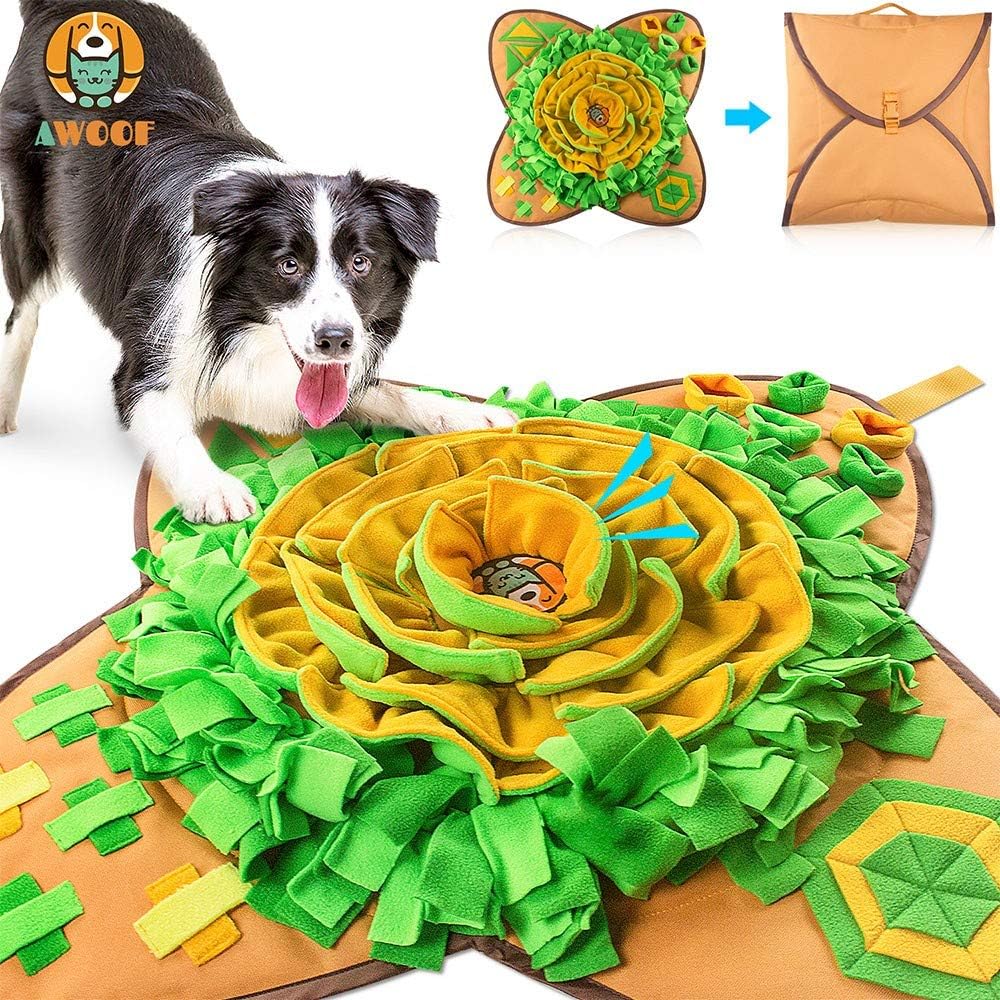
A snuffle mat is a supervised convenience toy, not a treatment for anxiety, fast eating, destructive behavior, or any medical concern. Food placed in it still counts toward the dog's usual feeding plan. Ask a veterinarian before changing food or portions, and get qualified help for guarding, distress, pain, appetite changes, or repeated swallowing of non-food items.
Quick Decision: Buy, Delay, Choose an Alternative, or Skip
- Buy: your dog already enjoys calm food searches, leaves fabric intact, and you can wash, fully dry, inspect, and store the mat after use.
- Delay: you have not yet tested whether searching is interesting, or you need to measure floor, washer, drying, and storage space.
- Choose an alternative: use a few pieces of familiar dry food scattered on a clean safe floor, a hard easy-clean puzzle, or a short supervised search using existing suitable items.
- Skip: your dog grabs and shakes textiles, eats fabric, guards food, becomes frantic, or cannot be supervised closely.
The Six-Part Worth-It Test
- Interest: Does your dog choose to search calmly, rather than walk away or attack the fabric?
- Supervision: Can an adult stay present, end the session promptly, and put the mat out of reach?
- Food fit: Does the maker allow the familiar food you plan to use, without creating a greasy or damp textile cleanup problem?
- Construction: Are folds, seams, cords, toggles, and backing easy to inspect before every use?
- Laundry: Can you follow the care label and let dense fabric dry completely before storage?
- Space: Does the opened mat fit a clear floor area, and does its stored shape have a dry, inaccessible home?
Cost and Maintenance Tradeoffs
The purchase price is only one part of the decision. A fabric mat also uses storage space, washing capacity, drying time, and a few minutes of inspection before and after each session. Dense folds can hold crumbs and may take longer to dry than a hard tray. A drawstring or folding design packs smaller, but cords and fasteners add parts to manage and inspect.
A mat earns that maintenance when it creates a repeatable activity your dog actually uses and you can reset without resentment. It is poor value when it spends most of its time damp, crumpled in a closet, or inaccessible because the laundry burden is too high.
Setup Before the First Session
Measure the intended open floor area and compare it with the listed deployed dimensions. Choose a clean, dry location away from stairs, doors, other pets, and household traffic. Read the manufacturer's directions, inspect every seam and attachment, and place only a small amount of familiar dry food loosely on top so the first search is easy.
Stay beside your dog. End the session if the mat becomes a tug, chew, or shake toy. Remove remaining food, check the fabric and backing for damage, clean it according to its care label, let it dry fully, and store it where the dog cannot access it. No fabric enrichment item is chew-proof or appropriate for unsupervised use.
Red Flags That Make the Mat a Poor Fit
- Your dog tears blankets, pulls fleece strips, or swallows textile pieces.
- Hidden food leads to stiff posture, growling, frantic digging, or conflict with another pet.
- The listing omits usable dimensions, materials, care directions, or information about cords and detachable parts.
- The mat slides, bunches, or flips during a calm trial and cannot be stabilized without introducing another hazard.
- Your planned food smears into the fabric or cannot be cleaned and dried promptly.
- The seller promises a cure, guaranteed calm behavior, or a medical or training outcome.
Who Should Skip a Snuffle Mat?
Skip the category for dogs that consume non-food items, persistently destroy soft toys, or cannot disengage from food searches calmly. A hard puzzle may be easier to inspect and wash for some dogs, while others are better served by a simple supervised game with no special equipment. If food guarding or intense frustration is part of the picture, a product is not the fix; consult a qualified reward-based trainer or behavior professional.
Also skip it when your dog has pain, dental difficulty, sudden appetite changes, vomiting, diarrhea, or another health concern. Contact a licensed veterinarian instead of using an enrichment purchase to troubleshoot symptoms.
Snuffle Mat vs Simpler Alternatives
A clean-floor scatter costs nothing and is the clearest way to see whether searching interests your dog, though it lacks a defined washable surface. A hard food puzzle is easier to wipe or wash but adds moving pieces and a different challenge. A supervised puzzle-toy chooser can help you compare textile and rigid formats without assuming one suits every dog.
If a mat does fit, the beginner snuffle mat guide compares actual product formats by difficulty, floor grip, laundry, storage, and construction. The broader enrichment guide hub offers related toy and routine decisions.
Bottom Line
A snuffle mat is worth it for a dog that enjoys calm food searches without chewing the textile and for an owner who can supervise, inspect, wash, fully dry, and store it every time. Try the basic search routine before buying. Delay until you can verify fit and maintenance, choose a hard or no-cost alternative when fabric is inconvenient, and skip the category when food tension, destructive chewing, or health concerns make it inappropriate.