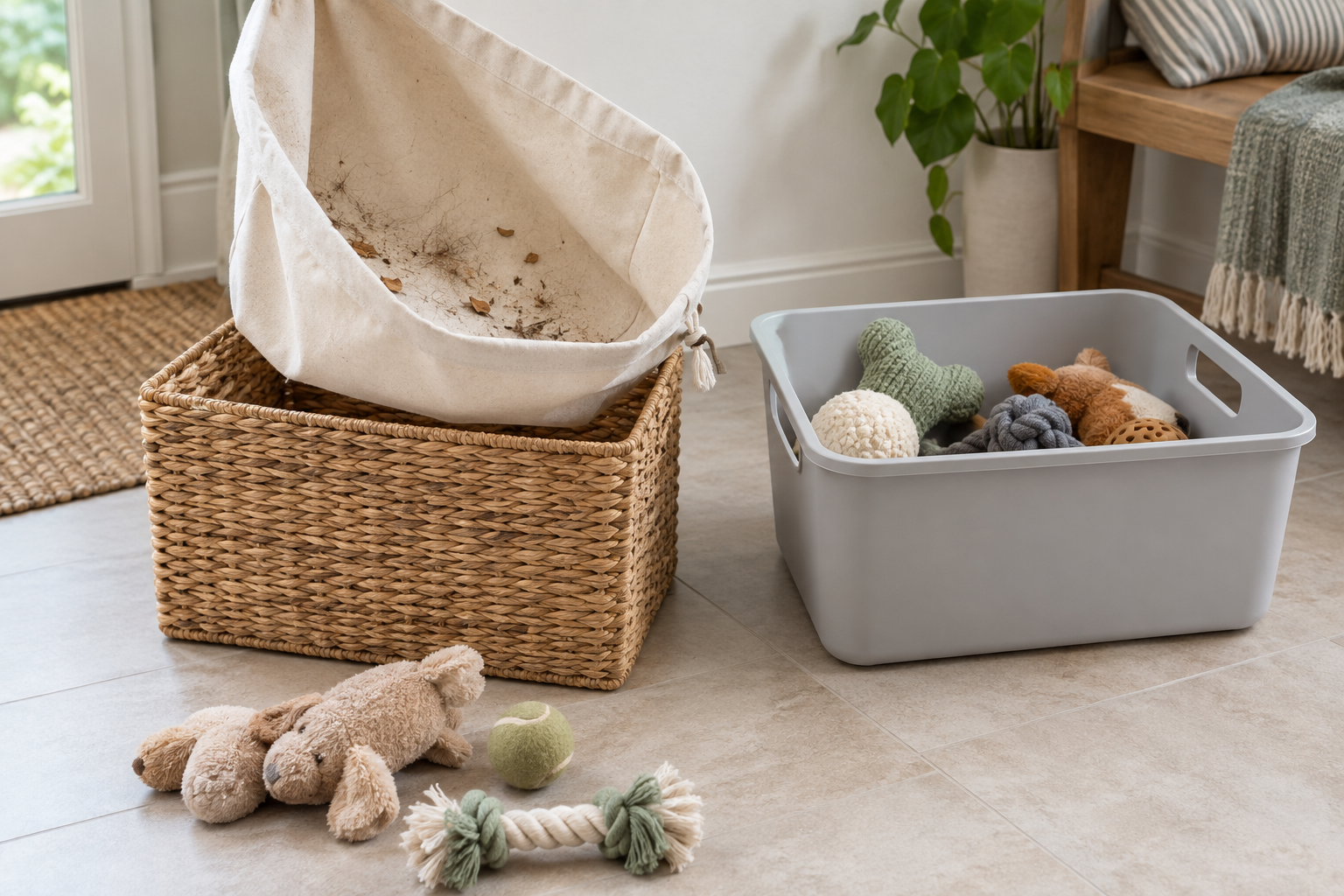
A liner is an organization and cleanup convenience, not a hygiene guarantee. Clean toys according to their own directions, let the liner and basket dry fully, and keep damaged fabric, loose cords, fasteners, and small removable pieces away from chewing or play.
Quick Decision: Buy, Repurpose, Clean Directly, or Skip
Buy a fitted liner when fur and dry debris collect often in a sound basket that is difficult to wash. Repurpose a cloth layer for a short trial when it lies flat, has no loose edges or cords, and can be removed safely. Clean directly when the basket has smooth reachable surfaces. Skip when the liner would bunch, hide basket damage, stay damp, or add more work than it removes.
Measure the Basket, Including the Rim
Measure the inside base length and width, wall height, opening, and rim circumference. Note whether the sides taper and whether handles, dividers, or a lid interrupt the edge. Product dimensions may describe the liner flat rather than its fitted usable space, so compare the maker's measurement diagram with the basket's interior shape.
A liner that is too small pulls against seams and can lift when a toy comes out. An oversized liner can fold into deep pockets that trap small toys and debris. Test that the fitted layer does not make the basket unstable or block a lid or handle.
Count Messes and Laundry Cycles
A liner earns its place when you can lift out routine fur, fibers, and dry crumbs more easily than vacuuming or wiping the basket. Track several normal cleanup cycles before buying. If the mess is light and a handheld vacuum or damp cloth handles it quickly, a liner may merely move the same work to the laundry.
Check the current care label for wash method, temperature, drying, and whether the liner must be reshaped. One liner may be enough when it dries before toys return; frequent cycles may require a spare, which changes the cost and storage calculation.
Fabric, Seams, and Attachments Matter
- Fabric: choose a documented washable material appropriate for the expected dry debris.
- Seams: inspect finished edges and stress points after each wash.
- Attachment: fitted or folded rims should stay secure without accessible elastic loops, toggles, or long cords.
- Color and texture: a liner that makes debris and damage visible can support routine inspection.
- Drying: air must reach the liner and the basket before they are reassembled.
- Access: supervised-only toys and string-like items still need genuinely inaccessible storage.
When Direct Cleaning Is Simpler
Smooth plastic, coated, or otherwise wipe-clean bins may not benefit from fabric. Empty the toys, follow the bin maker's care directions, reach the base and corners, and let the container dry. This avoids folds and laundry, although scratches, cracks, or damaged coatings still need inspection.
For wicker or structured fabric, first check whether vacuuming with a suitable attachment solves the dry-debris problem. Do not cover sharp edges, loose weave, broken wire, mold, persistent odor, or other damage with a liner; repair or replace the basket as appropriate.
Try a Safe Cloth Layer Before Buying
A clean cloth you already own can reveal whether removability improves the routine, but it should fit flat without long ties, frayed edges, or loose loops. Keep it out of reach if the pet mouths, digs, shreds, or pulls fabric. This trial is about workflow, not turning an unsuitable textile into a permanent pet product.
After several resets, ask whether lifting the layer saved time, whether toys stayed easy to find, and whether washing and refitting happened promptly. If not, stop the trial rather than buying a more elaborate version.
Who Should Skip a Liner
Skip one if the pet chews or pulls basket fabric, the basket is already easy to clean, wet or soiled toys routinely go into storage, or the selected liner has exposed cords or unclear care directions. Skip adapting a basket that is unstable, damaged, or too deep for safe toy access.
Persistent chewing, swallowing non-food items, guarding, sudden behavior changes, or illness signs are not storage-product problems. Contact a veterinarian or an appropriately qualified behavior professional for individual guidance.
Bottom Line
A washable pet toy basket liner is worth it when a measured, securely fitted layer makes repeated dry-debris cleanup easier without bunching, hidden damage, exposed attachments, or a burdensome wash routine. Test a safe cloth layer first, clean smooth baskets directly, and replace a damaged container rather than covering the problem.
For the broader system, use the simple toy rotation guide and compare closed bags for reserve toys. Browse the enrichment and play guide hub for supervised toy selection and storage decisions.