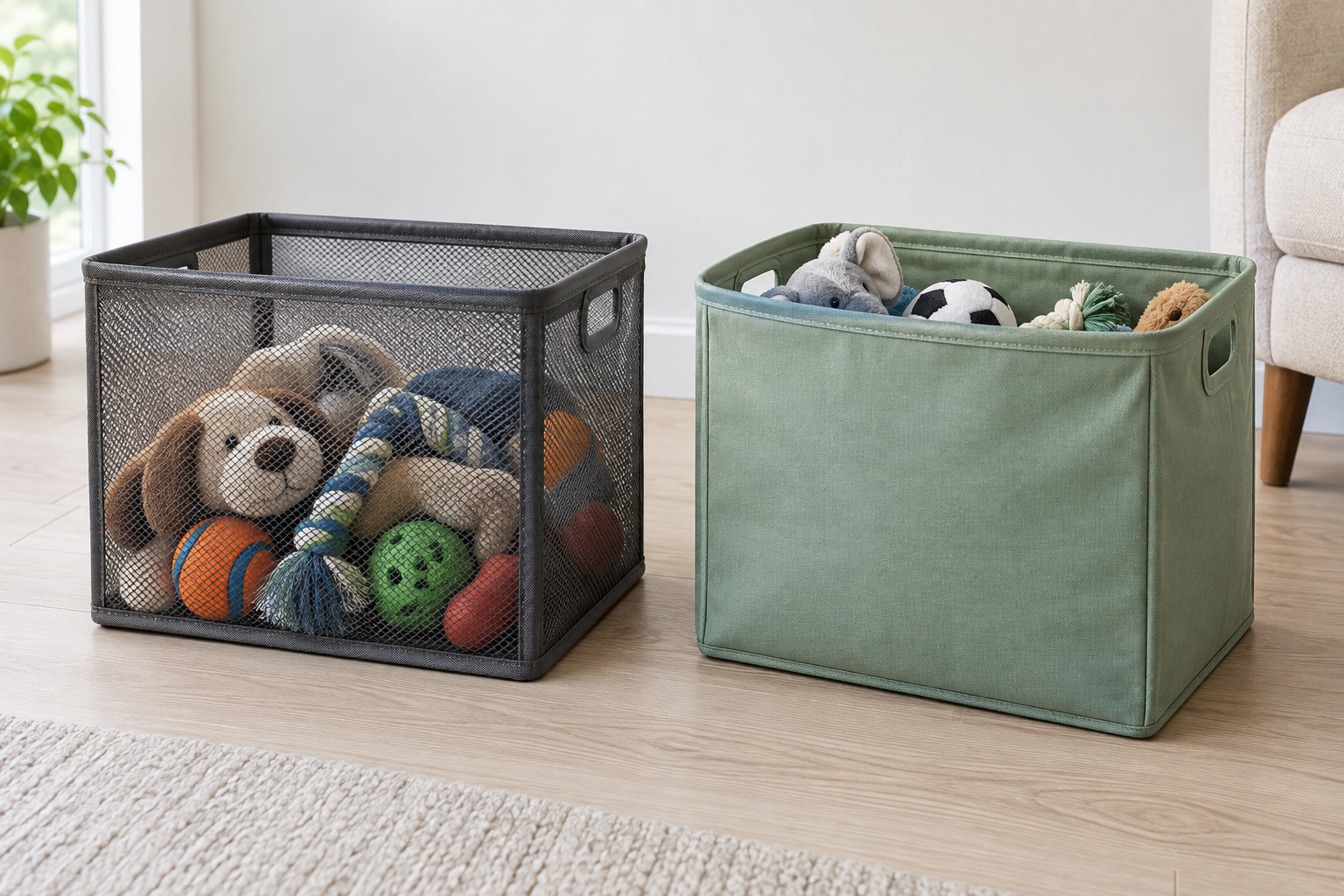
This is a storage-format comparison, not a behavior solution. A bin does not make a damaged toy safe or resolve chewing, swallowing, guarding, or destructive behavior. Remove damaged toys according to their maker's guidance and ask a veterinarian or qualified behavior professional about sudden behavior changes, swallowed pieces, guarding, or other safety concerns.
Quick Comparison
A mesh-sided bin reveals small balls and toys near the bottom without unloading the bin. The tradeoff is a larger surface of openings, bindings, and seams that can catch protruding toy parts, collect hair, or invite chewing.
A solid-sided fabric bin keeps loose fuzz and crumbs inside and presents a calmer visual face to the room. The tradeoff is lower visibility, so owners need to empty or sort it more deliberately to find small items and inspect what has collected at the bottom.
Neither construction guarantees ventilation, dryness, stability, washability, or pet-proofing. Those details depend on the specific materials, frame, base, care label, load, and placement.
Measure the Bin, Toys, and Placement
- Interior dimensions: measure the longest routine toys and allow enough opening width to place and remove them without forcing the walls.
- Useful depth: a deep bin can hide small balls; a shallow bin may let tall plush or rope toys spill into the walkway.
- Base and frame: check whether the bottom is removable or reinforced and whether the sides hold their shape when partly filled.
- Handles: include handles in the total footprint and inspect how they attach. Loose loops may be unsuitable around a pet that mouths fabric.
- Location: keep the bin clear of stairs, doors, vents, cords, and narrow walking paths.
When a Mesh Bin Fits Better
Mesh fits an owner-managed rotation when you want to see the contents before reaching in. It can be helpful for mixed sizes because a missing ball or small toy is easier to spot through the sides. Look closely at the mesh opening and binding rather than assuming all mesh behaves alike.
Inspect the openings against the toys you store. Hooks, frayed ropes, hard projections, tags, and loose threads can snag. Check the frame, corner joints, seams, and base for wear, and stop using the bin if wire, sharp edges, torn mesh, or loose parts appear.
When a Solid-Sided Bin Fits Better
Solid fabric walls fit rooms where you want to contain shed fibers, crumbs, and the visual jumble of mixed toys. They also avoid the many open cells of mesh, though seams, handles, inserts, and folds still need inspection.
Check whether the structure comes from sewn-in panels, a removable insert, or a separate frame. A collapsible bin may fold away neatly but slump when lightly loaded; a stiffer bin may hold its opening while taking more closet space. Follow the care label rather than assuming a fabric bin can go in a washing machine.
Cleaning, Drying, and Routine Inspection
Store only clean, fully dry toys. Mesh openings do not sanitize damp items, and solid walls do not create a sealed clean environment. Keep toys waiting for washing in a separate washable container so moisture and residue do not spread through the current rotation.
Empty the bin on a regular schedule, remove loose debris, and clean it only as directed. Open seams, folds, inserts, and the base so every layer can dry before toys go back. During the reset, inspect toys and the bin for fraying, cracks, exposed structure, loose pieces, stains that do not clean away, or odors that persist after proper washing and drying.
Who Should Skip Each Format?
Skip mesh when toys have parts that catch in the openings, a pet chews the mesh or binding, the frame develops exposed edges, or the surface is impractical to clean. Skip a solid-sided fabric bin when limited visibility causes small or damaged toys to be missed, the walls collapse into the walkway, or the care method does not match the mess.
Skip both as open floor storage when a pet chews containers, swallows fabric or toy pieces, guards the bin, climbs inside, or cannot safely access every stored item. Use an existing closed cabinet, closet shelf, or other inaccessible owner-managed location instead. If the main constraint is room footprint rather than wall construction, use the small-living-room toy storage guide. For a simpler rotation routine, see how to set up a pet toy rotation bin.
Bottom Line
Choose mesh when easy visual checks outweigh the extra snag and seam inspection. Choose solid sides when debris containment and a less cluttered appearance outweigh reduced visibility. Whichever format you choose, size it for the actual rotation, store only clean dry toys, inspect both toys and bin, and use inaccessible storage when open access is not appropriate.