Quick Answer
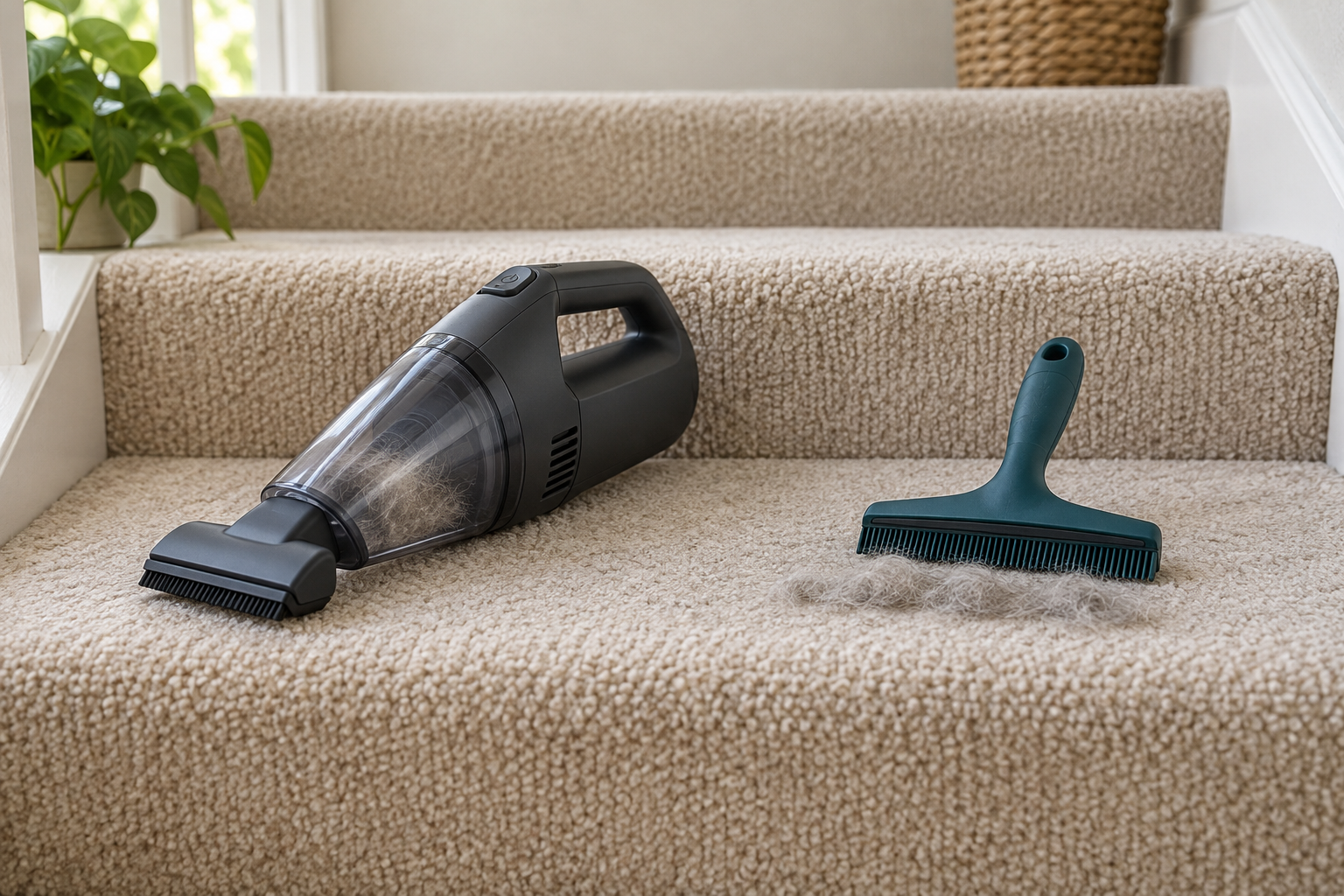
Choose a pet-hair squeegee for frequent, light surface-fur pickup on carpet the tool maker permits. It fits an owner who can work from a stable position, gather the loosened fur, and collect that pile separately.
Choose a handheld vacuum when the stair mess usually includes mixed dry debris, when a compatible upholstery or carpet tool fits the tread and riser, and when the complete machine is comfortable to carry, empty, clean, charge, and store.
Use both only when each has a defined job. A squeegee can gather stubborn visible fur before vacuuming, but a two-tool routine is unnecessary if one suitable tool already handles the normal mess.
Who Each Option Fits
A squeegee fits light, targeted fur pickup
A compact rubber blade or rubber-bristle head can suit open treads, nosing, and corners when hair sits near the surface. It is quiet, simple to store, and ready without charging. It does not collect the pile it creates, and it is a poor substitute for suction when fine dry debris matters.
A handheld vacuum fits mixed stair debris
A compact vacuum can pick up compatible dry fur and debris in one pass when its nozzle contacts the surface well. Prioritize complete operating weight, balance, tool width, bin access, and filter care. A larger bin or powered tool may help a longer cleanup but adds bulk and maintenance.
Practical Tradeoffs
- Cleanup result: a squeegee gathers visible surface fur; a vacuum collects compatible loose material into a bin. Neither guarantees deep carpet cleaning.
- Carpet fit: rubber contact can snag or change some delicate, looped, loose, or damaged carpet. Vacuum brush tools also have surface restrictions. Check both makers' directions.
- Noise: a manual tool is quiet. A vacuum may bother noise-sensitive pets, so let pets move away and clean without turning the appliance into a training exercise.
- Posture: a handheld squeegee gives close control but requires bending or kneeling. A vacuum may reduce repeated gathering yet can strain the wrist as its bin fills.
- Maintenance: a squeegee head needs fur removal, washing as directed, and drying. A vacuum adds bin emptying, filter care, brush or nozzle clearing, charging, and replacement-part planning.
- Storage and cost: manual tools are generally smaller and simpler. Powered tools need a secure indoor charging and storage spot away from water and chewing.
Setup, Use, and Maintenance
Start by checking the carpet maker's care guidance. Test any contact tool gently in an inconspicuous area. Work from a stable position on one broad tread at a time, keep the route clear, and do not overreach across several steps.
With a squeegee, use short light pulls and stop if the carpet snags, lifts, or changes texture. Gather the pile with a dustpan or compatible vacuum, remove hair from the tool, and clean and dry it as directed.
With a handheld vacuum, attach only a maker-approved tool, check that the nozzle and brush are undamaged, and avoid forcing the head into carpet. Empty the bin and maintain the filter according to the manual. Let washable parts dry for the full directed period before reassembly, and charge only in the specified location.
Keep pets away from the stairs during cleanup. A cleanup tool does not identify or treat the cause of shedding. Contact a licensed veterinarian if increased shedding appears suddenly or comes with bald patches, skin irritation, persistent scratching, or another concerning change.
Who Should Skip Each Tool?
Skip the squeegee when the carpet is delicate, loosely looped, fraying, or not approved for rubber contact; when manual stair work is uncomfortable; or when dust and grit are as important as fur. Skip it if gathering the loosened pile creates a second chore you will not complete.
Skip the handheld vacuum when the complete unit is too heavy or awkward for risers, its available tools are not approved for the carpet, the bin or filter routine is impractical, or there is no safe charging and storage location. A corded or lightweight stick vacuum may fit a long staircase better.
Skip buying either when an existing compatible vacuum or manual fabric tool already handles the actual weekly load. One reliable routine is more useful than overlapping tools.
Next Steps for Pet-Hair Cleanup
For manual head shapes and reach, compare pet-hair squeegee varieties for carpeted stairs. For powered-tool details, use the handheld vacuum guide for stairs and cars. If the job extends to rugs and hard floors, compare full-width rubber broom formats.
Bottom Line
A pet-hair squeegee is the simpler choice for quiet, targeted surface-fur gathering on compatible carpet. A handheld vacuum earns its extra weight and upkeep when the stair mess includes mixed dry debris and the right nozzle, balance, charging, and filter routine fit your home. Measure the stairs, follow the surface directions, and buy only the tool that closes a real gap.