Quick Answer
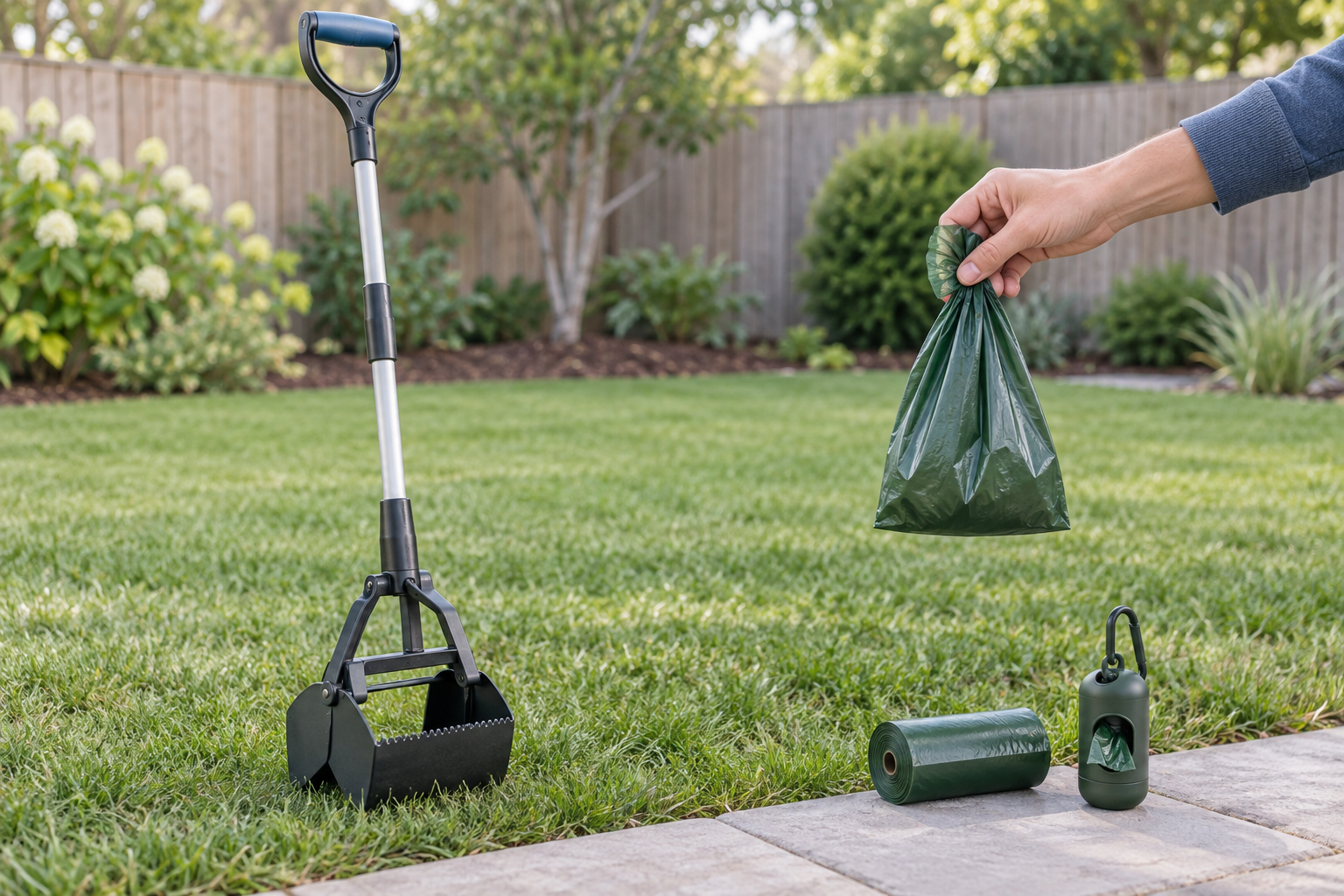
Choose a long-handle scooper when a private yard regularly needs several pickups, the tool is approved for your grass or hard surface, and you have a practical place to clean, dry, and store it away from pets and children.
Choose waste bags when the yard is small, pickup is frequent enough that there are only one or two spots, bending or crouching is comfortable, and you value precise pickup without storing another tool.
Choose neither as a complete plan until you know what your local waste rules permit. A tool changes collection, not final disposal.
Who a Long-Handle Scooper Fits
A handled scooper fits owners who prefer to keep their hands farther from the ground and make one deliberate yard pass. A jaw-style design combines pickup and gripping in one tool. A rake-and-tray set can collect several spots before transfer, but takes two hands and more storage width.
Surface match matters. Wide jaws may work differently on short grass, gravel, mulch, and pavement; rake spacing and tray edge also affect what can be collected cleanly. Follow the maker's stated surface guidance instead of assuming one head works everywhere. Once you choose the reusable-tool route, compare pooper scooper formats for a small yard by measured reach, head shape, cleaning, and storage.
A scooper is less attractive when the route to outdoor storage is long, there is no suitable wash-and-dry area, or a dog can reach and chew the mechanism. It may also be excessive for a tiny yard cleaned after every outing.
Who Handheld Waste Bags Fit
Bags fit a quick, direct routine: take one bag, pick up one spot, turn the bag inside out around the waste, tie it securely, and dispose of it according to local rules. They need little storage and can use the same bag format kept near the walking leash if the dimensions and strength suit the job.
The tradeoff is repeated bending or crouching, close hand control, and a new bag for each pickup or suitably small group of pickups. Check actual bag dimensions and dispenser compatibility; labels such as large or standard are not measurements.
The Practical Tradeoffs
- Reach: A measured handle can reduce bending during pickup. It does not guarantee accessibility or comfort for every user.
- Control: A hand inside a bag can follow uneven ground closely. A jaw, rake, or tray adds distance but may be less precise on mixed surfaces.
- Capacity: Tray sets can hold multiple pickups before transfer. Jaw tools and bags usually encourage smaller batches.
- Consumables: Bags are used during pickup. Some scoopers still need a liner or final disposal bag, so read the complete workflow.
- Storage: Bag rolls fit a drawer or dispenser. Long handles need upright or hanging space where the head can stay contained and dry.
- Maintenance: Bags leave no reusable pickup head. A scooper needs cleaning according to its instructions, complete drying, and recurring checks of hinges, springs, teeth, trays, and handles.
- Cost pattern: A scooper is an equipment purchase that may still use bags; handheld pickup has little equipment cost but an ongoing bag supply.
Setup, Cleaning, and Storage
For a scooper, measure the user's comfortable reach and the path from storage to yard. Confirm the open jaw or tray fits through gates and around landscaping. Assemble the handle exactly as directed, test the mechanism empty, and keep fingers clear of springs and closing jaws.
After use, remove remaining material without scraping the tool against surfaces the maker does not approve. Clean it according to the instructions, let every surface dry fully, and store it where rain, pet access, and foot traffic will not create another problem. Replace the tool if a cracked head, loose joint, sharp edge, weak spring, or unstable handle prevents controlled use.
For bags, keep rolls dry, check for split seams before pickup, and store them away from pets and children. Tie used bags securely and follow local rules for bins, collection, and prohibited disposal methods. Do not flush bags or leave filled bags in the yard.
Who Should Skip Each Option?
Skip a long-handle scooper when its head does not suit the yard surface, the handle length is awkward, the mechanism is difficult to control, or there is nowhere appropriate to clean and dry it. Skip a two-piece set when carrying and storing both parts makes the routine less likely to happen.
Skip handheld bags when repeated bending is uncomfortable or unsafe, the bag size makes pickup unreliable, or direct pickup is a barrier to consistent yard maintenance. Ask another household member or a local service for help rather than forcing a method that does not fit.
Pause and contact a veterinarian if a dog's stool changes suddenly, repeatedly contains blood, is accompanied by vomiting, pain, weakness, or other concerning signs. Cleanup equipment does not diagnose or treat a health problem.
Related Cleanup Guides
For neighborhood walks, compare dog poop bag holders by leash attachment and roll fit. If wipes, keys, phone, treats, and water also need a place, use the dog walking bag guide. Browse the cleanup guide hub for broader home and outing routines.
Bottom Line
A long-handle scooper fits a repeatable multi-spot yard pass when its head, handle, cleaning, and storage all suit the home. Handheld bags fit small, frequent pickups with minimal equipment when direct reach is comfortable. Choose the method you can use consistently, maintain correctly, and complete with lawful disposal.