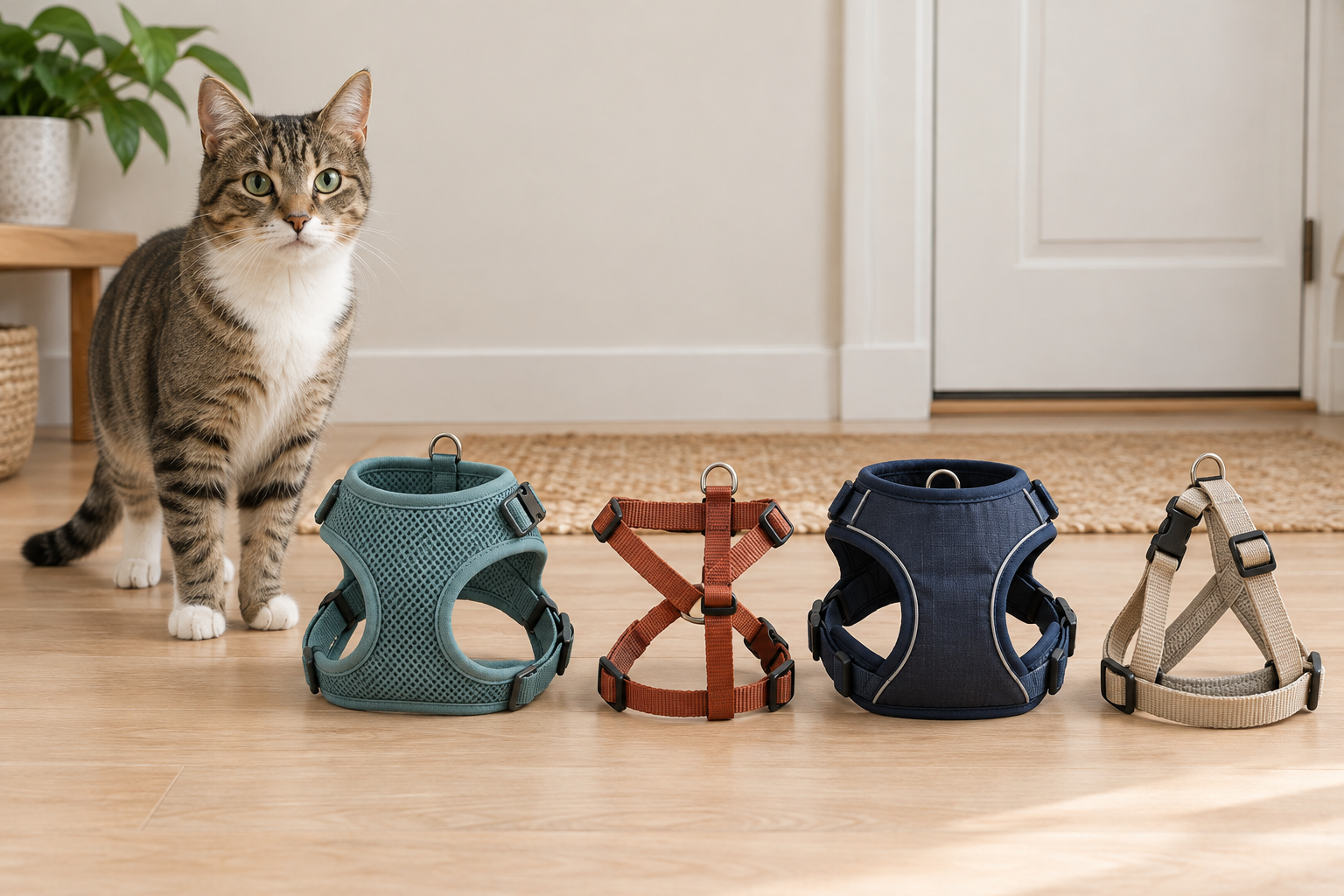
Quick Comparison
Soft vest: offers broad contact, but panel openings and binding edges must match the cat. H-style: uses less fabric and often has several adjustments, but correct strap routing matters. Jacket-style: wraps more of the torso, making panel length and mobility important. Step-in: avoids pulling an opening over the head, but only suits a cat comfortable with deliberate leg handling.
Measure Before Shopping
Use the maker's current instructions rather than a generic size label. Most charts ask for chest girth behind the front legs; some also require neck circumference, back length, or weight. Use a flexible tape, keep it level, and measure the cat standing naturally. If the measurement falls between sizes, follow that maker's direction instead of guessing.
When the harness arrives, compare its actual adjustment range with the measurements before removing packaging that affects returns. Check that the cat can stand, sit, turn, and walk without an edge pressing into the throat or a strap shifting into a leg opening. Recheck after movement because fur can hide loose or twisted straps.
Selection Criteria That Matter
- Adjustment: note which neck, chest, and connecting straps adjust and whether you can reach them without prolonged handling.
- Entry method: choose over-head, wraparound, or step-in according to what the cat already tolerates calmly.
- Closures: check that fur or fabric cannot interfere with buckles, clips, or hook-and-loop panels.
- Attachment: inspect the leash ring, stitching, and surrounding material before every use. Extra rings do not create a safety guarantee.
- Movement: watch the shoulders and front legs indoors. The harness should not twist, gape, or restrict ordinary motion.
- Care: confirm the current care label and drying method; inspect webbing, binding, fasteners, and seams after cleaning.
- Visibility: bright or reflective material may be easier to see but does not make an outing safe or replace supervision.
- Returns: a correctly measured design may still be poorly tolerated, so check trial terms before introduction.
Introduce the Harness Indoors
Begin in a closed, quiet room and follow the maker's directions. Let the cat investigate the harness, then keep early fitting sessions brief. Never drag, lift, or restrain a cat by the harness or leash. Stop if the cat freezes for an extended period, rolls frantically, pants, vocalizes unusually, bites the equipment, hides, or repeatedly tries to escape.
Only consider a short outdoor session after the cat moves comfortably indoors and the equipment has been rechecked. Choose a quiet enclosed area away from traffic, loose dogs, and obvious stressors; maintain close hands-on supervision and have a secure carrier available. Outdoor access is optional enrichment, not a requirement for every cat.
Who Should Skip a Cat Harness?
Skip or delay the category if the cat is fearful of handling, distressed by straps, able to back out during indoor checks, or outside the product's size range. A secure carrier, enclosed cat patio, or indoor enrichment may fit better. Replace any harness with frayed webbing, damaged stitching, cracked buckles, distorted rings, or unreliable closures.
A harness is not a treatment for fear. Ask a veterinarian about pain, breathing changes, skin irritation, mobility problems, or sudden handling sensitivity. If practice involves severe fear, repeated escape attempts, or aggression, pause and consult a qualified cat behavior professional rather than forcing another session.
Related Guides
Browse the outing and travel collection, build a simple outing kit, or choose a cat carrier for nervous vet visits. For a fully indoor option, compare cat window perches for renters.
Bottom Line
The best cat harness format matches the current maker's size chart, adjusts without twisting, permits normal movement, and can be put on without distress. Compare designs by fit and handling—not escape-proof promises—and keep every outing short, optional, and closely supervised.