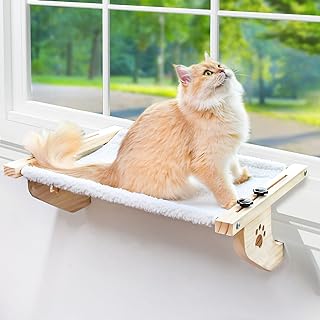
This guide is a practical buying framework, not a safety guarantee. Follow the manufacturer's instructions, check weight limits, inspect mounts often, and skip any perch that feels unstable on your actual window. If a cat has mobility pain, recent injury, sudden behavior changes, or trouble jumping, ask a veterinarian before changing furniture access or adding elevated spots.
Best Overall Fit: A Sill-Supported Perch With No-Drill Hardware
For many renters, the best first choice is a perch that rests on a solid window sill and uses adjustable no-drill supports. It spreads weight across the existing sill instead of depending only on suction cups, and it can often be removed without permanent changes when you move.
Measure sill depth, window width, blind clearance, and the space below the window before buying. A stable-looking product photo does not matter if the bracket cannot sit flat, the cover blocks your blinds, or the perch lands where people bump it every day.
Best for Windows Without a Useful Sill: A Freestanding Window Bed
A freestanding window bed or low cat stand can be the renter-friendly answer when the window has shallow trim, fragile paint, unusual molding, or lease rules that make mounted products risky. It sits on the floor and gives the cat a window view without attaching to glass or trim.
The tradeoff is floor space. Freestanding options can crowd small rooms, so check the footprint, height, and walking path. Choose a base that feels steady on your flooring, and avoid tall narrow stands that wobble when a cat jumps up or down.
Best Compact Option: A Suction-Cup Window Perch
A suction-cup perch can work well when you have smooth glass, a lighter cat within the stated limit, and the patience to clean and inspect the cups. It keeps the floor clear and can be removed without holes, which is why it is popular in apartments.
Do not treat suction cups as a set-and-forget mount. Clean the glass and cups as directed, check for slipping, replace worn parts, and keep the area below clear enough that a failed cup does not turn into a dangerous landing. Skip this style for textured glass, loose panes, cracked windows, damaged seals, or cats who launch hard onto furniture.
Best for Easy Cleaning: A Perch With a Removable Washable Cover
Window perches collect fur, dander, dust, pollen, litter crumbs, and sun-warmed odors. A removable washable cover is worth prioritizing, especially in small apartments where one sunny window can become a daily resting spot.
Look for a cover that detaches without taking the whole perch apart, dries reasonably fast, and fits back tightly after washing. If you already own a sound frame with worn fabric, compare washable replacement perch covers by exact fit and attachment. Skip plush covers with deep seams if you know you will not clean them often or if your cat tracks litter into favorite resting places.
Best for Sunny Rooms: A Perch With Shade and Heat Awareness
A warm window can be lovely, but direct sun can make a perch uncomfortable quickly. Choose a setup that lets your cat leave easily, and keep water and cooler resting spots available elsewhere in the home.
Watch the window at different times of day before placing the perch. If the glass area becomes hot, glare-heavy, or drafty, move the perch or choose a nearby freestanding option instead. A window perch is enrichment, not a reason to leave a cat stuck in heat, cold, or bright sun.
Selection Criteria That Matter
Choose around the rental constraint first, then the cat's size, confidence, and cleaning routine.
- Mounting method: No-drill sill supports, suction cups, and freestanding beds solve different rental problems.
- Window fit: Measure sill depth, window width, blind clearance, trim shape, and nearby furniture before buying.
- Weight limit: Use the manufacturer's stated limit conservatively, especially for cats who jump hard or share resting spots.
- Inspection access: Pick a setup you can check often for loose cups, shifting brackets, worn cords, cracked plastic, or bent supports.
- Cover cleaning: Removable washable covers are easier to maintain than fixed plush surfaces.
- Sun and draft exposure: Make sure the cat can leave the perch and has cooler or warmer alternatives nearby.
- Room flow: Avoid perches that block curtains, walking paths, radiators, door swings, or furniture you use every day.
- Cat temperament: Nervous, senior, very large, or energetic cats may need a lower, steadier, easier-to-enter setup.
Comparison Framework
Use the window and lease restrictions to narrow the style before comparing colors or cushion shapes.
- No-drill sill perch: Best for sturdy sills where you want more support than suction cups alone.
- Freestanding window bed: Best for shallow trim, fragile paint, strict leases, or windows that should not support a perch.
- Suction-cup perch: Best for smooth glass, compact rooms, lighter cats, and owners who will inspect the mount often.
- Foldable perch: Best when blinds or curtains need occasional access, as long as folding parts do not pinch or loosen.
- Wide cushioned perch: Best for cats who sprawl, with extra attention to weight limit and cover cleaning.
Who Should Skip a Cat Window Perch for Now
Skip a mounted window perch if the window is cracked, loose, textured, drafty, unusually hot, hard to inspect, or above furniture with sharp edges. Skip suction-cup styles if you will not clean and check the cups regularly. Skip high perches for cats who are unsteady, recovering, limping, or showing signs of pain until a veterinarian weighs in.
Also skip any setup that encourages a cat to paw at screens, lean against open windows, chew cords, or fight with another pet over a narrow resting spot. A perch should make the room calmer and more usable, not create a new risk point.
Set It Up Like a Renter
Before installation, read your lease, check whether adhesive or pressure hardware is allowed, and take a close look at paint, trim, blinds, and glass condition. Keep packaging and instructions until you know the perch fits the room, and avoid improvised mounting that the manufacturer does not support.
After setup, test the perch gently by hand before inviting your cat over. Keep early sessions supervised, inspect the supports daily at first, and move the perch if your cat seems hesitant, jumps awkwardly, or uses nearby furniture in a way that makes the landing unsafe.
Related Enrichment Guides
A window perch can be one part of an indoor enrichment routine, especially for cats who enjoy watching outdoor movement from a secure indoor spot. If your shortlist is down to two mounts, compare a suction-cup and sill-mounted cat window perch by exact window geometry and inspection needs. For the broader enrichment framework, start with how to choose supervised pet puzzle toys, then compare cat puzzle feeders for indoor enrichment. For scratch outlets in tight rentals, read cat scratching posts for small apartments.
If you are building a simple rotation of toys and activities, our guide to setting up a pet toy rotation bin can help keep the room from turning into a pile of supplies.
The Bottom Line
For most renters, start with a no-drill sill-supported perch if the window and trim can handle it, or a freestanding window bed if mounting feels risky. Choose suction cups only when the glass is appropriate and you are willing to inspect the setup often.
The goal is a comfortable lookout spot that fits the room, respects the rental, and stays easy to clean and check. If the perch depends on wishful mounting, blocks the room, or creates a hard landing, it is not the right choice for that window.