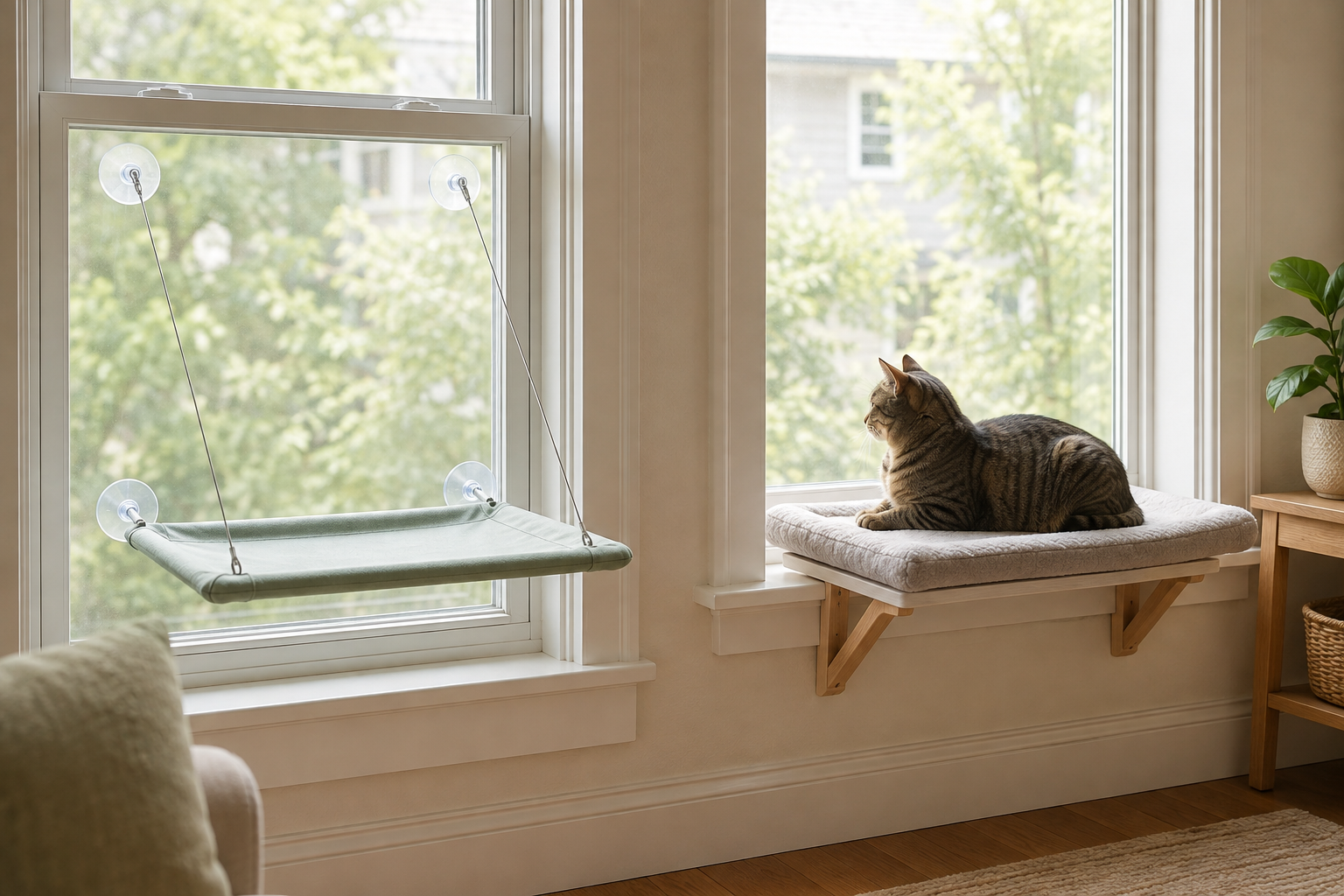
A window perch is an enrichment and resting accessory, not a fall-prevention device or a solution for pain, weakness, or mobility changes. Keep windows closed and securely latched, follow the exact product instructions, and supervise the first uses.
Quick Comparison
Choose suction cups when the maker permits your smooth, clean glass type; the clear pane fits every cup and cable; blinds and handles stay clear; and you will inspect the attachment regularly.
Choose sill-mounted when a firm, level sill meets the stated depth and trim requirements, the braces can sit as directed, and your lease or property rules allow the contact points.
Choose neither mounted format when the window is cracked, textured, loose, unusually hot, hard to inspect, or incompatible with the instructions. A stable freestanding bed near a closed window may be simpler.
Measure the Window, Not Just the Platform
Record the unobstructed glass width and height, sill depth, trim projection, distance to handles, and space taken by blinds or curtains. For a suction design, map every cup and cable attachment—not only the sleeping deck. For a sill design, check where its feet, clamps, or braces must contact the sill and wall.
Compare the usable resting area with your cat's normal curled and stretched positions. Do not count frame edges, raised hardware, or unsupported fabric as usable room. Check the manufacturer's current weight limit and whether it covers one cat or the total load of more than one.
How the Two Mounts Change Daily Checks
Suction cups depend on glass condition, correct preparation, and an attachment that remains easy to see. Follow the maker's cleaning and reattachment schedule. Before use, look for lifting cup edges, shifted cables, stretched fabric, loose connectors, or changes in the window surface.
A sill-mounted perch shifts the checklist to the ledge, braces, fasteners, and trim contact. Confirm that nothing has walked sideways, loosened, bowed, or marked the surface. Do not add homemade shims, adhesives, screws, or replacement hardware unless the manufacturer explicitly supports them.
Entry, Exit, and Cat Fit
Watch how your cat approaches and leaves a low, stable trial surface before choosing a perch height. The route should not require an awkward leap around curtains, cords, plants, furniture corners, or another pet. Keep blind cords and support cables arranged according to instructions and out of chewing or entanglement situations.
Some cats simply avoid a moving fabric deck, narrow ledge, enclosed cover, or sunny location. A wider platform is not automatically better if it blocks the window, exceeds the mount's geometry, or leaves no comfortable route. Give your cat a choice of resting places rather than placing food or water on the perch to pressure its use.
Sun, Glass Temperature, and Room Comfort
Check the spot at several times of day. Direct sun can warm the platform and glass, while drafts can make the same window uncomfortable later. Move the perch or close access when the surface or room conditions are unsuitable; shade and room ventilation still matter indoors.
Keep the closed window and screen in good repair, but do not treat a screen as a pet barrier. A perch that encourages pawing at a damaged screen or leaning on an open window should be relocated.
Cleaning and Cover Care
Removable covers can simplify fur and spot cleanup only when their laundering directions suit your routine. Check whether the full fabric deck, cover alone, or padding can be washed, how it dries, and whether it must be completely reassembled before use. If the frame is sound but the cover is worn, use the washable replacement perch-cover guide to check exact fit and attachment. Wipe hard parts only as directed so cleaners do not damage cups, finishes, or fabrics.
Stop using the perch if fabric tears, seams open, tubing bends, hardware corrodes, suction cups crack, or attachment parts no longer hold as intended. Ask the manufacturer about exact replacement parts rather than improvising a repair.
Who Should Skip a Mounted Window Perch?
Skip both styles when you cannot verify the window condition, exact fit, required attachment, stated limit, or routine inspections. Skip a higher perch for a cat who is limping, unsteady, recovering, reluctant to jump, or showing a new movement change until a veterinarian advises on the underlying concern and a suitable setup.
Renters should also skip any mount that conflicts with the lease or could damage glass, trim, paint, or seals. If cats compete over the same spot, provide separated resting options rather than expecting one narrow platform to solve the conflict; a qualified behavior professional can help with persistent tension.
Bottom Line
Suction-cup perches suit compatible smooth glass and owners willing to maintain a visible attachment system. Sill-mounted perches suit a measured, structurally appropriate ledge and can avoid relying on glass, but they need their own trim, brace, and permission checks. The better choice is the one whose exact directions match the actual window and whose platform fits your cat's calm, supervised use.
For other mounting formats and renter constraints, continue with the complete cat window perch buying guide. For a floor-level enrichment path, browse the enrichment and play pillar.