 Low-profile pull-on covers
 Structured double-strap boots
Dog boots are walking accessories, not treatment for sore, cut, irritated, or injured paws, and no boot makes a route or surface risk-free. If your dog is limping, licking a paw repeatedly, resisting weight-bearing, or showing swelling, bleeding, cracks, or persistent redness, skip the walk and contact a licensed veterinarian. Use a qualified trainer or behavior professional when handling paws causes fear or defensive behavior.
Measure Every Paw Before Choosing a Size
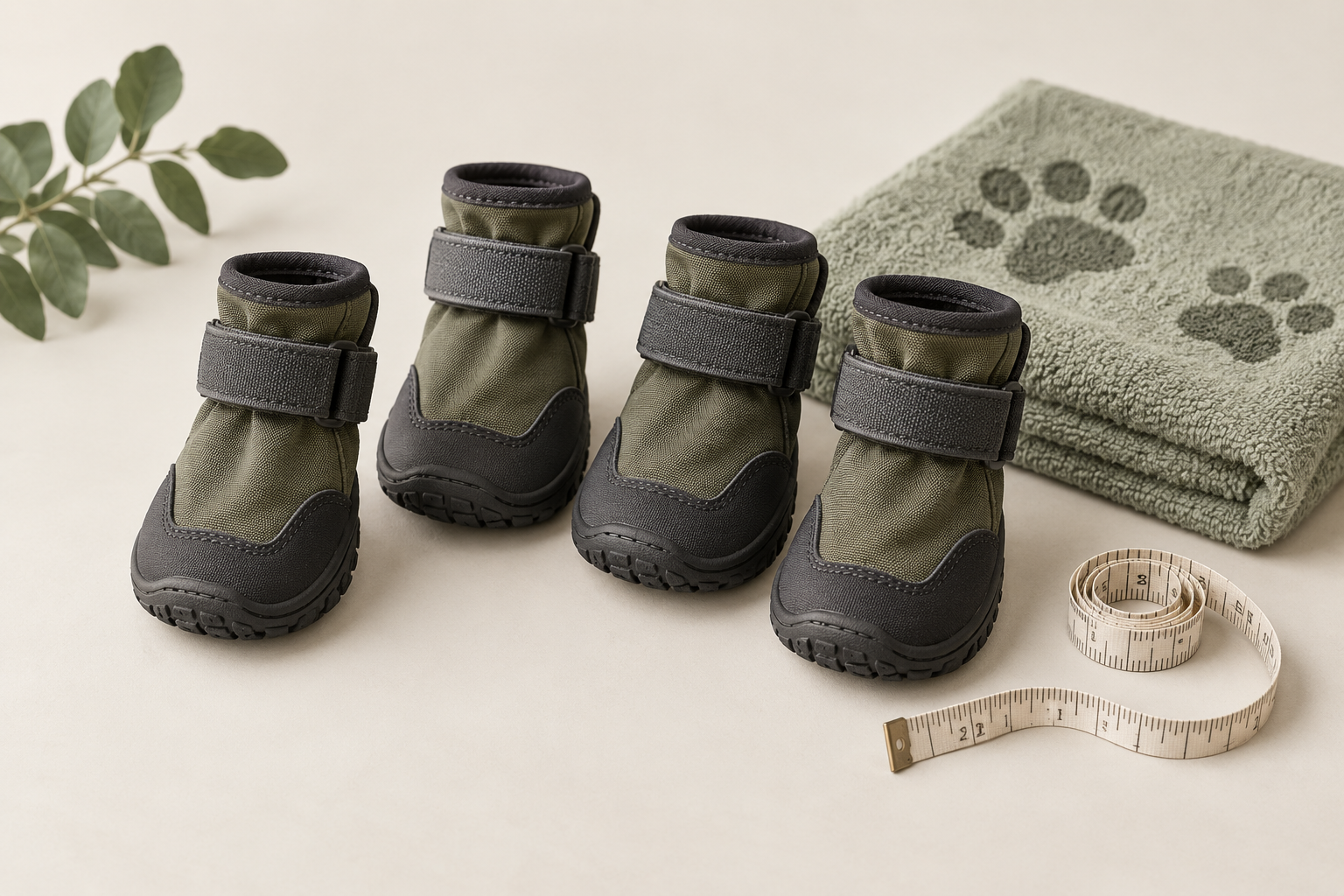
Follow the current maker's method rather than assuming size from breed or body weight. Many charts ask for paw width while the dog is standing so the toes spread under normal weight; others also use paw length. Measure front and rear paws separately because they may not match, and keep the tape, pen, or paper away from chewing.
Compare the actual measurement with the listed size range, not just labels such as small or large. If a paw sits on a boundary, use the manufacturer's guidance or ask the seller instead of guessing. A boot that twists, slides off, presses on toes, or leaves obvious rubbing is not a workable fit.
Choose the Least Complicated Shape That Fits the Job
Flexible single-strap boots
This is the practical first category for many ordinary wet-walk routines. A flexible sole can be less bulky than a structured tread, while an adjustable closure can be easier to tune than a pull-on opening alone. Compare the opening width, strap path, seam placement, sole flexibility, and whether individual replacements are offered.
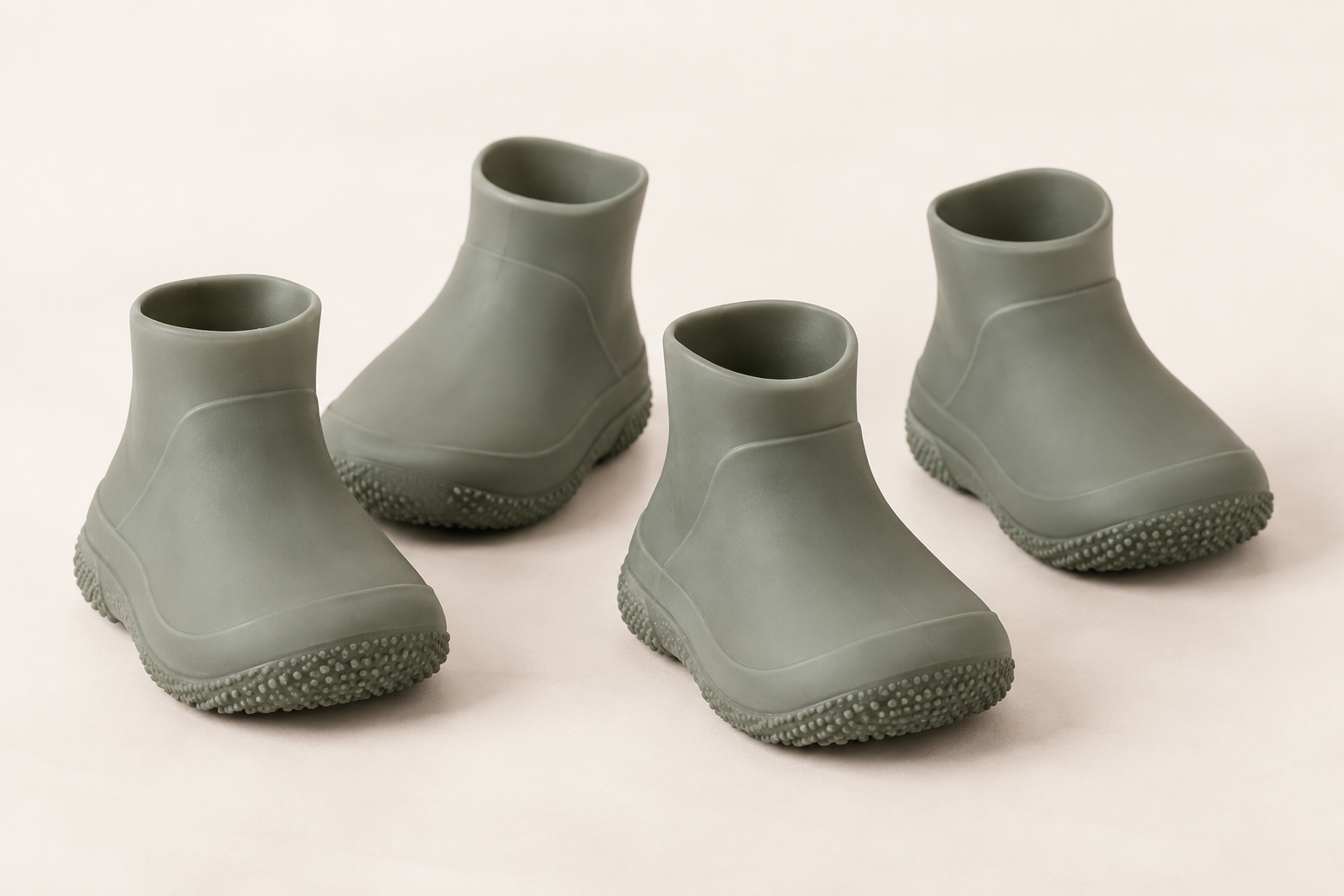
Low-profile pull-on covers
A short pull-on cover reduces fabric around the lower leg and may rinse quickly, but retention depends heavily on opening shape and exact paw fit. Check how the cover is put on and removed, whether the material can be opened for cleaning, and what the maker says about reuse. Skip a shape that rolls, pinches, traps debris, or cannot be dried completely.
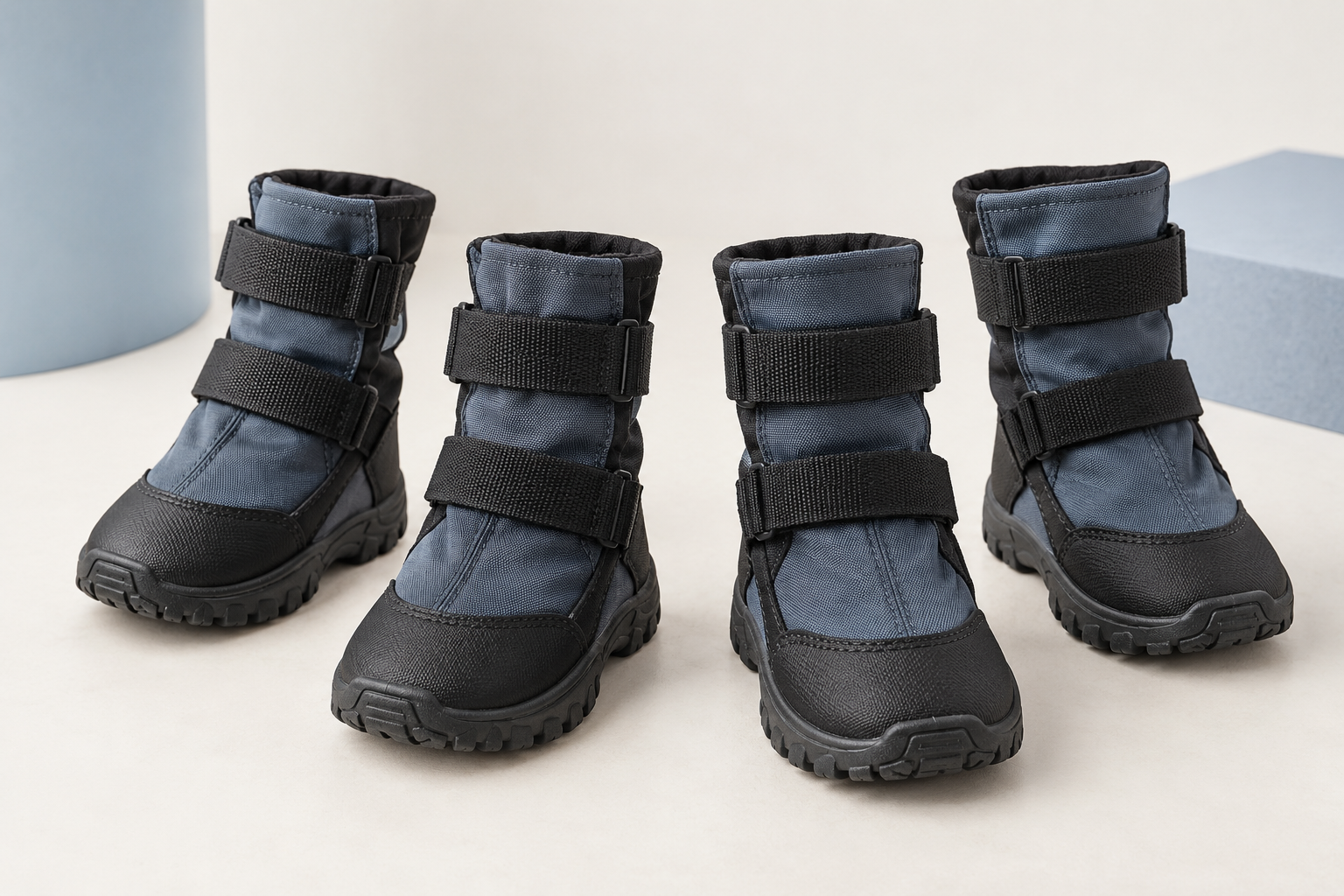
Structured double-strap boots
A taller upper and second strap add adjustment points and coverage, but also add bulk, seams, and damp material. This format can take longer to put on, inspect, wash, and dry. It is a poor choice when the dog dislikes clothing around the lower leg or when the short route does not justify the extra setup.
Check Closures Without Overtightening
Look for a closure range that overlaps securely at the measured leg position without sitting on a joint or catching fur. Fasten according to the maker's directions, then watch the dog walk indoors on a clear floor before heading out. Stop if the boot rotates, folds under, slips, or causes persistent pawing or distress.
Straps and fasteners wear. Before each use, inspect stitching, hook-and-loop surfaces, buckles, elastic, and any reflective trim. Retire damaged footwear rather than adding improvised ties, tape, or loose parts that the dog could chew.
Tread Is a Construction Detail, Not a Guarantee
Compare the sole's flexibility, texture, edge shape, and attachment to the upper. A deep tread may hold more mud and take longer to scrub, while a very smooth or stiff sole may not suit the way your dog moves. Product wording such as nonslip or all-weather does not guarantee footing on every surface. Keep walks conservative, avoid surfaces you cannot assess, and turn back if the dog struggles.
Plan the Cleaning and Drying Route
Remove boots promptly after the walk in a dry, well-lit spot. Check each paw and the inside of every boot for grit, trapped moisture, folded fabric, or damage. Follow the care label; do not assume every fabric, coating, closure, or sole can go into a washing machine or dryer.
Open straps and uppers so air can reach damp areas, and let every boot dry completely before closing it into a bag or bin. A washable boot bag can organize already-clean, dry gear, but it should not become sealed storage for wet footwear. Keep a dedicated paw towel nearby for days when boots are unnecessary.
Introduce Boots in Short, Calm Sessions
Let the dog inspect the boots, then practice handling one paw and fastening one boot for a brief indoor session. Do not force a full set and a long walk at once. Reward calm participation with something already appropriate for your dog, and stop before frustration builds. If your dog freezes, panics, mouths the boots, or guards their feet, remove the gear and reassess.
Food rewards still count toward the dog's usual intake. Ask a veterinarian before changing food or portions, and seek qualified behavior help when paw handling is unsafe or persistently distressing.
Who Should Skip Dog Boots?
- Dogs with painful or injured paws: contact a veterinarian instead of covering the problem.
- Dogs that chew or swallow gear: use a simpler cleanup routine and keep boots inaccessible.
- Owners who cannot supervise fit: boots need checks during and after use.
- Very short, manageable routes: a towel, washable mat, and doorway cleanup station may be easier.
- Pairs that stay damp: if drying space is inadequate, extra footwear creates another maintenance problem.
Quick Buying Checklist
- Use the current maker's standing-paw measurement method.
- Measure front and rear paws rather than assuming they match.
- Check opening size, closure range, boot height, and sole flexibility.
- Confirm whether the listing is a pair, a set of four, or another count.
- Read cleaning and drying instructions before buying.
- Look for replacement singles if one boot may wear first.
- Inspect fit indoors and supervise every use.
- Skip claims that promise universal traction, injury prevention, or medical benefit.
Bottom Line
Start with a flexible single-strap dog boot when the goal is simply to make brief wet or muddy walks more manageable. Choose a low-profile pull-on cover only when its opening and retention suit the measured paw, or a taller structured boot when the extra upper, fastening, and drying work have a clear purpose. The right category fits each paw, stays aligned without overtightening, tolerates the real cleanup routine, and remains acceptable to the dog.
For the rest of the setup, use the walking and travel guide hub. If body coverage matters more than paw coverage, compare dog raincoats for quick wet walks. For cleanup, build a practical doorway station.