Quick Answer
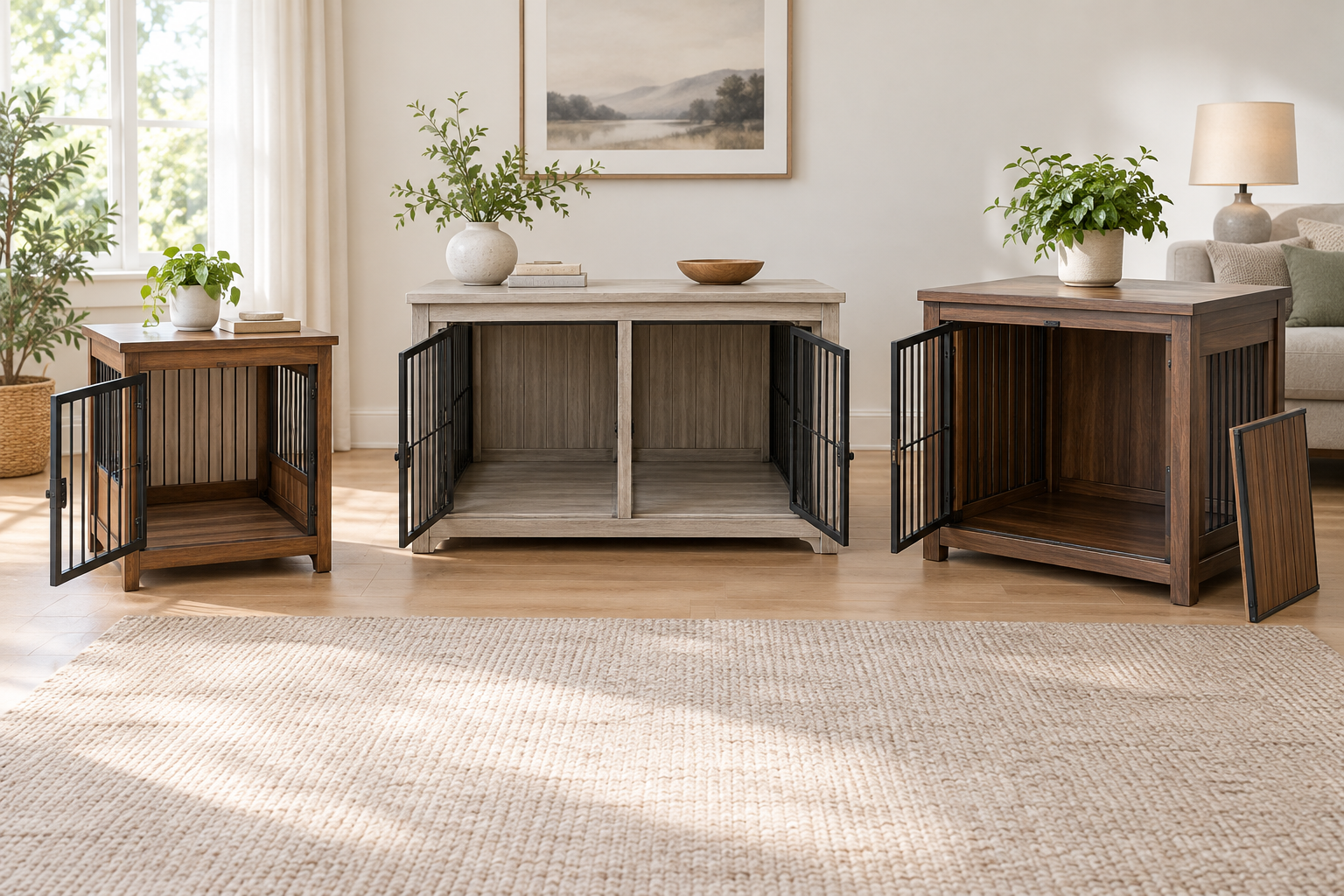
Start with a compact end-table format when one properly sized enclosure and one unobstructed door fit a measured corner. Compare a low console double-door format when alternate entry points solve a real room-layout problem. Consider a removable-divider format only when the maker clearly documents the divider configuration and its usable spaces.
Furniture styling is not a reason to crate a dog that is not already comfortable with appropriate confinement. If a dog panics, drools heavily, injures the mouth or paws, bends bars, damages panels, repeatedly tries to escape, or shows marked distress, stop using the crate and ask a veterinarian or qualified reward-based trainer for help.
Measure the Dog, Interior, and Room
Measure the individual dog in the positions relevant to the crate maker's fit guidance, then compare those measurements with the listing's usable interior dimensions—not its exterior cabinet size or breed label. A thick frame, center divider, raised base, or hardware can reduce usable space.
On the floor, tape out the full exterior width and depth. Add every open-door arc, projected handle, base trim, and any maker-required wall clearance. Walk the normal route to the sofa, doorway, outlet, and cleaning area. A unit that fits while closed can still obstruct a narrow living room when its door is open.
How the Formats Differ
Compact end-table crates
A compact cabinet may fit beside a sofa while supplying a small top surface. The tradeoff is that one door position can limit placement. Confirm the door opening and swing remain clear, air can circulate as directed, and the tabletop's current load and use restrictions suit the household.
Low console double-door crates
A wider, lower console can provide another access point and a longer top. It also occupies more wall and floor space, adds another latch to inspect, and may place one door against furniture. Count only doors that can remain fully usable in the planned room.
Removable-divider crates
A maker-approved divider can change how a cabinet is configured, but it does not create extra space. Check what the maker says the divider is for, how it attaches, whether it changes openings or ventilation, and whether every configured area remains appropriate. Do not improvise panels or use a divider to crowd dogs together.
A Practical Buying Checklist
- Usable interior: Compare actual internal length, width, height, and obstructions with current manufacturer fit guidance.
- Complete footprint: Include trim, feet, handles, open doors, walking clearance, and required wall clearance.
- Doors and latches: Check opening dimensions, hinge paths, latch operation, and access from the planned furniture position.
- Ventilation and visibility: Follow the maker's placement instructions; never block openings with walls, blankets, or nearby furniture.
- Materials and condition: Inspect bars, panels, joins, fasteners, edges, finish, floor, and removable parts. Stop using damaged equipment.
- Cleaning access: Confirm whether the base or tray removes, which surfaces can be cleaned, and where parts can dry fully.
- Assembly and moving: Check assembled weight, required tools, leveling instructions, and whether the unit can reach the room through doors and turns.
- Top surface: Follow current load, heat, liquid, and object-placement restrictions. Keep cords, lamps, plants, and reachable items away from the dog.
- Return terms: Verify them before assembly or use, especially when interior fit cannot be assessed from exterior measurements.
Who Should Skip a Furniture-Style Crate?
Skip this category when the dog is not already comfortable with appropriate crate use; interior measurements or maker guidance do not establish a suitable fit; the dog chews, scratches, bends, or pushes hard against confinement equipment; the room cannot preserve ventilation and door clearance; cleaning access is awkward; or an existing suitable crate already has a safe, workable place.
Choose an ordinary wire or plastic crate instead when portability, direct inspection, a removable tray, or a less bulky exterior matters more than matching furniture. A crate is not a treatment for separation-related distress, destructive behavior, house-training difficulty, or aggression, and it is not a substitute for exercise, social contact, toilet breaks, veterinary care, or qualified training support.
Related Guides
Compare wire and plastic dog crates for temporary home use if cabinet styling is not essential. For occasional storage or travel, see foldable crate formats. If bedding is the real decision, use the crate mat versus dog bed guide after confirming the crate maker permits bedding for the individual dog.
Bottom Line
The best furniture-style dog crate is the format whose usable interior, open-door footprint, ventilation, construction, cleaning access, and maker restrictions fit both the dog and the living room. Measure the inside and outside separately, preserve every working clearance, and skip the category when ordinary crate construction or no crate better serves the routine.