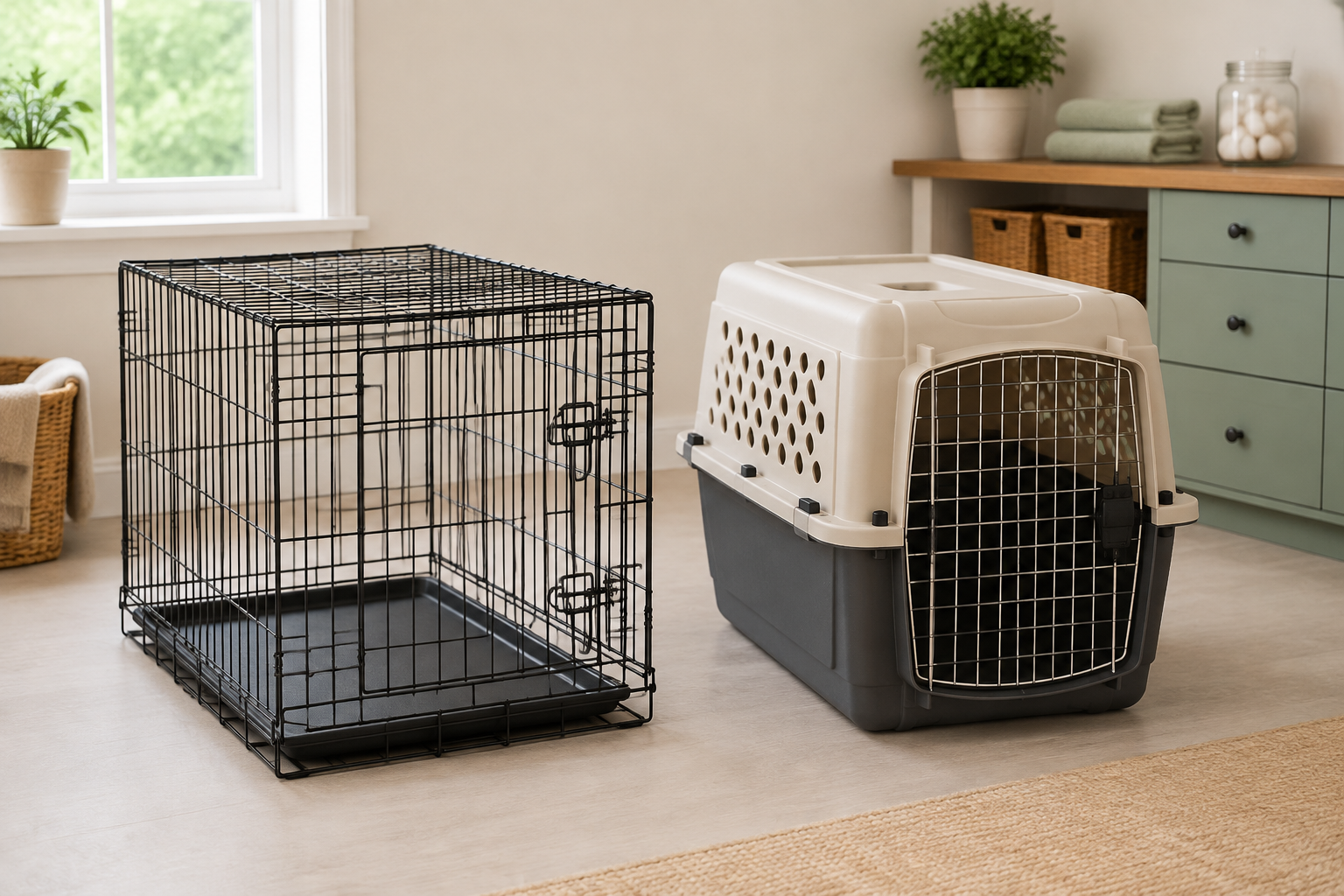
A crate is a management tool, not a treatment for anxiety, distress, barking, or destructive behavior. Use a crate only for a dog already comfortable with an appropriate routine. Repeated escape attempts, panic, self-injury, sudden behavior changes, or difficulty settling call for advice from a veterinarian or qualified trainer.
Quick Comparison
Choose wire when you need the crate to fold between visits, want broad visibility and airflow, and can inspect and secure every setup point. Choose plastic when a rigid, more enclosed shell fits the dog and room and you have storage for its assembled shape. Skip buying when a safe familiar setup already works or the need is too brief to justify storing another large item.
Measure Usable Interior Space, Not the Size Name
Record internal length, width, and height rather than relying on a nominal size. The dog needs room to stand naturally, turn around, and rest comfortably. Interior space can be reduced by sloped plastic walls, raised door thresholds, dividers, bowls, or thick bedding. Follow the crate maker's sizing guidance and check that the door opening suits the dog's body and normal movement.
Place the measured crate in the planned room on paper first. Allow the full door swing, access to latches, ventilation on every required side, and a clear household walking route. Neither crate should block an exit, heater, vent, or frequently opened cabinet.
Setup and Storage Favor Different Routines
Wire crates commonly collapse, but folding is useful only if the latch and panel sequence is manageable and the packed crate fits the intended closet, wall, or vehicle space. Record folded dimensions and product weight. Protect hands from pinch points and confirm every panel is locked before use.
Plastic crates generally separate into upper and lower shells or remain assembled. Check the maker's fasteners and assembly directions; do not improvise missing hardware. Their rigid shape may be simpler to move while empty, but carrying points are not permission to lift a dog inside unless the manufacturer specifically directs that use.
Visibility, Ventilation, and Household Activity
Wire offers open sight lines. That can help in a calm familiar room, but it also exposes the dog to passing people, other pets, and visual activity. Plastic sides reduce some sight lines while keeping dedicated ventilation openings. Neither construction guarantees calm, comfort, or suitable airflow in every location.
Do not cover ventilation openings or drape loose fabric where it can be pulled inside. If room activity is the real decision, compare a crate cover with a quiet-room setup and keep professional-help boundaries in mind.
Doors, Latches, and Damage Checks
Check door opening dimensions, hinge movement, latch engagement, bar or opening spacing, and any sharp or unfinished edges. A second wire-crate door can improve furniture placement, but it also adds another latch to verify. On plastic crates, inspect the door frame, shell connection points, vents, and fasteners.
Stop using a crate with bent wire, broken welds, sharp edges, cracked plastic, loose hardware, a distorted door, or a tray that no longer sits correctly. Replacement parts only make sense when the manufacturer permits them and the remaining structure is sound.
Cleaning and Floor Protection
A removable wire-crate tray can simplify routine debris cleanup, while a plastic lower shell contains the floor area in one molded piece. Compare how each component is removed, washed, rinsed, and dried according to current maker directions. Crate seams, wire intersections, door hardware, and shell fasteners still need inspection.
Place either crate on a stable, level surface and check what the feet or base do to the floor. A fitted mat may add comfort for a dog that can use one safely, but it reduces interior space and must stay clean and intact. See the crate mat guide for material and fit criteria.
Who Should Skip Each Format?
Skip a wire crate when its open exposure conflicts with the established routine, the dog can catch tags or paws on unsuitable spacing, or you cannot verify the folding locks each time. Skip plastic when interior taper makes the measured fit too tight, ventilation would be obstructed, the shell or hardware is damaged, or assembled storage is unrealistic.
Skip both as a temporary experiment for a dog showing distress. A veterinarian can help rule out medical contributors to a sudden change, and a qualified trainer can help plan gradual crate or room-management work without treating confinement as a shortcut.
Bottom Line
Wire is usually the practical choice when flat storage, broad visibility, and flexible door placement lead the decision. Plastic is the practical choice when a rigid, more enclosed shape fits the dog, room, and storage plan. Measure the usable interior and the complete household setup, inspect the hardware, and choose the format that supports an already appropriate routine.
Continue through the comfort and home-setup pillar or compare foldable dog crates for occasional guests.