 Meow Town Concord Cat Litter Cabinet
 New Age Pet ecoFLEX Litter Loo
This guide is a measurement and use-case comparison, not a hands-on test. An enclosure can make a litter area look more intentional, but it does not guarantee odor control, stop all tracking, or suit every cat. Daily scooping, an appropriate litter box, and your cat's willingness to enter matter more than the furniture finish.
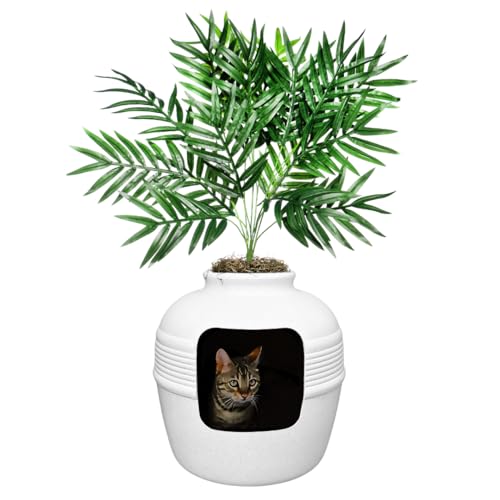
Best Compact-Looking Planter: Good Pet Stuff Original Hidden Litter Box
This planter-style model is the first option to compare when you have an awkward corner but no natural place for a rectangular end table. Because the litter area is built into the round base, there is no separate pan-to-cabinet fit calculation.
The tradeoff is access. Cleaning a shaped, covered base can feel different from pulling a pan through a wide cabinet door, and the plant makes the unit taller even though it does not add usable storage. Check the current entrance and overall dimensions, and leave enough room to lift or separate the top during a full clean.
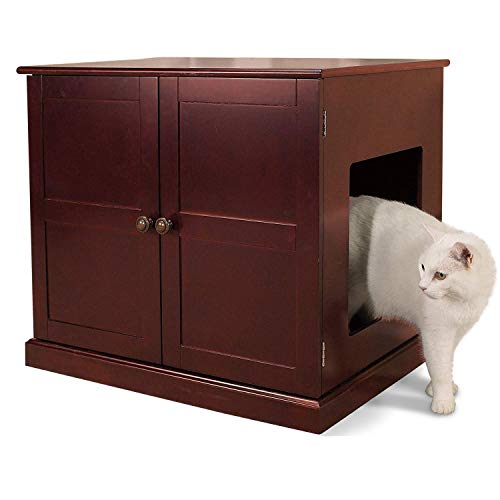
Best Traditional End-Table Shape: Meow Town Concord Cat Litter Cabinet
The Meow Town Concord is the more conventional furniture route: a rectangular cabinet that can sit beside a sofa or against a wall. Compare it when a flat top earns its footprint and the cabinet's usable interior fits your existing litter pan with clearance around the rim.
A cabinet is only space-efficient when its doors can open fully. Tape the exterior outline on the floor, then mark the door swing and cat entry side. If the open door blocks a hallway or you cannot reach the pan without moving nearby furniture, the attractive closed footprint is misleading.
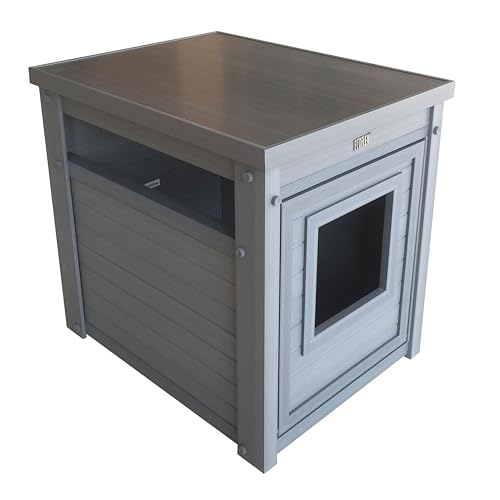
Best Wipe-Clean Cabinet Material: New Age Pet ecoFLEX Litter Loo
The ecoFLEX Litter Loo is worth comparing when wipe-down surfaces and a flip-down access panel matter more than a wood-furniture look. Its cabinet format can double as an end table, but the top should stay lightly loaded so regular cleaning does not become a furniture-moving project.
Confirm the current model's usable interior and opening rather than assuming a standard litter pan fits. Composite panels also do not remove the need for a washable liner or quick cleanup when litter or moisture escapes the pan.
Selection Criteria That Matter
- Usable interior: Compare inside width, depth, and height with the litter pan, including rim, handles, scoop holder, and room to lift or slide it out.
- Entry size and route: The opening should suit your cat without a tight turn, high step, or narrow tunnel that changes how the box is used.
- Cleaning access: Wide doors, removable tops, or flip-down panels should expose the whole pan without requiring you to dismantle the setup.
- Ventilation: Enclosures need openings and consistent scooping. Furniture cannot make waste odor disappear, and heavy fragrance may make the area less acceptable to a cat.
- Floor plan: Include door swing, wall clearance, baseboard depth, nearby outlets, walking paths, and the space needed to kneel during cleaning.
- Material: Sealed or wipeable surfaces are easier to maintain than raw edges. Protect seams from moisture and follow the maker's cleaning directions.
- Stability and assembly: Build the unit on a level floor, use included anti-tip hardware when instructed, and do not overload a top surface.
- Litter mat fit: Leave a usable landing area outside the entrance. Our litter mat guide explains texture, size, and cleaning tradeoffs.
Quick Comparison Framework
- Planter enclosure: Useful for a corner or visually soft setup; less useful when you want a flat storage surface.
- End-table cabinet: Useful beside furniture when door swing and interior fit work; harder to clean in a cramped passage.
- Bench enclosure: Offers more interior width and sometimes storage; usually consumes too much floor space for the smallest rooms.
- Two-room cabinet: Can create a litter-catching path; adds footprint and may create turns some cats dislike.
- Open litter box: Often the better choice when cleaning access, cat acceptance, mobility, or budget matters more than concealment.
Who Should Skip Litter Box Furniture
Skip an enclosure if your cat avoids covered boxes, has difficulty stepping or turning, is very large relative to the usable interior, or needs a litter setup that is easier to monitor. Also skip furniture that forces the box beside noisy appliances, heavy foot traffic, or a door that can trap the cat's route.
Litter furniture is a convenience and home-setup item, not an odor or behavior treatment. Sudden litter box avoidance, straining, frequent trips, crying, blood, or other concerning changes warrant prompt advice from a licensed veterinarian. Do not try to solve a new elimination problem by hiding or repeatedly relocating the box.
Plan the Cleanup Path
Put the enclosure where you can scoop without dragging it across the room. Keep a lidded waste container and scoop nearby, protect the floor with a low-profile mat your cat accepts, and wipe the cabinet according to its care instructions. For a broader product path, compare odor-control options for small apartments without using fragrance to cover a dirty box.
If tracking is the bigger problem, furniture may be an expensive detour. Start with a measured litter mat and a consistent sweeping routine. For washable floor protection around other pet zones, use our washable pet mat guide.
The Bottom Line
Start with the Good Pet Stuff planter when a round, self-contained shape suits the room. Compare the Meow Town Concord when a traditional end table earns its footprint, or the ecoFLEX Litter Loo when wipe-down cabinet surfaces are the priority.
The best choice is the enclosure that fits both the pan and the cat, opens fully for cleaning, and leaves a comfortable approach. If furniture compromises any of those basics, a well-placed open litter box is the better small-space solution.