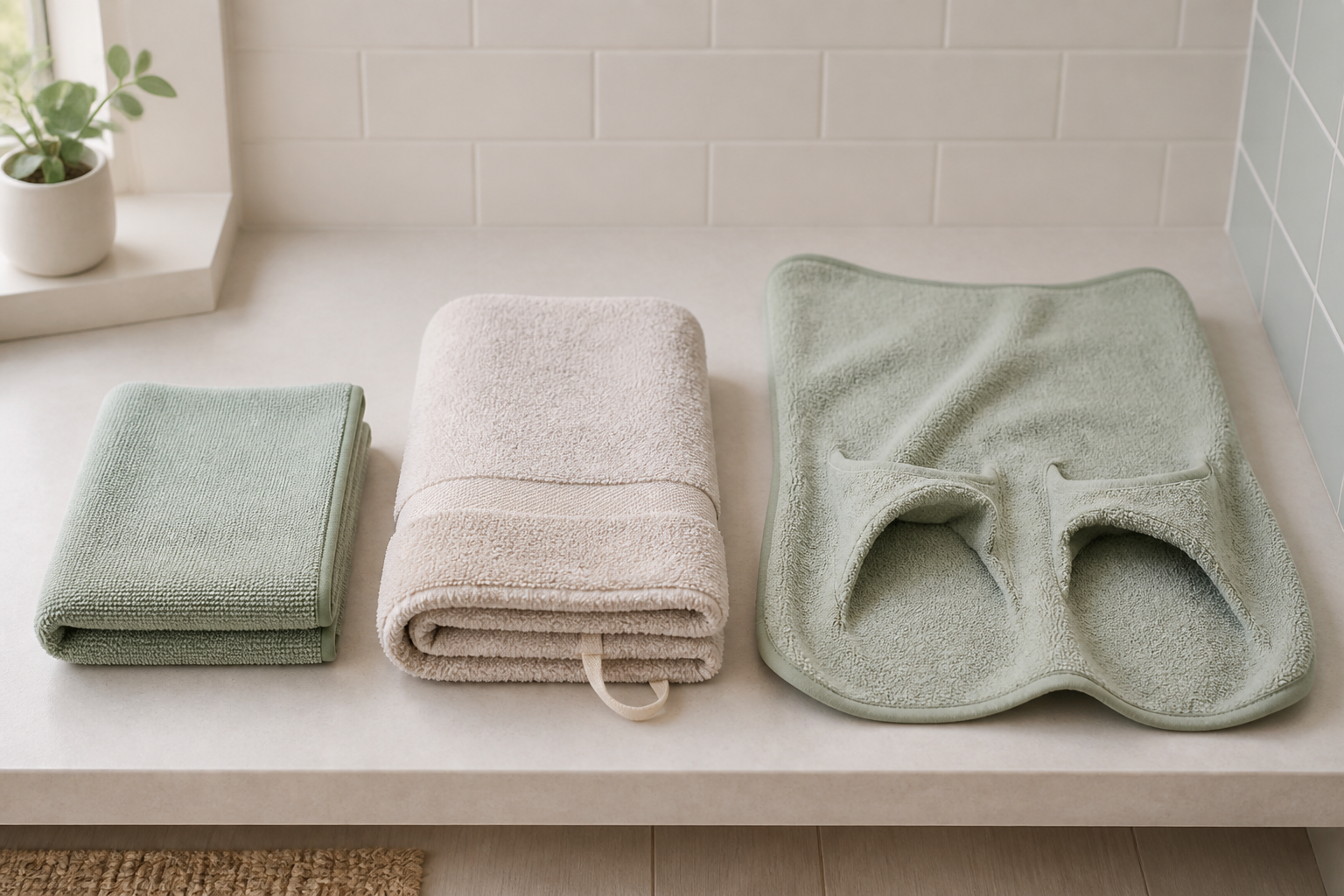
This is a buying framework for ordinary bath drying and wet cleanup, not bathing technique or skin care. A towel is a convenience item. If your pet has painful handling, broken or inflamed skin, persistent itching, unusual odor, or sudden coat changes, pause and ask a veterinarian or qualified groomer.
Quick Comparison: Which Towel Format Fits?
Compact microfiber: for limited storage and hanging room
Microfiber towels can fold into a small cabinet or caddy and may feel less bulky when damp. Compare actual open dimensions rather than relying on “large” or “extra absorbent” wording. Fine fibers can catch on rough nails, hook-and-loop closures, or damaged skin, so inspect the weave and keep the towel away from snagging items in the wash.
Looped cotton terry: for a familiar household-towel routine
Cotton terry is straightforward to handle and launder, but a thick towel can occupy more shelf and drying space. A hanging loop helps only if its stitching is secure and the towel can hang fully open enough to dry. Check the care label before assuming hot washing or high-heat drying is suitable.
Hand-pocket towels: for controlled grip
Pockets give each hand a defined position, which can make it easier to hold the towel without bunching it. They also add seams and folded layers that need to dry fully. Check that the pocket spacing fits your reach and leaves enough usable towel area for your pet.
Selection Criteria That Matter
- Open size: Measure against your pet’s body rather than buying by a vague pet-size label. Two smaller towels may be easier to manage than one oversized towel.
- Folded footprint: Confirm the towel fits the shelf, drawer, basket, or caddy where it will live when clean.
- Wet handling: Thick terry can become heavy; thin microfiber may cling or bunch. Choose the tradeoff you can comfortably grip.
- Fabric and edges: Check the fiber label, binding, seams, and loops. Retire towels with unraveling threads or damaged pockets.
- Cleaning: Follow the manufacturer’s wash and dry instructions and wash soiled towels promptly.
- Drying space: A towel needs airflow before closed storage. A hanging loop is useful only when it does not leave the fabric folded into a damp bundle.
- Pet tolerance: Stop if handling causes struggling, pain, panic, snapping, or scratching. A different towel cannot solve a handling or medical problem.
- Storage safety: Keep damp towels, loose loops, and laundry products out of chewing reach.
A Practical Comparison Framework
Start with dimensions: enough surface to cover and blot your pet without excess fabric dragging on the floor. Next, decide where the wet towel can hang and how often you can launder it. Only then compare pockets, loops, decorative textures, or multi-pack convenience.
For a tight bathroom, a compact towel plus a second clean backup often works better than one very thick towel. Rotate them so each can dry completely. Avoid unsupported absorbency rankings; fabric weight, towel area, wash history, and how saturated the coat is all change the real result.
Who Should Skip a Pet-Specific Bath Towel?
Skip the purchase if a clean household towel already fits your pet, storage, and laundry routine. A “pet” label is not automatically better. Also skip pocketed formats if the seams irritate your hands, oversized towels if they crowd the floor, and hanging-loop styles when you have no ventilated place to hang them.
A towel robe is a different choice: it stays on briefly after a wet walk or bath while a handheld towel is used for active blotting and drying. Dog owners considering that format can use our dog towel robe comparison. If several aired towels accumulate between wash days, use the pet towel hamper worth-it test before adding dedicated storage.
Small-Bathroom Storage and Care
Keep clean towels separate from damp ones and from grooming liquids that could leak. A ventilated basket, open shelf, or properly spaced hook is more useful than tightly packing a towel before it is dry. For organizing ordinary grooming supplies, see the pet grooming organizer guide.
The Bottom Line
Choose compact microfiber for low packed volume, looped cotton terry for a familiar towel routine, or a hand-pocket format for controlled grip. Measured size, wet handling, care instructions, complete drying, and safe storage matter more than unverified absorbency claims. If an ordinary clean towel already does the job, you can comfortably skip a pet-specific version.
If the main decision is what belongs on the floor beside the tub, compare a washable pet bath mat with a folded towel by measured coverage, backing, edge profile, laundering, and drying.