This guide covers an ordinary reusable floor layer beside a tub for a pet who can be bathed cooperatively. It does not cover restraint, bathing technique, skin treatment, or a pet who is frightened, painful, unstable, or difficult to handle. Ask a veterinarian or qualified groomer when bathing may be unsafe or a skin, coat, mobility, or handling concern needs professional help.
Quick Comparison
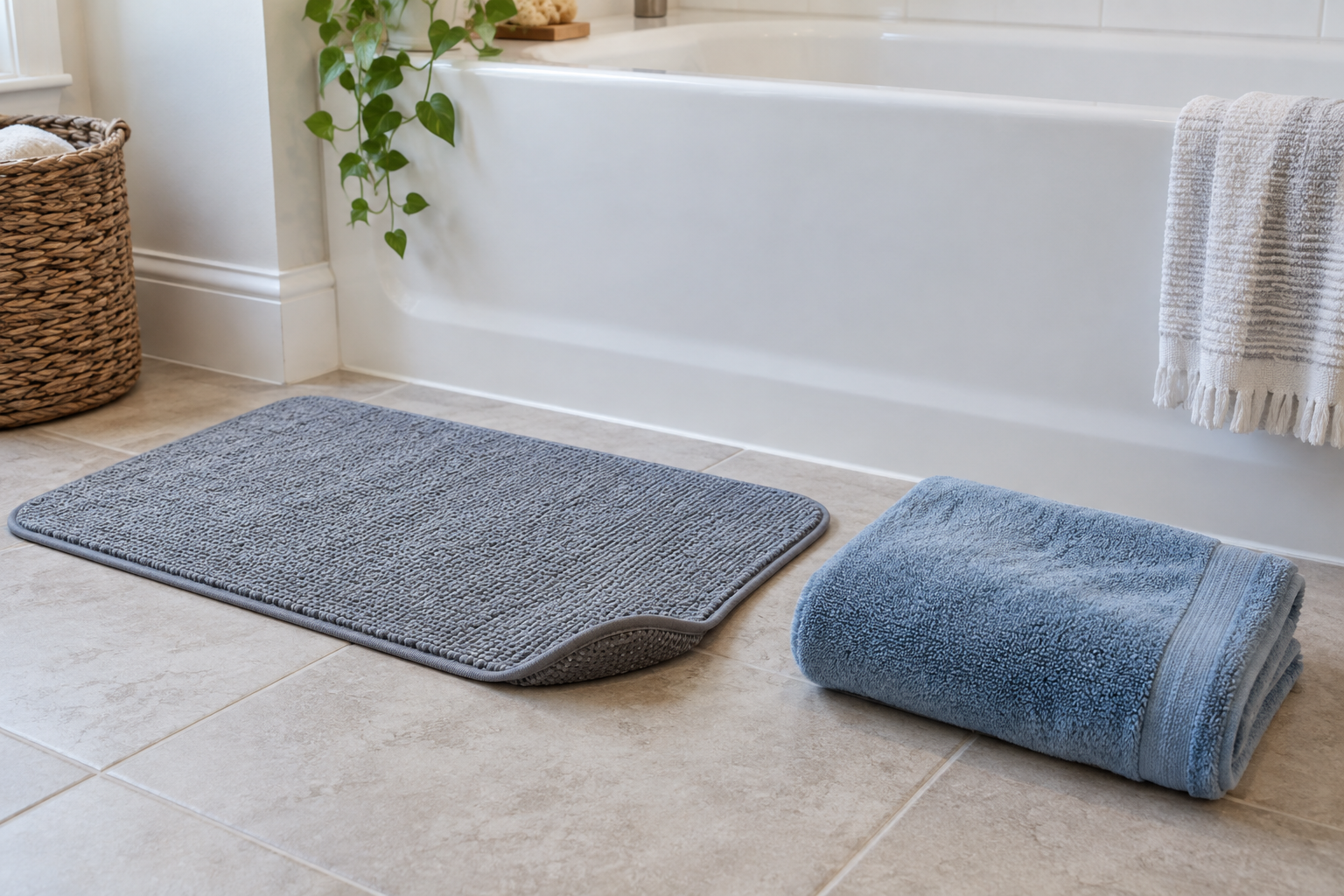
A washable bath mat creates a consistent footprint and may include a separate backing material, but its edge, full wet weight, and floor-care requirements need checking. It is a dedicated item that also needs its own storage and drying space.
A folded towel can be resized by changing the fold and replaced quickly when saturated. It may shift, bunch, or lift at an edge, and folding reduces the area it covers. A towel is usually easier to repurpose, but it is not automatically suitable for every floor or pet.
The useful question is not which format is universally safer. It is which one fits the measured landing area, stays manageable through the bath, follows the floor maker's guidance, and can be removed for prompt laundering without creating more clutter.
Measure the Tub-Side Setup First
Identify where all four paws are likely to land and measure that clear floor area. Include the tub edge, bath screen or curtain, door swing, cabinet opening, hamper, and the position of the person assisting the pet. A mat that catches under a door or a towel that extends into a walkway can make the room harder to manage.
- Coverage: compare usable dimensions, not a vague small or large label.
- Edge profile: check thickness and whether an edge curls, folds, or conflicts with a door.
- Floor fit: follow the flooring manufacturer's guidance for backed mats, damp textiles, and discoloration or trapped-moisture risks.
- Pet fit: avoid loose loops, damaged fabric, or edges a pet persistently paws, mouths, or bunches.
- Laundry fit: confirm the wet item fits your washer or hand-wash routine and has a place to dry fully.
When a Washable Bath Mat Fits Better
A dedicated mat fits when the tub-side landing stays in roughly the same place and the mat's exact footprint covers it without blocking doors or storage. A structured face can be easier to lay out consistently than refolding a towel for every bath. A labeled backing may also change how the mat behaves on a particular floor, but do not infer grip or slip prevention from appearance alone.
Inspect the backing, binding, corners, and face before use. Stop using a mat with cracked backing, curling edges, loose fibers, retained residue, or a shape that no longer lies as intended. If the care label requires air drying, make sure you have enough open space to dry both sides rather than leaving the mat damp on the floor.
When a Folded Towel Fits Better
A towel fits when the landing area changes, storage is tight, or you want to swap in a dry layer partway through cleanup. You can fold a large towel for thickness or open it for coverage, but those benefits compete: more folds mean less covered floor. Keep a second dry towel ready rather than continuing to rely on a saturated one.
Choose a clean towel whose open dimensions, fabric, seams, and wet weight are manageable. Avoid loose loops that catch claws and retire towels with unraveling edges. A folded towel does not have a dedicated backing, so observe whether it stays flat in the actual setup without claiming it will grip every surface.
Compare Cleaning, Drying, and Storage
Follow the item's care label. Remove hair and ordinary bath residue, launder promptly, and dry completely before closed storage. Thick mats can take longer to dry through the backing; heavily folded towels can hide damp inner layers. Open either item fully and give it adequate airflow.
Keep clean bath textiles separate from soiled cleanup items and from leaking grooming products. A mesh or solid bath caddy can organize dry routine supplies, but neither caddy is a good place to compress a wet mat or towel. If several damp towels accumulate, use the pet towel hamper worth-it guide to plan open drying before laundry storage.
Who Should Skip Each Format?
Skip a dedicated mat when it will not clear the door, the backing conflicts with the floor maker's guidance, it is too bulky for the washer, or there is nowhere to dry both sides. It is also unnecessary when a towel you already own fits the routine well.
Skip a folded towel when it bunches during the real setup, its reduced folded footprint misses the landing area, loose loops catch claws, or its wet weight is difficult to lift. Do not keep adding towel layers when the floor needs active wiping and the saturated layers need removal.
Pause the bath setup entirely if the pet cannot stand comfortably, tries to escape, shows pain, panics, snaps, or cannot be handled without force. A different floor layer will not fix a medical, mobility, fear, or handling problem; contact a veterinarian or qualified groomer for an appropriate plan.
Next Steps
If the folded-towel route fits, compare compact microfiber, cotton terry, and hand-pocket pet bath towels by size, wet handling, care, and storage. To protect the handler's clothing, compare grooming apron formats for at-home pet baths by coverage, straps, pockets, care, and drying. For the wider supply setup, the small-bathroom grooming organizer guide helps separate dry tools, liquids, and secure storage.
Bottom line: choose the washable mat for a stable, measured tub-side footprint when its backing, edge, laundry load, and drying needs fit the room. Choose the folded towel for flexible coverage and familiar laundering when it stays manageable and flat in your actual setup. Use what you already own when it meets those criteria, and treat either option as a cleanup layer—not a safety guarantee.