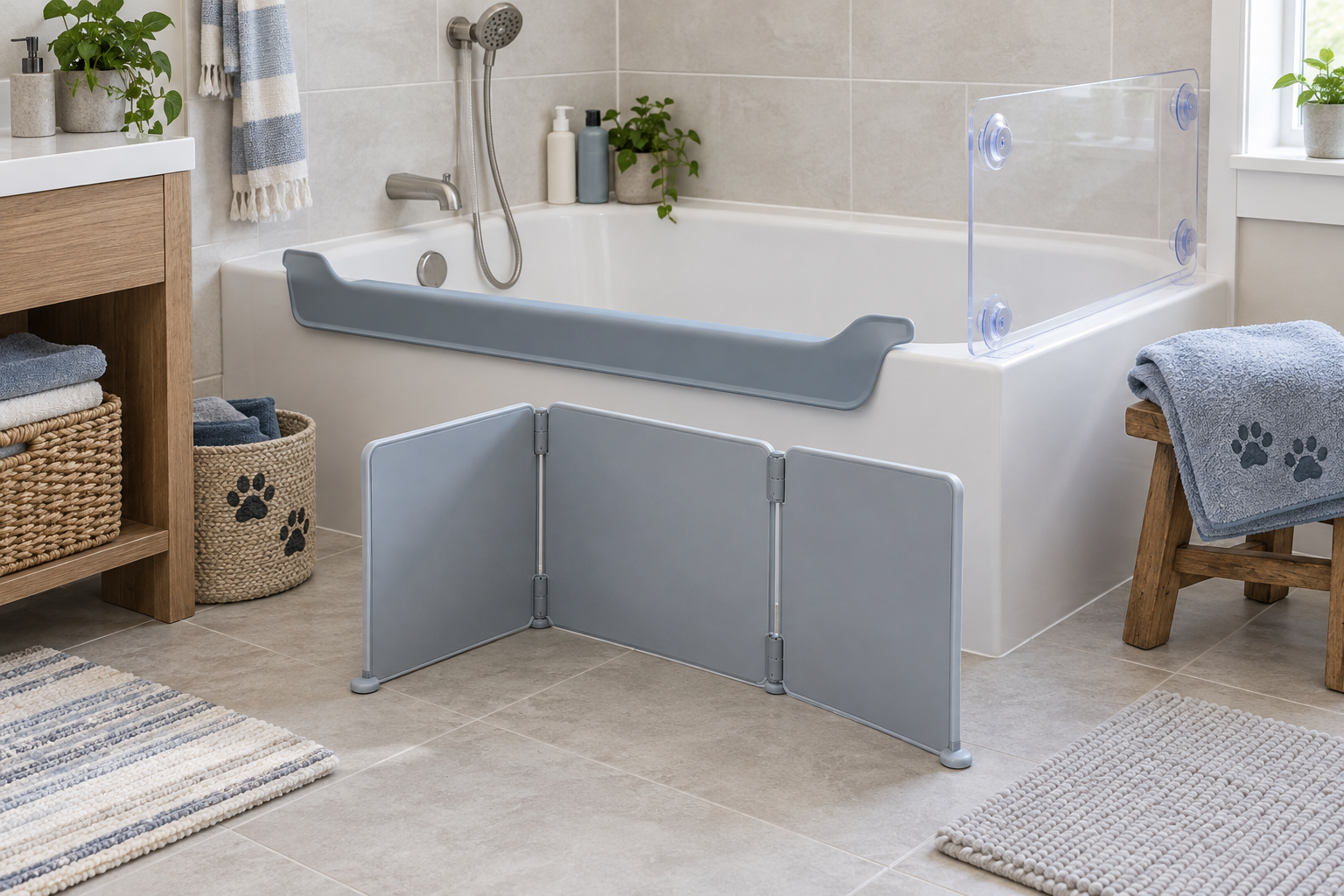
This guide addresses routine splash containment only. It does not teach bathing technique or make an unwilling, frightened, painful, medically sensitive, or difficult-to-handle pet safe to bathe at home. Ask a veterinarian or qualified groomer for the right next step when bathing causes distress, pain, skin concerns, breathing trouble, repeated escape attempts, or unsafe handling.
Quick Comparison
Low edge guard: best fit for splash crossing a broad, level tub rim. Foldable panel: best fit for temporary coverage beside an open bath area when there is enough stable floor space. Suction-mounted shield: best fit for a smooth compatible vertical surface and a narrow side-splash route. Choose none yet: when the bath layout, pet handling, slippery footing, drainage, or water-control routine is the real problem.
Measure the Bath Area Before Shopping
Measure the length and width of the exposed tub or sink edge, the distance from that edge to the nearest wall or cabinet, and the height where droplets land. Record the rim shape: flat, rounded, tiled, textured, interrupted by tracks, or too narrow for an attachment. For a floor panel, measure the dry footprint without blocking your stance, exit route, drain, or door swing.
For suction mounts, confirm that the product maker permits the exact surface. Grout lines, textured tile, curved acrylic, seams, and flexible wall panels may prevent reliable contact. Do not rely on a guard to support weight, keep a pet in place, or replace a secure hand position.
Selection Criteria That Matter
- Useful coverage: compare the product's complete dimensions with the measured splash path, not the general size of the room.
- Attachment: inspect clips, lips, suction cups, weighted bases, or freestanding feet. Confirm what surfaces and edge shapes the maker permits.
- Drainage: a guard should not trap water against an unsealed wall, cabinet toe kick, floor seam, or damaged tub edge.
- Pet access: keep hinges, loose panels, cups, cords, and detachable pieces out of chewing, pawing, and escape paths.
- Owner clearance: preserve a stable stance and unobstructed access to controls, sprayer, drain, towels, and the room exit.
- Cleaning: check whether seams, channels, textured surfaces, and hardware can be washed and fully dried as directed.
- Storage: measure the product when folded or removed and plan a dry location outside the pet's reach.
How the Three Formats Differ
Low flexible tub-edge guard
This format occupies little floor space and can redirect low splash back toward a tub. It depends heavily on rim geometry. Curves, tracks, caulk lines, textured surfaces, and faucet placement can create gaps. Skip it when it interferes with your forearms or the pet's safe entry and exit.
Foldable freestanding panel
A folding panel can cover a wider temporary area without attaching to the tub. Its footprint, hinges, and base are the main tradeoffs. It can become an obstacle in a narrow bathroom, and it must remain stable without being used as a brace. Look for washable surfaces and a folded size you can dry and store.
Clear suction-mounted shield
A clear panel preserves sightlines and may cover a concentrated side-splash route. Its usefulness depends on a compatible smooth surface and regular mount checks. Remove, wash, dry, and reinstall only as directed; a suction-mounted panel should never be treated as permanent structural protection.
Setup, Cleaning, and Drying
Test the empty bath area first. Install or place the guard according to its current directions, confirm that the drain and controls stay accessible, and make sure the product does not wobble into the working space. Run a small amount of water and watch where it collects. Correct pooling or an unstable placement before involving a pet.
After use, remove hair and residue, wash the guard with compatible products, rinse seams and mounts, and let every surface dry fully. Dry the floor and inspect caulk, grout, nearby wood, and cabinet edges for moisture. Replace cracked, sharp, warped, delaminated, or unreliable pieces.
Who Should Skip a Splash Guard?
Skip this purchase if a towel outside the splash path, a correctly sized washable mat, lower sprayer pressure, or a different bathing location already handles the routine mess. Skip a floor panel in a tight room where it limits footing or exit access. Skip suction mounting when the surface is textured, damaged, curved, or not maker-approved.
Most importantly, skip home bathing when the pet cannot be handled calmly and safely. A splash guard is a cleanup convenience, not behavior equipment, fall protection, or a medical solution. Ask a veterinarian about skin, ear, mobility, pain, or other health concerns, and use a qualified groomer when the handling or setup exceeds what you can manage safely.
Related Bath-Setup Guides
For water that reaches the floor, use the pet bath mat versus folded towel comparison. To keep supplies accessible without crowding the tub, compare a handled basket and hanging organizer. If your clothing is the main cleanup issue, see the grooming apron guide.
Bottom Line
The best splash guard is a removable, washable format that matches a measured splash path without compromising footing, access, drainage, or calm handling. Start with tub geometry, verify attachment and care directions, and skip the purchase when a simpler washable layer or a professional bathing setup fits better.