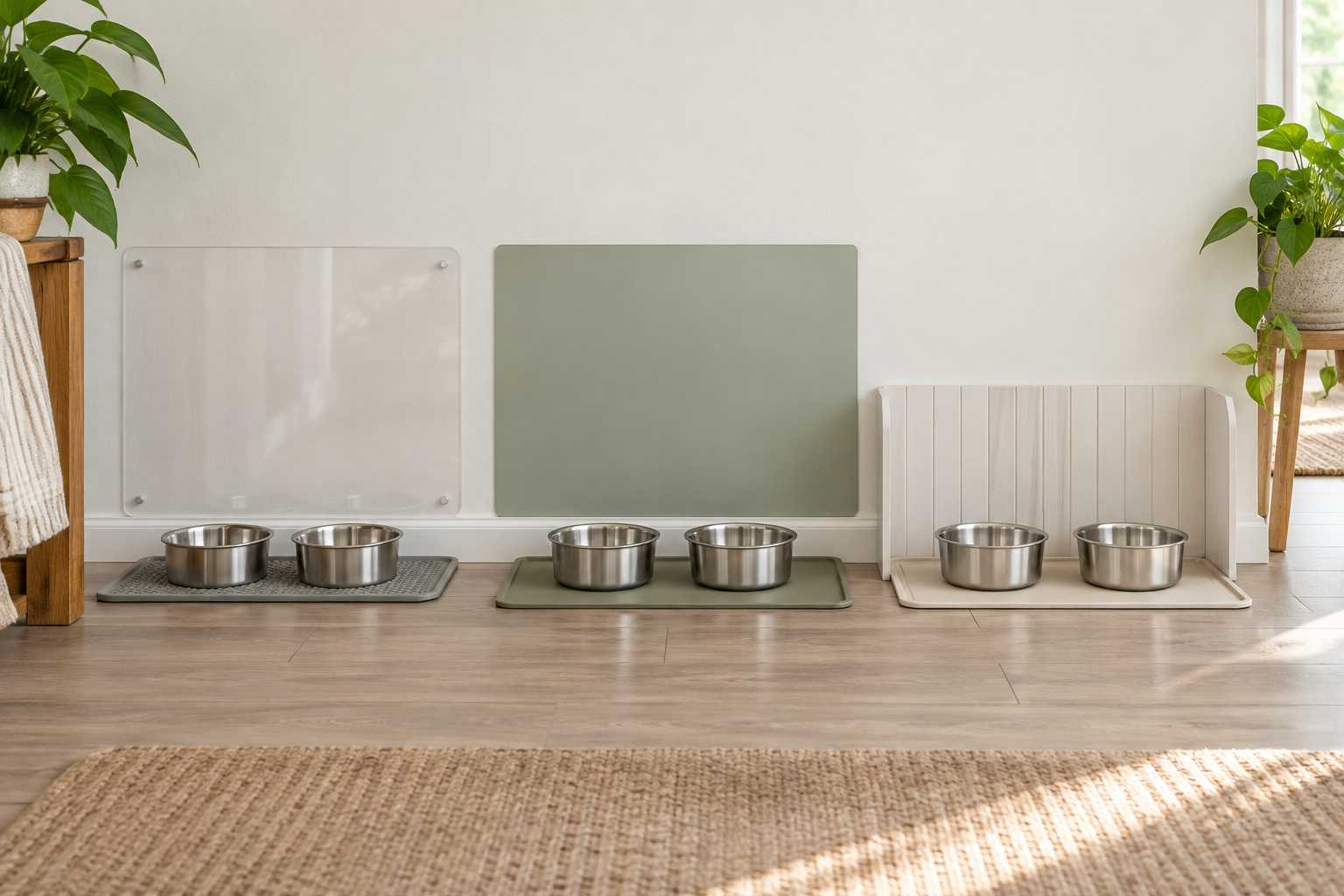
Quick Comparison
Removable rigid panel: offers a firm cleaning surface and visible edges, but mounting hardware or strips must suit the wall and the panel needs removal clearance. Adhesive film: has the smallest footprint, but wall texture, paint condition, application, and removal directions are decisive. Freestanding panel: avoids wall adhesive, but consumes floor space and must remain stable without trapping moisture or crowding the pet. No wall guard: is sensible when moving the bowls away from the wall solves the marks.
Selection Criteria That Matter
- Actual coverage: mark the usual splash or crumb area, then compare it with the guard's usable width and height rather than its package dimensions.
- Wall compatibility: identify paint, tile, paneling, or another finish and follow both the surface and guard makers' instructions. “Removable” is not a universal damage-free promise.
- Attachment: inspect clips, fasteners, adhesive edges, and clearances. Keep loose parts and peelable corners out of a pet's reach.
- Cleaning and drying: choose a surface that can be cleaned with methods allowed by its maker and fully dried, including seams and the wall behind removable guards.
- Bowl clearance: leave enough room to lift bowls and the floor mat without scraping the guard or pushing food and water against the wall.
- Edges and stability: reject sharp, cracked, curling, or unstable panels. A freestanding guard should not narrow a walkway or tip when the feeding mat moves.
- Renter fit: obtain permission when required; a freestanding setup or simply moving the bowls may be lower-risk than applying a wall product.
A Practical Setup and Cleaning Routine
First move the bowls a little farther from the wall and observe whether a guard is still needed. Measure the wall zone and the complete floor footprint with bowls and mat in place. Install only as directed on a compatible, clean, dry surface. Do not cover outlets, vents, damaged paint, damp areas, or baseboard gaps that need inspection.
Wipe ordinary marks promptly using permitted methods. Lift or remove the guard at the interval its design allows so you can inspect hidden edges and let every surface dry. Stop using it if adhesive lifts, an edge curls, fasteners loosen, moisture persists, or the pet starts pawing or chewing it.
Who Should Skip a Wall Guard?
Skip one when moving the bowls or using a correctly sized feeding mat fixes the problem; the wall is textured, fragile, damp, peeling, or otherwise incompatible; no permitted mounting method exists; the panel would obstruct a walkway; or your pet can chew or dislodge it. Persistent dampness or wall damage needs the appropriate property professional, not another covering.
A wall guard is a cleanup accessory, not a solution for sudden changes in eating or drinking. Contact a veterinarian if your pet suddenly drinks much more or less, has trouble eating, vomits repeatedly, or seems unwell.
Related Guides
Start with our practical new-pet supply guide. Then compare single-bowl and double-bowl feeding mats, decide whether a bowl splash guard is worth it, or choose feeding mats for routine food and water messes.
Bottom Line
The best feeding-area wall guard fits the measured mess zone, is explicitly compatible with the wall, leaves safe bowl clearance, and can be cleaned and dried without hiding damage. Choose a rigid removable panel for a defined surface, compatible film for the lowest profile, or a stable freestanding panel when wall attachment is not appropriate—and skip all three if moving the bowls is enough.