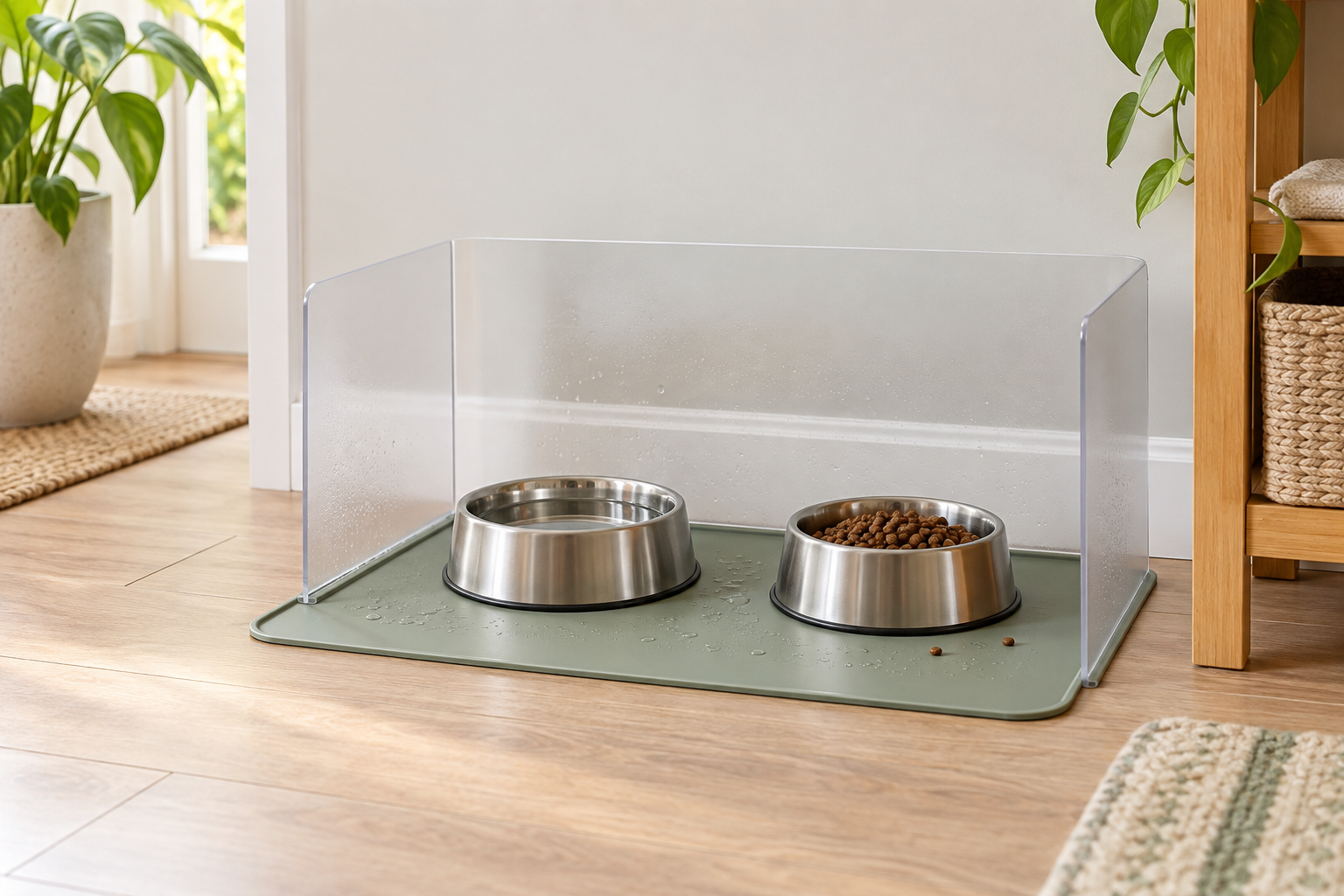
A splash guard is a cleanup convenience, not a health product and not a guarantee against spills or floor damage. Keep fresh water available in a bowl appropriate for the pet, follow each product's care directions, and speak with a veterinarian about sudden changes in drinking, appetite, swallowing, posture, or bowl use.
Quick Decision: Buy, Relocate, Use a Mat, or Skip
Buy a guard when repeated observation shows side or wall splash, the panels fit the measured station, and every surface remains reachable for cleaning. Relocate the bowls when a little more wall clearance solves the problem. Use a wider mat when water falls mainly downward. Skip when the barrier narrows the approach, shifts under contact, hides damp debris, or cannot be cleaned and dried easily.
Map the Mess Before Shopping
Place clean, dry paper or a washable towel around the current station for a few routine uses, supervising so it cannot be mouthed or pulled. Note whether water appears under the bowl, in front of it, along one side, or on the wall. Separate water splash from food crumbs and from a bowl that slides or tips; those problems may need different changes.
A vertical guard makes the most sense for a consistent sideward or backward splash path. It adds little when nearly all moisture stays within the footprint of a suitable mat. Observation also prevents buying a tall panel for a mess caused mainly by carrying water away on fur or paws.
Measure Usable Space, Not Just Panel Width
Measure the combined bowl footprint, the space between bowls, and the room needed to lift each bowl straight out. Add the guard's panel thickness, hinges, feet, connectors, or base. Check baseboard projections, outlets, cabinet doors, floor vents, and the distance needed for the pet to approach without squeezing between furniture.
Panel height matters only when it intersects the real splash area. Taller is not automatically better: a high or opaque barrier can reduce visibility and make wiping the wall or reaching the bowls more awkward. Follow the maker's assembly and placement directions rather than trimming or improvising structural parts.
Check Stability and Pet Access
Look for a documented freestanding base, connected panels, or another installation method appropriate to the floor and wall. Test stability while the station is empty, then with bowls placed as directed. A lightweight panel that shifts into the bowl, exposes sharp damage, or becomes a chew target does not fit the setup.
Keep edges, fasteners, adhesives, loose films, and detachable parts inaccessible. Do not rely on a guard to keep one pet out of another pet's food or to manage resource guarding. Feeding conflict, fear, persistent avoidance, or aggressive behavior calls for individualized help from a veterinarian or appropriately qualified behavior professional.
Plan the Cleaning Route
A useful guard should make cleanup more contained, not hide it. Check whether panels separate, fold, or lift as one unit; whether the base has seams; and whether the material can be wiped or washed under the current instructions. Clear panels show residue readily but can also show streaks. Textured or joined surfaces may take longer to dry.
Remove bowls and clean all reachable faces on a regular schedule suited to actual use. Wipe the wall and floor behind the guard rather than assuming the barrier stays dry. Let each component dry before reassembly, and inspect hinges, edges, feet, coatings, and fasteners for damage.
Compare the Simpler Alternatives
- Move the station: a few inches of clearance from the wall may remove the need for a vertical layer.
- Use a wider mat: best when droplets land mostly on the floor and the mat fits the pet's approach.
- Try a heavier compatible bowl: consider it when movement, rather than splash direction, creates the mess; weight alone does not guarantee against tipping.
- Protect the wall: a washable, wall-compatible layer can use less floor space, but installation and finish compatibility need checking.
- Reset after use: for occasional messes, prompt wiping may be simpler than storing another product.
Who Should Skip a Splash Guard
Skip it when the feeding area is already cramped, the pet is reluctant to enter enclosed spaces, panels block a comfortable stance, the only available model has unclear care or material information, or the setup places parts within chewing reach. Also skip a guard that interferes with floor transitions, doors, cords, mobility equipment, or safe access to the water bowl.
Do not treat unusual splashing or a sudden increase in drinking as an organization problem. Contact a veterinarian promptly for a meaningful change in thirst, urination, appetite, swallowing, breathing, energy, or comfort.
Bottom Line
A pet bowl splash guard is worth it when water repeatedly travels sideways or backward, a measured barrier fits without crowding the pet, and the entire setup is easy to clean and dry. For mostly downward drips, start with a suitably sized mat. For occasional or layout-driven messes, relocating the bowls may solve more with less equipment.
Build the wider feeding setup with the new-pet essentials guide, compare silicone and fabric feeding mats, or use the low-mess feeding-station checklist. Browse the feeding and water guide hub for the next decision.