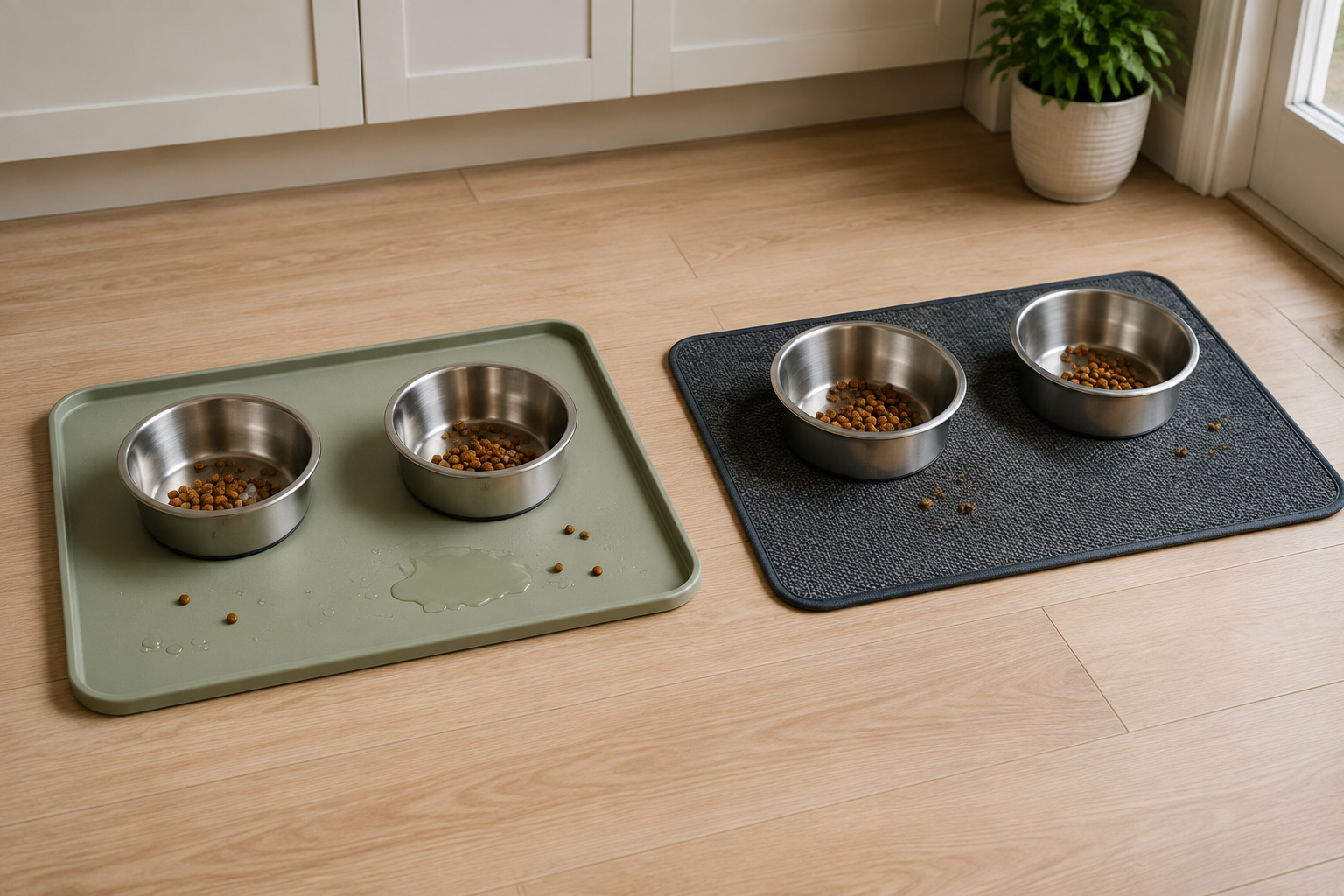
Quick Comparison
Choose silicone when the recurring problem is pooled water, wet food, or a daily mess you want to wipe or rinse without starting laundry.
Choose fabric when the recurring problem is crumbs and light splashes, you prefer a softer low-profile surface, and machine washing fits your routine.
Skip both for now if the bowls simply need a more stable location, the area is too cramped for a correctly sized mat, or a pet chews and lifts loose floor coverings.
Silicone Mats: Better for Containing Wet Messes
A smooth silicone mat does not need to absorb water to keep it off the floor. A shallow raised edge can hold an ordinary splash long enough for cleanup, while the surface wipes clean between deeper washes. Flexible silicone can roll for storage, although tightly rolling a large mat may make it awkward to lay flat again.
The tradeoff is handling pooled liquid. A mat that bends too easily can spill when lifted, and a rim reduces usable bowl space. Measure the outer mat and the flat area inside the rim. Confirm that two bowls fit with room for fingers and that neither bowl sits on a curved edge.
Skip silicone if the mat slides on your floor, collects debris under textured ridges you will not scrub, blocks a cabinet or door, or becomes a chewing target.
Fabric Mats: Better for Absorbing Light Splashes
A fabric feeding mat can catch crumbs and absorb a modest splash before it spreads. Its softer surface and low profile may suit a feeding station where a tall rim gets in the way. Fabric also gives owners a familiar cleaning path when pet towels and mats already go through regular laundry.
Absorbency is not the same as containment. A saturated mat can leave moisture against the floor, and thick layers take longer to dry. Check the backing and floor-care warnings, lift the mat after wet meals, and let both the mat and floor dry fully.
Skip fabric if spills are large or frequent, laundry is already a bottleneck, the edges curl, the backing stays damp, or hair and crumbs cling more stubbornly than you are willing to clean.
Measure the Whole Feeding Station
- Bowl footprint: Measure both bowls at their widest point and include the gap needed to lift each one.
- Mess radius: Notice where crumbs and droplets actually land; a mat barely wider than the bowls will not catch them.
- Edges: Keep rims and bound fabric away from door swings, cabinet toes, and walking paths.
- Pet stance: Leave stable, uncovered floor where the pet normally stands instead of forcing paws onto a disliked texture.
- Floor finish: Follow the flooring maker’s guidance and inspect beneath any rubbery or waterproof backing for trapped moisture or marks.
Compare the Cleaning Routine
For silicone, confirm whether the mat fits the dishwasher without folding onto a heating element and whether hand washing is simpler. Textured corners and rims need direct scrubbing. Rinse away cleaning residue and dry the mat before putting it back.
For fabric, read both wash and dry directions. Consider whether food debris should be shaken off first, whether the backing tolerates the dryer, and how long air drying takes. Do not leave a damp mat folded or pressed against flooring.
Replace either type when cracks, tears, peeling layers, persistent curled edges, damaged backing, trapped odor, or a surface you can no longer clean makes the setup harder to maintain.
When the Mat Is Not the Real Fix
A larger mat can catch ordinary mess, but it cannot explain a sudden change in eating or drinking. Contact a veterinarian if a pet suddenly drinks much more or less, struggles to eat, repeatedly vomits, seems painful, or shows another concerning change. A mat is floor-protection gear, not a health solution.
If bowl movement is the main issue, compare bowl bases and spacing before changing mat material. If the whole area needs work, the low-mess feeding station guide covers placement, bowls, storage, and cleanup as one routine.
Bottom Line
Silicone is usually easier for recurring water and wet-food mess because it wipes clean and can contain a shallow spill. Fabric is usually easier for crumbs and light splashes when machine laundry and full drying fit the household routine. Choose by usable dimensions, floor compatibility, cleaning effort, and the mess you actually see—not by material alone.
For broader product selection, compare feeding mat varieties for food and water messes. New-pet owners can place the decision in context with starter supplies that solve daily problems.