The Quick Answer
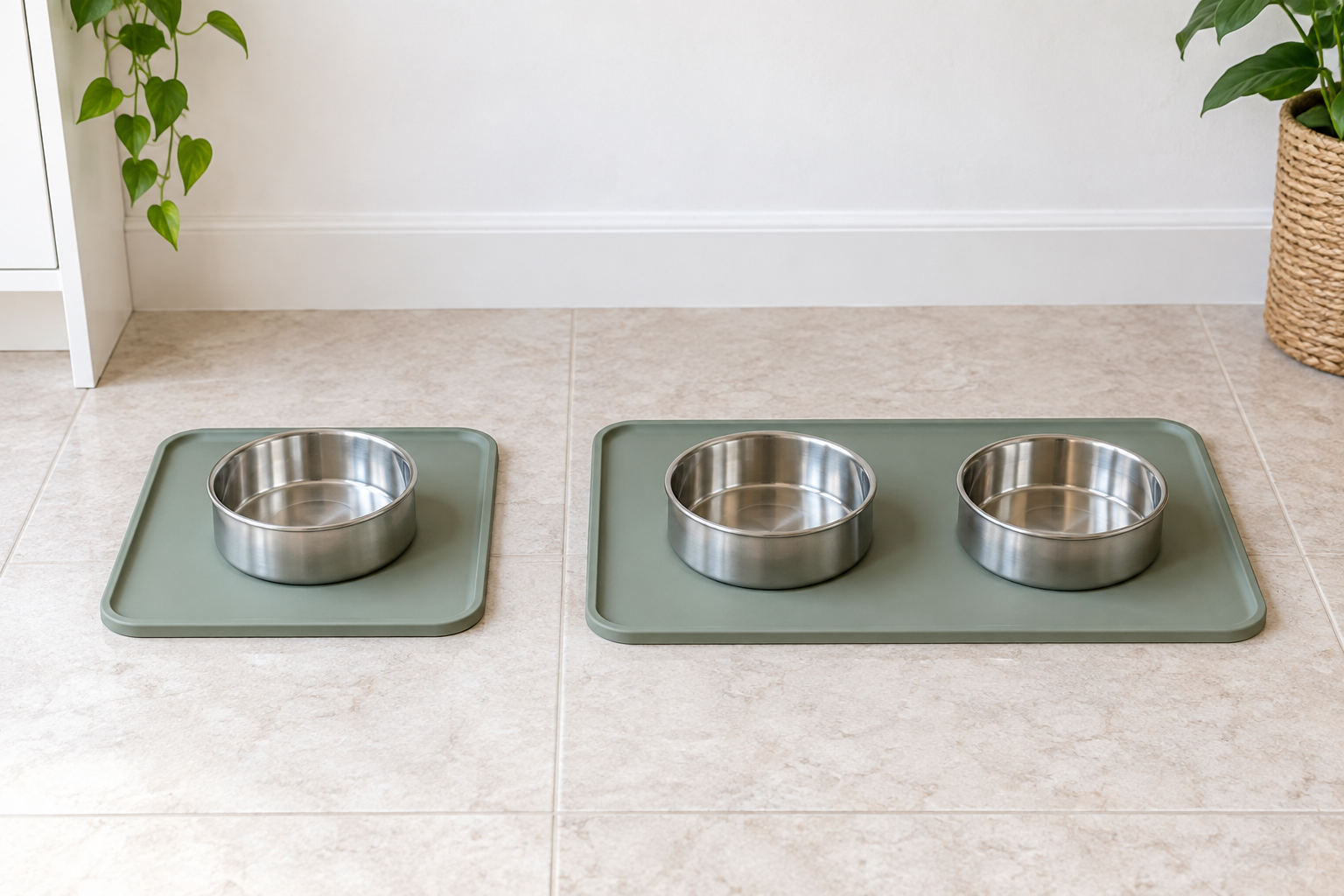
A single-bowl mat is easier to fit into a narrow area and lets you move food and water to separate locations. It may also be simpler to carry to a sink. The tradeoff is cleaning and storing more than one mat if several bowls need coverage.
A double-bowl mat keeps a paired setup on one surface and can catch the shared mess between bowls. It needs enough usable width—not just generous exterior dimensions—and a practical route to the wash area. Either layout fails if bowl bases or the normal mess extend beyond it.
Measure the Bowls, Spill Zone, and Room
- Bowl bases: measure each bowl at its widest point, including non-slip rings or flared sides.
- Usable area: compare the flat interior inside any raised edge, not only the exterior size.
- Spacing: make sure rims do not collide and each bowl can be lifted without moving the other.
- Mess pattern: observe where ordinary drips and crumbs land, then extend the outline beyond that area.
- Room fit: leave a clear approach and keep the mat out of door swings, cabinet access, cords, and walkways.
- Cleaning route: confirm the empty mat fits a realistic wash and drying area under its current care directions.
When a Single-Bowl Mat Fits Better
Use a compact mat when only one bowl makes a recurring mess, the feeding area is narrow, or bowls need separate locations. Separate mats can make it easier to move one bowl without disturbing another. This flexibility is useful only when every mat has a stable, easy-to-clean place.
The tradeoffs are more pieces to wash, gaps between nearby mats, and less shared coverage. A small mat can look tidy while providing too little border around a wide bowl, so measure the interior rather than trusting a single-bowl label.
When a Double-Bowl Mat Fits Better
Use a wider mat when two bowls remain side by side and the mat covers the space beneath and between them. One perimeter can simplify a paired station, and a raised edge may contain ordinary drips when the entire mess lands inside it.
The tradeoffs are a larger footprint, more awkward wet handling, and less freedom to change bowl spacing. Check that both bowls lift independently and do not crowd a wall or another pet. Do not assume a molded two-bowl outline fits bowls you already own.
Cleaning, Drying, and Floor Care
Remove bowls before lifting a mat. Follow the maker's current wash, heat, and drying directions; do not assume different materials share the same care. Wash both sides, clean the floor beneath, and let both dry fully before resetting the station. Inspect edges, textured surfaces, seams, and backing for residue, tears, curling, or loss of grip.
Check the flooring manufacturer's guidance before leaving rubbery or moisture-trapping materials in one place. A mat does not make an unsuitable finish waterproof, and a larger mat can hide a larger damp area.
Multi-Pet and Health Boundaries
A double-bowl mat does not automatically make a shared feeding station appropriate. Pets may need separate locations or supervised routines. If one pet blocks, guards, chases, or displaces another, separate them safely and ask a qualified behavior professional for help rather than expecting a mat to solve the interaction.
A mat is a cleanup convenience, not a way to change appetite, thirst, swallowing, or elimination. Contact a veterinarian about sudden or concerning changes in eating or drinking instead of changing products alone.
Who Should Skip Both Formats?
Skip a new mat when a suitable washable layer already contains the mess, the bowls stay stable on an easy-clean floor, or the planned mat would block access. Skip a paired layout when bowls belong in separate places or the mat will not fit the cleaning routine. Skip a compact mat when the spill zone extends beyond it.
For the broader buying decision, use the feeding-mat variety guide. The new-pet essentials guide and low-mess feeding-station guide cover bowls, placement, storage, and cleanup together.
Bottom Line
Choose one compact mat for a single bowl, flexible placement, or separate feeding zones. Choose one wider mat when two bowls stay together and both bases, spacing, and the recurring mess fit inside the usable surface. Measure first, remove bowls before lifting, follow care directions, dry the mat and floor fully, and keep the current setup when another product would add more cleaning than it saves.