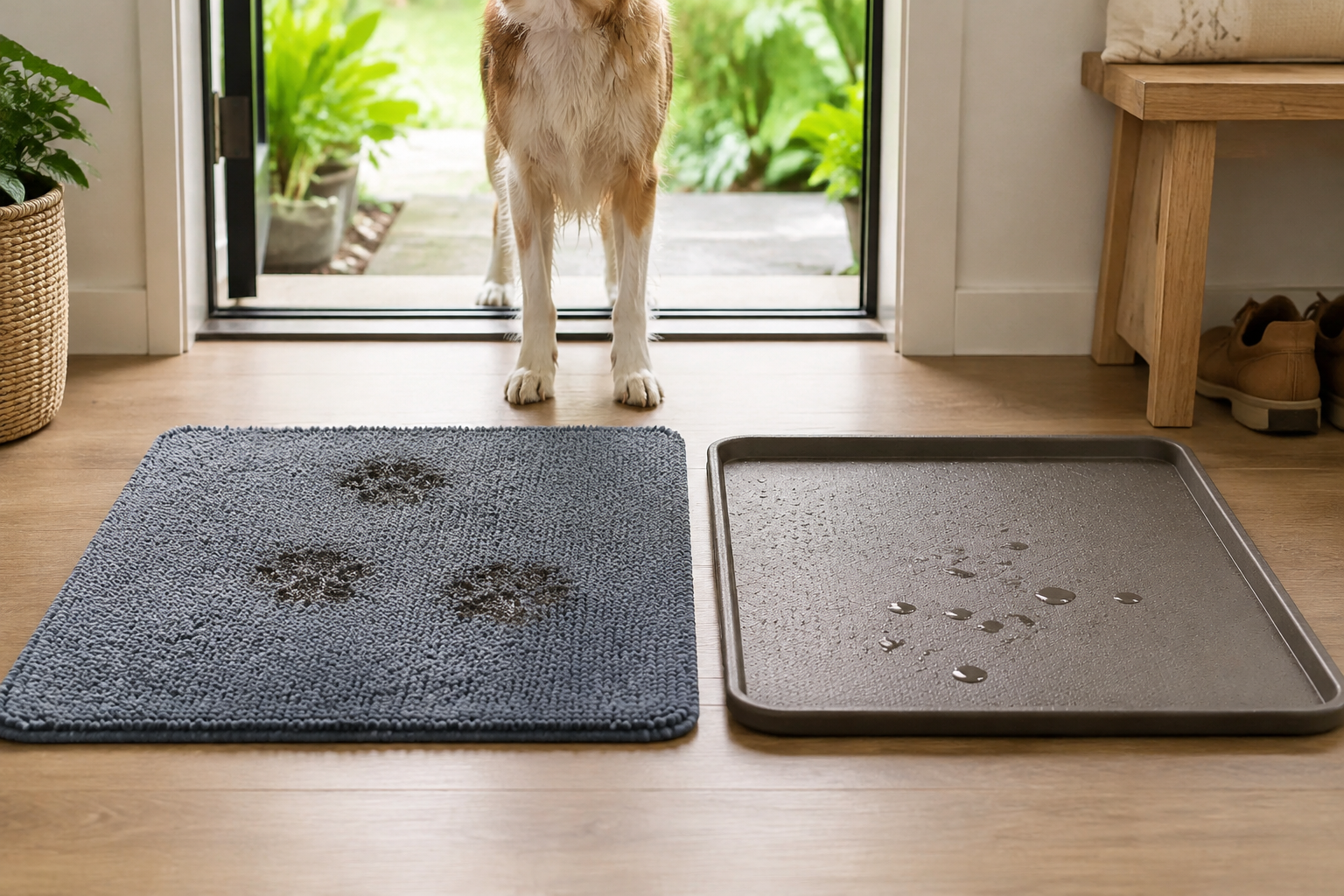
This is a product-format comparison, not a promise that a mat will keep a floor dry or prevent slips. Water can move beyond an undersized mat, saturated fabric can transfer moisture, and some backings may not suit every floor finish. Wipe wet flooring promptly, follow the floor maker's care directions, and keep the walking path clear.
Quick Comparison
Choose an absorbent mat when damp paws and small drips are the main mess, you can launder or rinse the mat as directed, and you have somewhere to dry it completely.
Choose a waterproof mat when you want a wipe-clean barrier beneath wet gear or a short paw-cleaning stop and can remove the collected water before it spreads.
Use a two-stage setup when a shallow waterproof tray can hold soaked gear while a separate absorbent mat gives the dog a comfortable landing spot. Do not stack layers if they slide, curl, trap moisture, or block the door.
Skip both if a washable towel routine already handles occasional wet paws, the only available mat would create a trip edge, or your dog chews, digs, or avoids the material.
Absorbent Mat: Better for Damp Paws, More Drying Work
Fabric-faced and microfiber-style mats can take up water from paws as a dog pauses or walks across them. They tend to feel more like a rug than a tray, which may suit an entry where people also walk. Their useful capacity is limited, though, and it is not always obvious when the backing or the floor beneath has become damp.
When an absorbent mat fits
- Your usual mess is damp paw prints rather than pooled water.
- The mat is large enough for the dog's full landing and turning pattern.
- The care label matches your washer, rinse, and drying routine.
- You can lift the mat regularly to check and dry the floor beneath it.
Absorbent-mat tradeoffs
Thick pile can hold grit, take longer to dry, and interfere with a low door sweep. Rubber-style or coated backing may interact with some floor finishes, especially when left damp. Check the current floor and mat instructions; do not infer floor compatibility from a generic “non-slip” description.
Waterproof Mat: Clear Barrier, Visible Surface Water
A waterproof mat or shallow flexible tray keeps liquid on its upper surface when used within the maker's stated limits. That makes the cleanup point easy to see and wipe. It does not absorb the water, so wet paws can step back into droplets and carry them beyond the edge.
When a waterproof mat fits
- You need a defined place for dripping boots, leash hardware, or a paw-cleaning cup.
- You prefer wiping or rinsing a smooth surface to laundering fabric.
- A low raised edge clears the door and does not sit in the main walking line.
- The mat lies flat on the floor type without trapping moisture underneath.
Waterproof-mat tradeoffs
A smooth wet surface may be uncomfortable or slick for some dogs, and high edges can be awkward for small dogs or pets with limited mobility. Water can escape when the mat is tipped or overfilled. Remove collected moisture promptly rather than assuming the barrier can remain wet all day.
Measure the Doorway Before Shopping
- Landing length and width: Watch where all four paws actually land, not just the threshold width.
- Door sweep: Measure the smallest gap under the moving door and account for curled edges or pile.
- Walking path: Keep mat edges away from the busiest footpath when possible.
- Gear space: Add room for a towel, leash, or boot tray only if the layout stays easy to cross.
- Storage and drying: Confirm where a wet mat will hang, drain, or lie flat after cleaning.
Backing, Floors, and Everyday Handling
Backing deserves as much attention as the top surface. Check whether the manufacturer names compatible floor types and whether the mat must be lifted between uses. Test a clean, dry mat in a low-visibility spot if the floor maker recommends it. Dirt beneath any backing can scratch a finish, while trapped moisture can create a separate cleanup problem.
No mat should be treated as slip prevention. Keep the floor and mat surface clear, flatten curled edges, and replace a mat whose backing cracks, flakes, stiffens, or no longer lies reliably flat.
Cleaning and Drying
Follow the exact care label rather than assuming every fabric mat is machine washable or every waterproof mat tolerates hot water. Shake or vacuum dry grit first when directed. Wash, rinse, and dry all layers completely, including a separate backing or removable insert. A second mat or a folded towel can keep the entry usable while the main mat dries.
For muddy paws, a mat is usually the final landing zone, not the whole routine. Keep a washable towel nearby and use only pet-appropriate cleaning products according to their labels. Persistent licking, limping, soreness, damaged pads, or a sudden reluctance to walk deserves guidance from a licensed veterinarian.
Who Should Skip a Door Mat?
Skip a dedicated mat when wet-weather outings are rare, an existing washable towel works, or the entry is too narrow to add a stable surface. Also skip loose fabric, foam, or raised edges your dog chews, shreds, digs at, or consistently avoids. A product should simplify the routine, not create a new supervision problem.
Bottom Line
Choose an absorbent dog door mat for routine damp paws when laundering and full drying fit your week. Choose a waterproof mat for a visible wipe-clean barrier when you can clear surface water promptly. Measure the dog's actual landing pattern, door sweep, floor, and drying space before buying—and use a two-stage setup only when both pieces remain flat and easy to maintain.
For a broader plan, use the doorway cleanup station guide. If you want a rug-style option that works with the room as well as the dog routine, continue to the washable pet entryway rug guide.