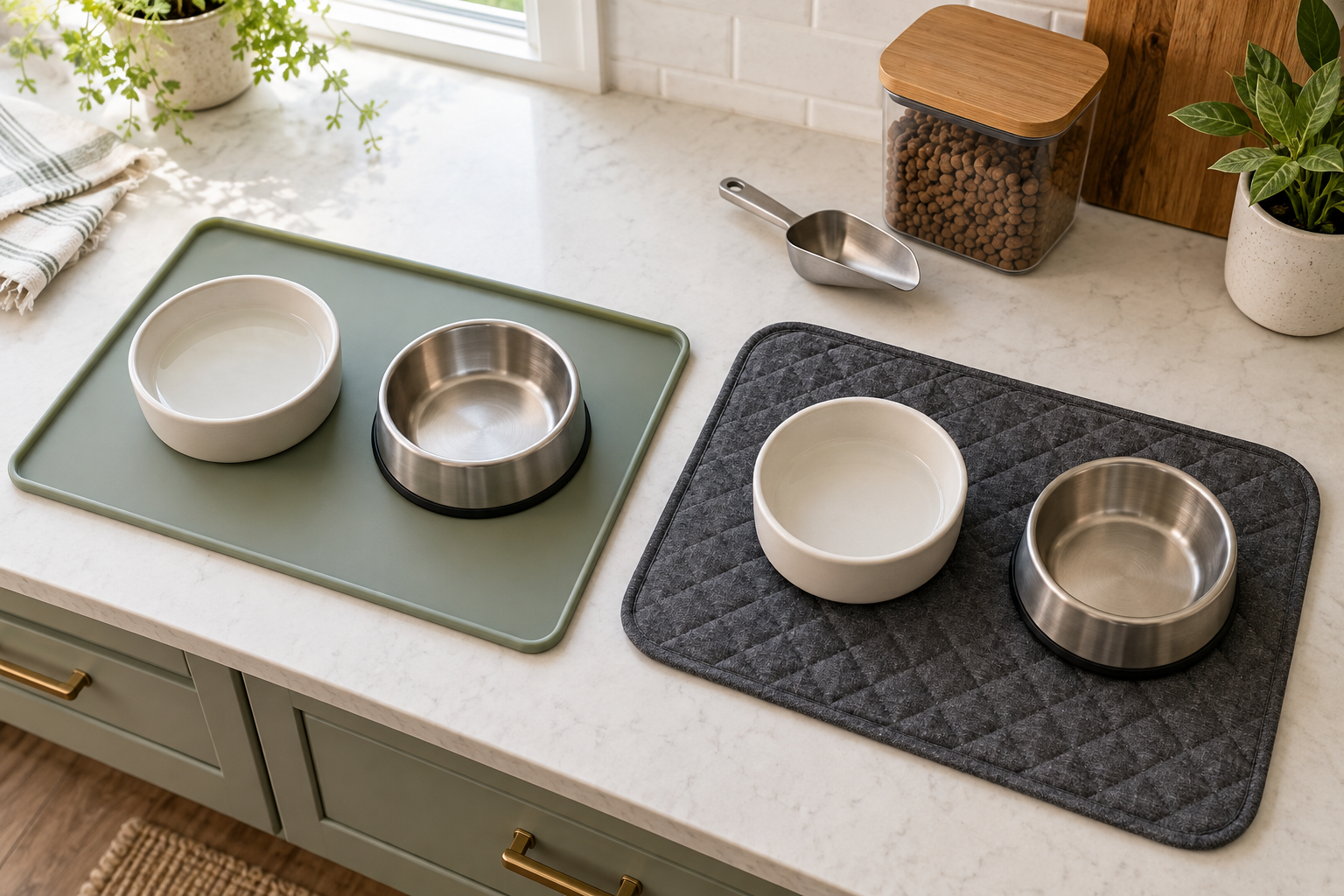
Quick Comparison
| Decision point | Silicone mat | Washable fabric mat |
|---|---|---|
| Small drips | A supported raised edge can keep a modest drip within the mat. | Absorbs or holds moisture according to its construction but does not act like a tray. |
| Daily cleanup | Usually favors direct wiping or washing according to current directions. | Favors households already prepared to launder and fully dry it. |
| Working feel | A firmer surface may suit scoops and containers; verify grip and counter guidance. | A softer surface may bunch or shift if its backing and dimensions do not fit. |
| Storage | May roll, but should return flat without cracked or curled edges. | Usually folds compactly, though seams and backing can add bulk. |
| Best fit | Wet or wipe-down routines with enough supported counter depth. | Mostly dry routines with dependable laundry and drying space. |
Neither material is automatically cleaner or safer. The useful choice is the one that fits the measured surface, can be cleaned as directed, dries fully between uses, and stays separate from unrelated household tasks.
Measure the Working Area First
Measure the clear width and depth after accounting for the backsplash, sink lip, appliances, cords, and the space needed to open the food container. Compare that area with the mat's usable surface. A silicone rim reduces inner workspace, while fabric binding and seams can change where bowls or containers sit steadily.
Keep the full mat supported by the counter. Do not let it cover appliance controls, cross a hot surface, or hang where a pet can pull it. Follow the pet-food maker's storage and handling instructions; a mat is a convenience surface, not a food-safety control.
Choose Silicone When Containment Comes First
A raised-edge silicone format makes sense when scooping or opening wet food leads to small routine drips and the mat can remain fully supported. It also suits a household that prefers to wipe or wash a defined surface instead of adding another fabric item to the laundry.
- Check the inner dimensions: the scoop, lid, bowl, or portion container should fit inside the rim without crowding.
- Inspect the edge: a low rim can contain a modest drip, but a tall or thick rim may interfere with your grip.
- Verify care: rely on current maker directions for hand washing, dishwasher use, drying, and temperature limits.
- Check the counter: follow surface-compatibility guidance and lift the mat to clean and dry underneath.
Tradeoff: silicone is less compact than a thin fabric layer and may curl or retain a rolled shape. Skip any mat that no longer lies flat, has damaged edges, or lacks clear material and care information.
Choose Fabric When Laundry Fits the Routine
A washable fabric format can work for a mostly dry preparation routine when crumbs and light residue are the usual mess. It folds readily and may feel easier to lift, but it needs a realistic path from use to washing to complete drying.
- Check the backing: verify that the current construction suits the counter and does not bunch under containers.
- Inspect seams and quilting: texture can affect how easily crumbs are removed and where a scoop rests.
- Read the care label: confirm wash temperature, dryer guidance, and whether the mat must air-dry.
- Plan a spare or bare-counter routine: the preparation area still needs a workable setup while the mat is being washed.
Tradeoff: fabric does not provide tray-like containment, and a damp mat should not be folded or returned to storage. Skip it if laundry is infrequent, drying space is limited, or pooled liquid is a normal part of the routine.
Cleaning, Drying, and Storage
After preparation, return the food and scoop to their proper storage, remove residue, and clean the mat according to current directions. Clean and dry the counter beneath it as well. Keep the original food label and lot information available rather than transferring away all identifying details.
Store a silicone mat flat or as the maker directs, away from sharp edges and heat. Store a fabric mat only after it is completely dry. Replace either format when cracks, peeling, damaged backing, loose threads, permanent curling, or other wear prevents normal cleaning or stable use.
If a veterinarian has prescribed a food or handling routine, follow that guidance and the food maker's directions instead of treating a general prep mat as a substitute.
Who Should Skip Both?
Skip a dedicated mat when an existing washable tray or reserved preparation board already fits, cleans easily, and stays separate from other tasks. Skip both if the counter is too shallow to support the whole mat or if either format would block controls, overlap heat, or create a reachable loose edge.
If the real problem is mess where the pet eats, use the separate silicone versus fabric feeding-mat comparison. A floor-level feeding mat and an owner-used preparation surface solve different problems.
Related Guides
Compare more construction options in the washable prep-mat guide for small counters. Then decide whether a dedicated pet food scoop is worth adding, or return to the new-pet essentials pillar for the broader feeding setup.
Bottom Line
Choose silicone for a supported, wipe-clean work zone with modest edge containment. Choose fabric for a mostly dry routine when folding, laundering, and complete drying are easy. Choose neither when a reserved washable surface already handles the job.