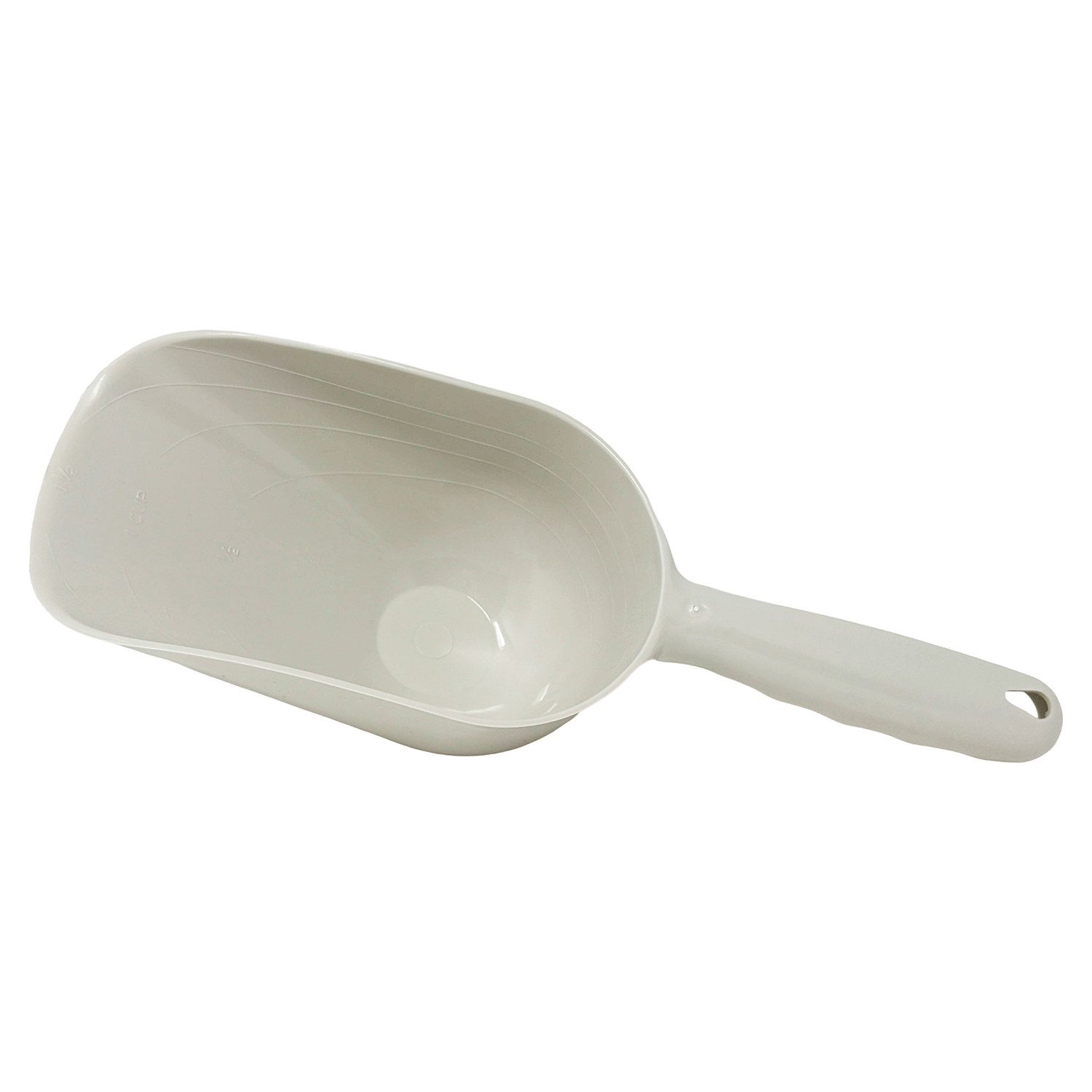
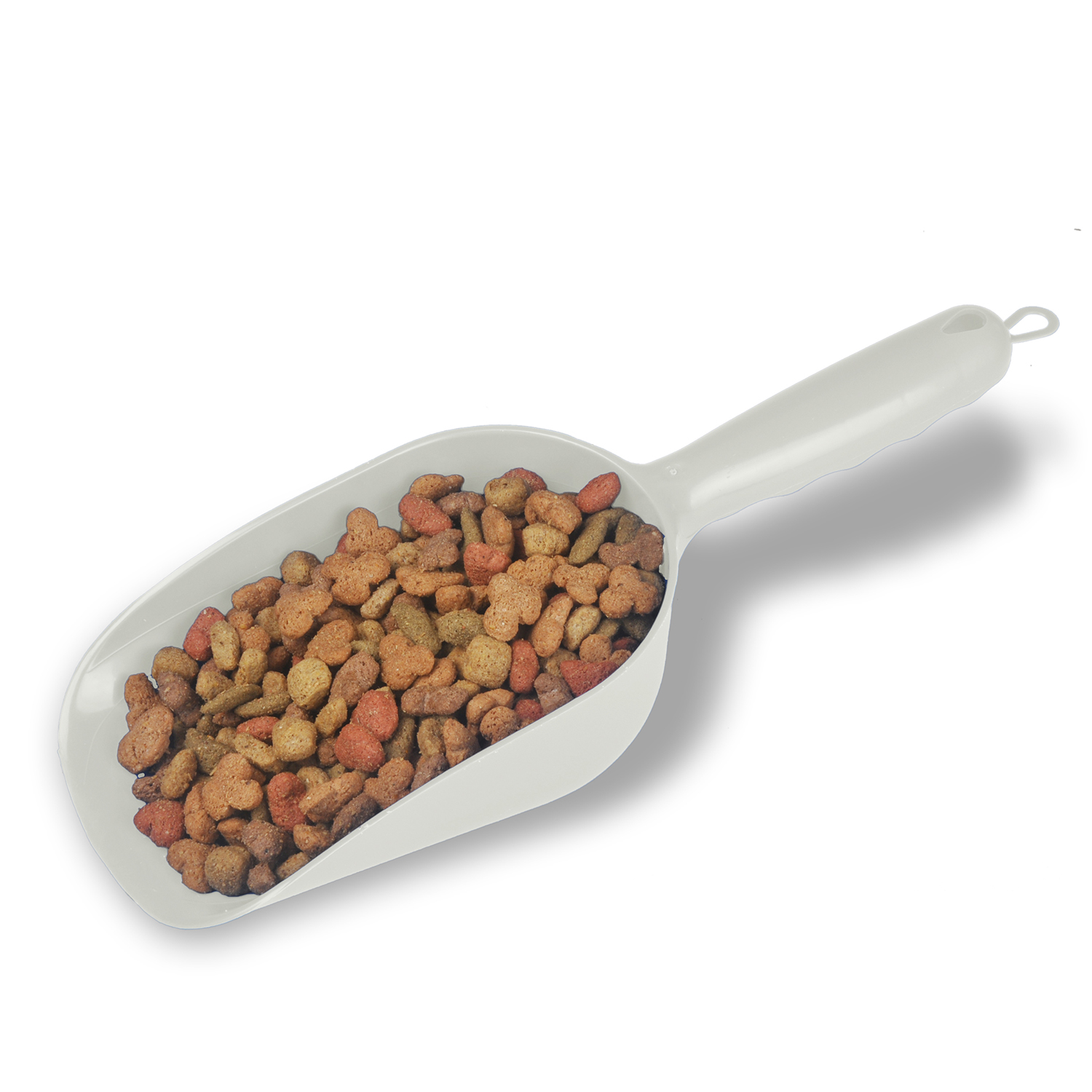
 One-cup or clip-on scoop
 Straight-sided measuring cup
This is a purchase-decision guide, not a hands-on review and not nutrition advice. A scoop only repeats an established amount; it cannot determine how much an individual pet should eat. Follow the current food label and any instructions from your licensed veterinarian.
Quick Decision: Buy, Skip, Delay, Choose an Alternative, or Escalate
Buy a dedicated scoop when you measure dry food every day, the current cup is hard to reach or read, and a clearly marked tool can stay with the food.
Skip it when a clean, dedicated measuring cup already matches the units you use and fits the bag or bin. A pet-branded handle does not improve a routine that already works.
Delay the purchase until you know the amount you need to repeat, the container opening and depth, and where the scoop will be stored without picking up moisture or residue.
Choose an alternative such as a standard dry measuring cup when you need a level rim and familiar fractions, or a lightweight transfer cup with a kitchen scale when the food maker or veterinarian has already given instructions in grams.
Escalate feeding-amount questions to a licensed veterinarian. Sudden appetite changes, unexpected weight changes, repeated vomiting, or difficulty chewing or swallowing call for veterinary advice, not a new scoop.
The Worth-It Test
- Repeat use: Will the tool be used at least daily rather than becoming another drawer item?
- Correct units: Are the markings visible and in the same units as the instructions you follow?
- Container fit: Does the bowl pass through the opening, and is the handle long enough for the food level?
- One-meal capacity: Can it measure the normal amount without several awkward partial scoops or an unreadable tiny fraction?
- Cleaning fit: Can you wash and fully dry its seams, handle, hinge, or collapsible folds as directed?
- Storage fit: Can it stay labeled, clean, dry, and easy for every feeder to find?
If your existing measuring cup passes all six checks, a new scoop is unlikely to add much value.
Cost, Maintenance, and Setup Tradeoffs
The purchase cost is usually modest, but the real tradeoff is extra equipment and another cleaning task. A large molded scoop can reach into a deep bin and reduce repeated motions, yet it takes more storage space and may be difficult to read for small amounts. A clip-on or collapsible version stores neatly, but hinges and folds add places that need washing and drying.
Setup matters more than branding. Measure the container opening, note whether the food stays in its original bag, and decide whether the scoop will hang nearby, clip to the bag, or remain inside a clean dry bin. Keep the original package, lot code, best-by date, and feeding directions available even when food is stored in another container.
Who Should Skip a Specialty Scoop
Skip one if you feed wet food, use pre-portioned packaging, or already have a dedicated measuring cup that is clear and convenient. Also skip a two-cup model when the normal amount is a small fraction that is difficult to judge against its markings.
A scoop is also the wrong fix for inconsistent household instructions. If several people feed the pet, write down the established amount and schedule, label the correct tool, and agree on a simple way to record that a meal was given.
Red Flags Before Buying
- The listing does not clearly state capacity, units, dimensions, material, or cleaning instructions.
- The marks are decorative, low-contrast, or unrelated to the amount you need to repeat.
- The scoop is too wide for the bag or bin opening, or too short for the container depth.
- Hollow handles, hinges, or folds look difficult to rinse and dry fully.
- The seller makes nutrition, weight-control, hygiene, or health promises based on the tool alone.
- The plan depends on guessing a feeding amount rather than following appropriate instructions.
Cheaper Alternatives and Better First Moves
Start by dedicating an ordinary dry measuring cup to the pet food and labeling it. A straight-sided cup with a level rim can be easier to use for smaller amounts than a broad scoop. If instructions are in grams, use an appropriate kitchen scale and tare the bowl—but only with a target supplied by the food maker or veterinarian.
If material is now the remaining question, compare a silicone and stainless steel pet food scoop by rigidity, package fit, cleaning, and storage. For a broader, low-clutter setup, see Starter Pet Supplies That Actually Help, the site's practical new-pet pillar. The low-mess feeding station guide covers bowl placement and daily cleanup, while the small-kitchen food storage guide helps with bag retention, footprint, and access.
Bottom Line
A pet food scoop is worth it when a clearly marked capacity, useful handle, easy cleaning, and dedicated storage make a daily dry-food routine simpler. It is a convenience tool, not a feeding solution.
If a labeled measuring cup already does the same job, skip the extra purchase. If you do buy, choose the smallest easy-to-read format that fits the amount, container, cleaning routine, and people who actually feed the pet.