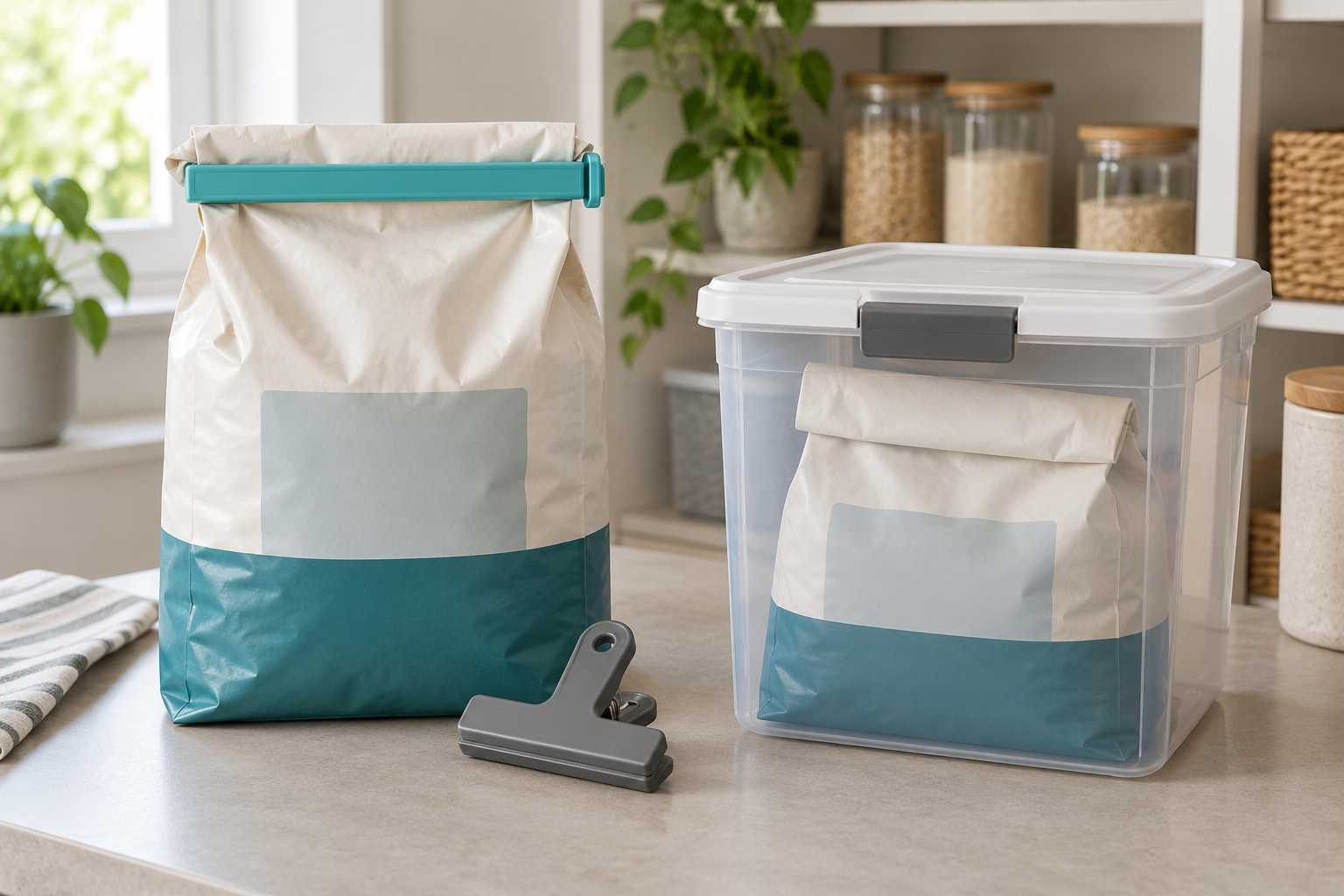
This is a package-closure and storage decision, not nutrition advice. Follow the current instructions on the food package. If food or packaging is damp, damaged, contaminated, or otherwise questionable, follow the maker's guidance rather than assuming a new clip fixes it. Ask a veterinarian about diet, portions, appetite changes, or health concerns.
Quick Decision: Buy, Repurpose, Use a Bin, or Skip
- Buy a dedicated clip when the package has no dependable built-in closure, an existing clip does not fit, and a measured format makes daily access easier.
- Repurpose a household clip when it is clean, intact, simple to use, and holds the folded bag without sharp pressure or hidden information.
- Use the original bag inside an outer bin when structure, carrying, shelf placement, or pet access is the larger problem.
- Delay until you open the actual bag and know its fold, thickness, storage location, and maker's directions.
- Skip when the built-in closure works or any add-on would distort seams, cover information, or create loose parts within a pet's reach.
The Seven-Part Worth-It Test
- Closure need: Does the opened package actually need help beyond its zipper, strip, or other built-in closure?
- Folded dimensions: What are the width and thickness after the bag is closed as directed?
- Daily handling: Can everyone who feeds the pet remove and replace the clip without excessive force?
- Package condition: Does the clip avoid valves, zippers, stiff seams, gussets, and fragile edges?
- Information access: Will the label, lot code, date, ingredients, feeding directions, and maker contact remain readable?
- Cleaning and storage: Can the clip be cleaned, dried fully, and stored away from pets?
- Real value: Does it solve recurring friction that a clean clip already owned cannot?
Fit Comes Before Clip Style
Measure the folded top rather than the printed face of the bag. A wide sliding clip needs a straight fold within its usable length and opening. A spring clamp grips a smaller area and may suit a rolled corner, but its handles need clearance. Do not force a clip across a zipper, valve, thick seam, or uneven gusset, and do not trim or puncture the package to make hardware fit.
A listing photo cannot confirm compatibility. Compare stated dimensions with the closed bag in front of you and check return terms when fit is uncertain. The bag clip buying guide explains sliding, spring, and compact channel formats after the category has earned a place in the routine.
When an Existing Clip or Outer Bin Is Better
A clean household spring clip is the cheaper choice when it holds the real fold, has smooth intact contact surfaces, and is comfortable to open every day. Keep it dedicated to this use and away from trash or cleaning-product packaging. Retire it if it cracks, rusts, bends, loses parts, or develops sharp edges.
An outer bin is more useful when the bag falls over, is awkward to move, or needs a defined storage location. Measure the whole closed original bag and the shelf before buying. Keep the food in its labeled original packaging whenever practical and follow its storage instructions; an outer container does not establish shelf life or make damaged food acceptable. Compare an airtight container with original-bag storage before changing systems.
Cost, Maintenance, and Setup Tradeoffs
A clip is inexpensive compared with a storage bin, but it adds another part to wash, dry, inspect, and find at feeding time. Long sliding clips need drawer or shelf space when the bag empties. Strong spring clips may be awkward for limited hand strength, while compact channel clips can be fussy when the folded thickness changes.
A bin costs more and occupies permanent space, yet can support the original bag and make a stable home for it. It also needs routine cleaning and complete drying according to its maker's directions. Before buying either option, test the proposed shelf location for lid or handle clearance and keep food and loose clips inaccessible to pets.
Red Flags and Who Should Skip
Skip a clip with no usable dimensions, unclear care directions, sharp contact points, brittle parts, exposed rust, or detachable pieces a pet could reach. Skip any setup that requires forcing the closure, conceals important package information, narrows a walkway, or places a heavy bag where it is hard to lift safely.
A clip also is not the answer to damaged packaging, moisture, contamination, insects, an expired product, feeding uncertainty, or a pet refusing food. Follow the manufacturer or retailer's directions for product and packaging concerns. Contact a veterinarian for appetite changes, digestive concerns, diet questions, or other health issues.
Bottom Line
A pet food bag clip is worth buying only when the opened original bag has a recurring closure problem and a measured dedicated format works better than a clean clip already on hand. Delay until the bag is open, preserve all package information, and choose an original-bag-in-bin setup when support and storage—not closure—are the real needs.
For the broader feeding setup, use the new-pet essentials guide. If portion-tool storage is the next problem, first decide whether a dedicated food scoop is worth it.