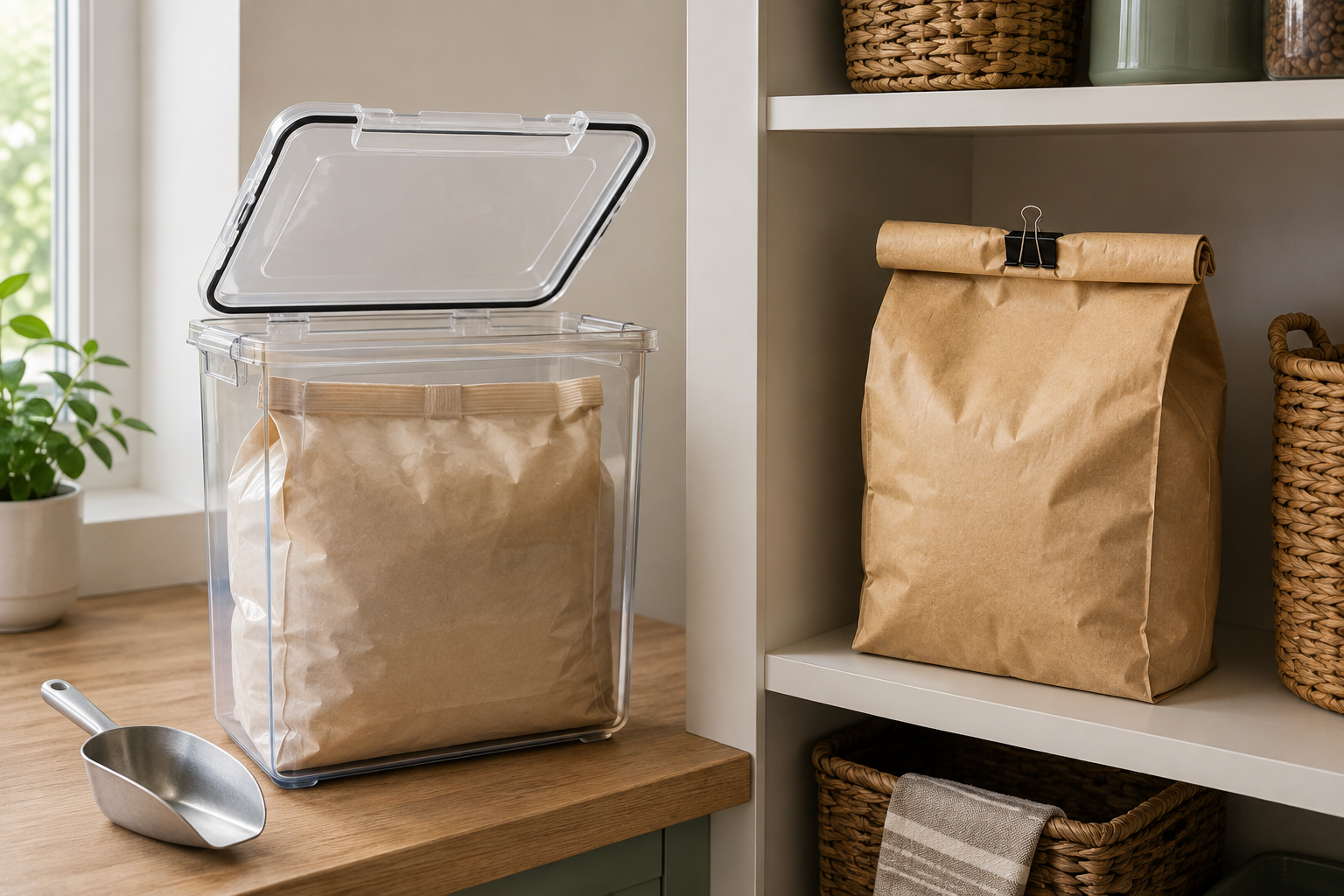
This is a storage-workflow comparison, not a promise that either setup keeps food fresh for a particular period, prevents pests, or changes nutrition. Follow the food manufacturer's directions and retain the packaging information. If food looks or smells unusual, the package is damaged, or contamination is suspected, stop using it and contact the manufacturer or an appropriate local professional.
Quick Comparison
Keep the original bag by itself when its closure works, it stands securely, it is easy to scoop from, and you have a dry location pets cannot reach.
Put the original bag inside a lidded container when the bag slumps, tips, crowds the shelf, or is difficult to move—and a measured bin genuinely improves access.
Avoid decanting by default when doing so would separate food from the label, lot code, date, ingredients, or feeding directions. If the maker specifically instructs a different storage method, follow that guidance.
Option A: Airtight or Lidded Pet Food Container
A container adds a rigid footprint, a dedicated opening, and another surface to clean. It can turn a floppy bag into a stable storage setup, but only if the usable interior fits the full bag and the lid can open where you plan to store it.
Who a container may fit
- Owners whose usual dry-food bag is difficult to stand, carry, or access neatly.
- Homes with a measured pantry, cabinet, or floor location that allows full lid clearance.
- People who can comfortably reach into, move, clean, rinse, and fully dry the bin.
- Routines where retaining the whole original bag inside the container is practical.
Container tradeoffs
The bin takes more space than the flexible bag alone. Gaskets, hinges, wheels, corners, and scoop holders create extra cleaning points. Large containers can be awkward to lift, and capacity labels do not guarantee that a particular bag shape will fit. A lid is not a pet-proof or pest-proof guarantee.
Option B: Keeping Food in the Original Bag
The original bag keeps identification and feeding information attached to the food and collapses as the contents are used. It is the lowest-clutter choice when the bag closure and storage location already work.
Who original-bag storage may fit
- Owners who buy smaller bags with a closure they can operate reliably.
- Homes with a dry, stable shelf or cabinet away from pets.
- People who want to avoid lifting or washing a large separate bin.
- Households that change foods and need package details to remain easy to verify.
Original-bag tradeoffs
A large flexible bag may slump, tear, or be hard to scoop from. Rolling the top changes its height, while a clip or closure needs enough room and must stay attached. A secondary tray or ordinary outer tote may add structure without requiring a purpose-built airtight container.
Measure the Whole Routine, Not Just Capacity
- Full bag: Measure width, depth, height, and the folded or closed top when the bag is full.
- Usable interior: Compare internal dimensions rather than relying only on stated volume.
- Lid path: Leave room for the lid, cabinet door, scoop, and your hand.
- Lifting: Plan how the food reaches the storage spot and whether the setup can be moved for cleaning.
- Package retention: Keep the label, date, lot code, ingredients, and feeding directions with the food.
- Pet access: Store either format where a pet cannot chew the bag or bin, reach the food, or knock the setup over.
Cleaning and Changeover
For a bin, follow its maker's care directions and let every washed surface dry fully before returning the bag. Remove crumbs and residue around the base, lid, seal, and scoop area. Do not put a new bag on top of old loose food or residue.
For original-bag storage, wipe the shelf or outer tote as needed and inspect the package for tears, dampness, or closure damage. Keep the scoop clean and separate unless the food or container maker directs otherwise.
When to Skip Each Setup
Skip a separate container when it blocks a walkway, cannot open fully, is hard to clean or lift, or adds no meaningful improvement over a securely stored bag.
Skip bag-only storage when the bag will not stand securely, cannot close as directed, is likely to be damaged in its location, or makes daily access unmanageable. An outer bin that retains the bag may be the simpler adjustment.
Do not use storage gear as an answer to appetite, weight, vomiting, diarrhea, sudden thirst, or other health changes. Contact a licensed veterinarian about those concerns.
Bottom Line
The original bag is usually the simplest starting point because it keeps important information with the food. A measured lidded container becomes useful when it improves stability, placement, or daily handling—and holding the entire closed bag inside often preserves the strengths of both formats.
If the original bag is the better fit but its closure needs help, compare bag clips for original pet-food packaging. If you already know you want an outer bin, compare open and lidded access formats. For the broader setup path, use the new-pet essentials guide and the low-mess feeding station guide.