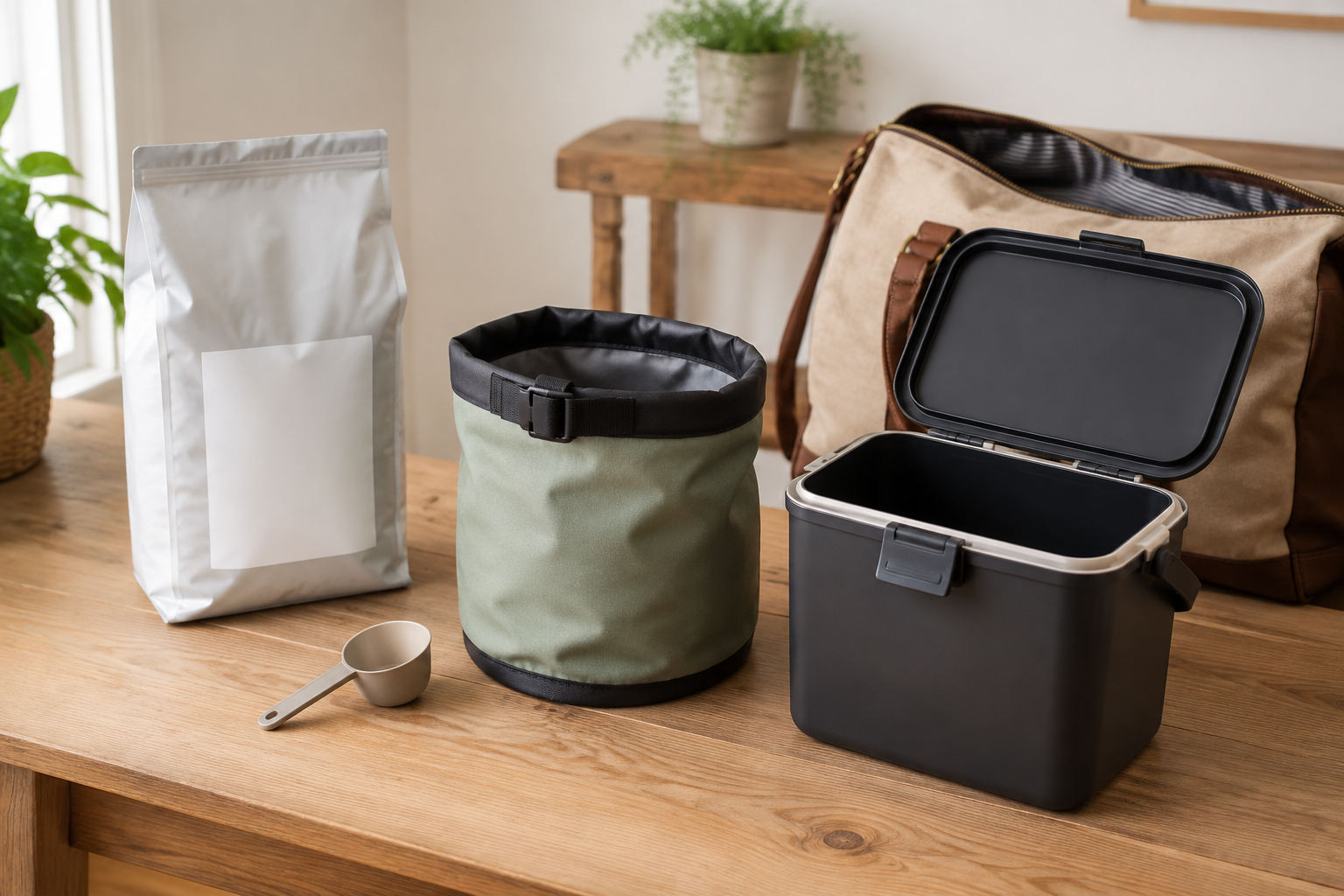
This is a structure comparison, not a hands-on test or a food-safety ranking. A travel container is an organization convenience. It does not determine portions, extend a food's usable life, replace package directions, or make an unsuitable storage location appropriate.
Quick Comparison
- Choose collapsible when luggage space is tight, the soft sides will be protected, and the lining, closure, and folds are practical to wash and dry.
- Choose rigid when fixed shape, a broad stable base, easy access, or resistance to ordinary packing pressure matters more than shrinking after meals.
- Keep the original package when it is already compact, closes as directed, and can travel protected from damage and pet access.
- Skip both if neither option is explicitly intended for food contact or you cannot retain the label, lot code, date, and feeding directions.
Compare the Real Packed Volume
Start with the amount of familiar dry food required by the feeding plan you already follow. Do not let a container's capacity determine portions. Put that amount in a similarly sized household container, then measure the space it occupies in the tote, vehicle bin, or luggage.
For a collapsible design, record both its full and empty dimensions. A roll-top can become shorter as food is used, but buckles, handles, and stiff bases still take space. A rigid container keeps its exterior footprint for the return trip; that can be inconvenient, or useful if it protects a scoop and clean bowls after the food is gone.
Collapsible Containers: Flexible Packing, More Seams to Inspect
Soft sides can fit around other gear and may be easier to carry by a top handle. Compare the maker's stated capacity with the usable volume below the closure. Inspect the lining, seams, buckle, zipper or roll-top instructions, and whether the base stands while you scoop.
Folds and stitched corners can take more attention to clean and dry. A soft container also needs a protected location away from sharp gear, damp supplies, and pet access. Do not infer puncture resistance, leak resistance, airtightness, or food-contact suitability from appearance; verify only current manufacturer claims.
Rigid Containers: Stable Access, Permanent Footprint
A rigid body can provide a broad opening and predictable base, which helps when measuring meals in a rental kitchen or at a campsite table. Compare the latch or threaded lid, removable seals, handle attachment, and whether your scoop reaches the bottom without contaminating the handle.
The tradeoff is fixed volume. Measure around hinges, handles, and lid swing rather than using capacity alone. Check for corners or gasket channels that are hard to reach, and follow the stated washing and drying method for every removable part.
Keep Package Information With the Food
Repacking should not separate food from its identity. Keep the original bag when practical, or retain clear photographs of the complete label, product name, lot code, date, feeding directions, manufacturer contact details, and any instructions you may need. Label the travel container plainly when food for more than one pet is packed.
Bring the familiar food used at home. Questions about portions, prescription food, allergies, diet changes, appetite, vomiting, diarrhea, or other health concerns belong with a licensed veterinarian—not a storage-container guide.
Cleaning, Drying, and Condition Checks
- Confirm that the current product is intended for the food and use you have planned.
- Follow its directions before first use and after the trip.
- Clean folds, seams, corners, lids, threads, seals, buckles, and scoops as directed.
- Let every part dry fully before refilling or storing it closed.
- Stop using a container with damaged lining, open seams, cracks, sharp edges, warped lids, broken latches, or residue that does not clean away.
Who Should Skip a Dedicated Container?
Skip a purchase when the original bag is small, securely closed according to its directions, and protected inside a clean tote. Also skip a soft format if the packing area includes sharp or heavy equipment, and skip a rigid one if its fixed footprint crowds essential travel supplies. For a sitter, several clearly labeled portion containers may be easier than either large format, provided every piece is suitable and manageable.
Plan the Rest of the Travel Feeding Kit
Compare travel bowls with lids for short outings, organize clean and used gear with the pet outing kit guide, and keep travel food separate from water bottles, cleaners, damp towels, and used bowls.
Bottom Line
Choose a collapsible travel food container when shrinking bulk and flexible packing solve the main problem and you can clean every fold. Choose rigid when a stable opening and fixed-shape protection justify the permanent footprint. In either case, verify current materials and care directions, retain the original food information, and treat the container as organization—not a nutrition or health solution.