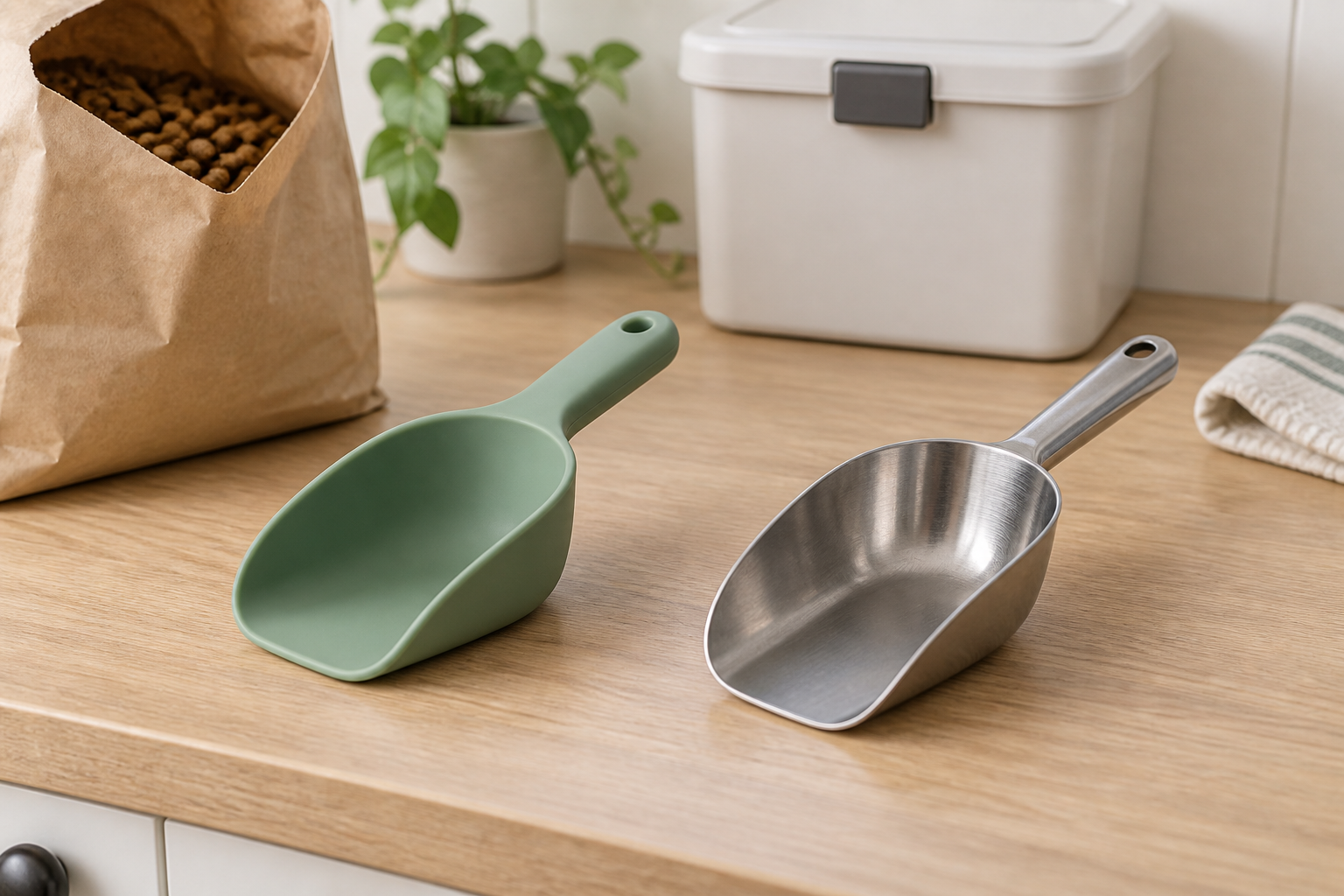
This is a product-material comparison, not nutrition advice. A scoop repeats a selected volume; it does not determine the appropriate amount for an individual pet. Follow the current food label and instructions from your licensed veterinarian. Ask your veterinarian before changing food amounts for weight, growth, pregnancy, illness, medication, or another health concern.
Quick Comparison
Silicone can reduce weight and flex slightly around a package opening, depending on thickness and construction. That flexibility may also make a very soft bowl less convenient for leveling or carrying a full scoop.
Stainless steel keeps a rigid bowl and edge, but it can be heavier and may knock against a hard container. Joined handles, rolled rims, stamped markings, and stated steel grade vary by product, so inspect the actual listing rather than assuming every metal scoop is built alike.
Measure Before Choosing
- Amount and units: start with the volume you have been directed to serve. Check whether markings use cups, fractions, milliliters, or another unit you understand.
- Package opening: measure the narrowest usable width after the bag is opened or the bin lid is raised.
- Depth and handle: make sure the handle reaches comfortably without your hand rubbing the food or container edge.
- Storage: measure the drawer, hook, scoop holder, or dry shelf. Do not leave a scoop buried in food unless the food or container maker expressly permits it.
When Silicone Fits Better
A one-piece silicone scoop can suit a small bag opening, light daily kit, or crowded drawer. Compare wall thickness and bowl shape: a scoop that bends too readily for your normal amount may be awkward to lift or level. Check that any markings are molded deeply enough to read and use consistently.
Inspect the rim, handle, and hanging hole for tears, splitting, tackiness, trapped residue, or other deterioration. “Silicone” by itself does not establish temperature limits, dishwasher compatibility, stain resistance, or food-contact suitability; rely on the current maker's declarations and care directions.
When Stainless Steel Fits Better
A rigid stainless steel bowl can suit a deep bin or a routine where a firm edge makes leveling easier. Compare the complete construction, not only the word “steel.” Look at the handle joint, rim, interior finish, declared capacity, markings, weight, and cleaning directions.
Skip a scoop with sharp edges, rough seams, loose joints, deep dents, corrosion, or areas that cannot be cleaned. A metal scoop is not automatically more accurate or more durable; those outcomes depend on its dimensions, markings, fabrication, use, and care.
Cleaning, Drying, and Food Storage
Follow the scoop maker's cleaning directions and the food maker's handling guidance. Remove food residue, wash as directed, and let the entire scoop dry before it returns to a clean storage spot. Pay attention to handle joints, embossed markings, hanging holes, and rolled edges.
Keep the original food packaging or its label, lot information, date, ingredients, and feeding directions with the food. A scoop is a convenience tool, not a way to preserve food or replace package information. Store food and tools in a dry place pets cannot access.
Who Should Skip Each Material?
Skip silicone when the bowl flexes too much for the amount you serve, markings are hard to read, the handle is too short, or the care directions do not suit your washing routine.
Skip stainless steel when its width will not enter the package, its weight or hard rim makes handling uncomfortable, joined areas are hard to clean, or it will damage a container surface. Skip buying either if a clean, clearly marked household measure already repeats the instructed amount and can be stored separately.
Bottom Line
Silicone earns its place when light weight and limited flexibility improve package and storage fit. Stainless steel earns its place when a rigid bowl and firm edge improve handling. Choose only after checking the amount, units, opening, handle, cleaning directions, and dry storage plan.
For the complete feeding setup, use the low-mess feeding station guide and the new-pet essentials pillar.