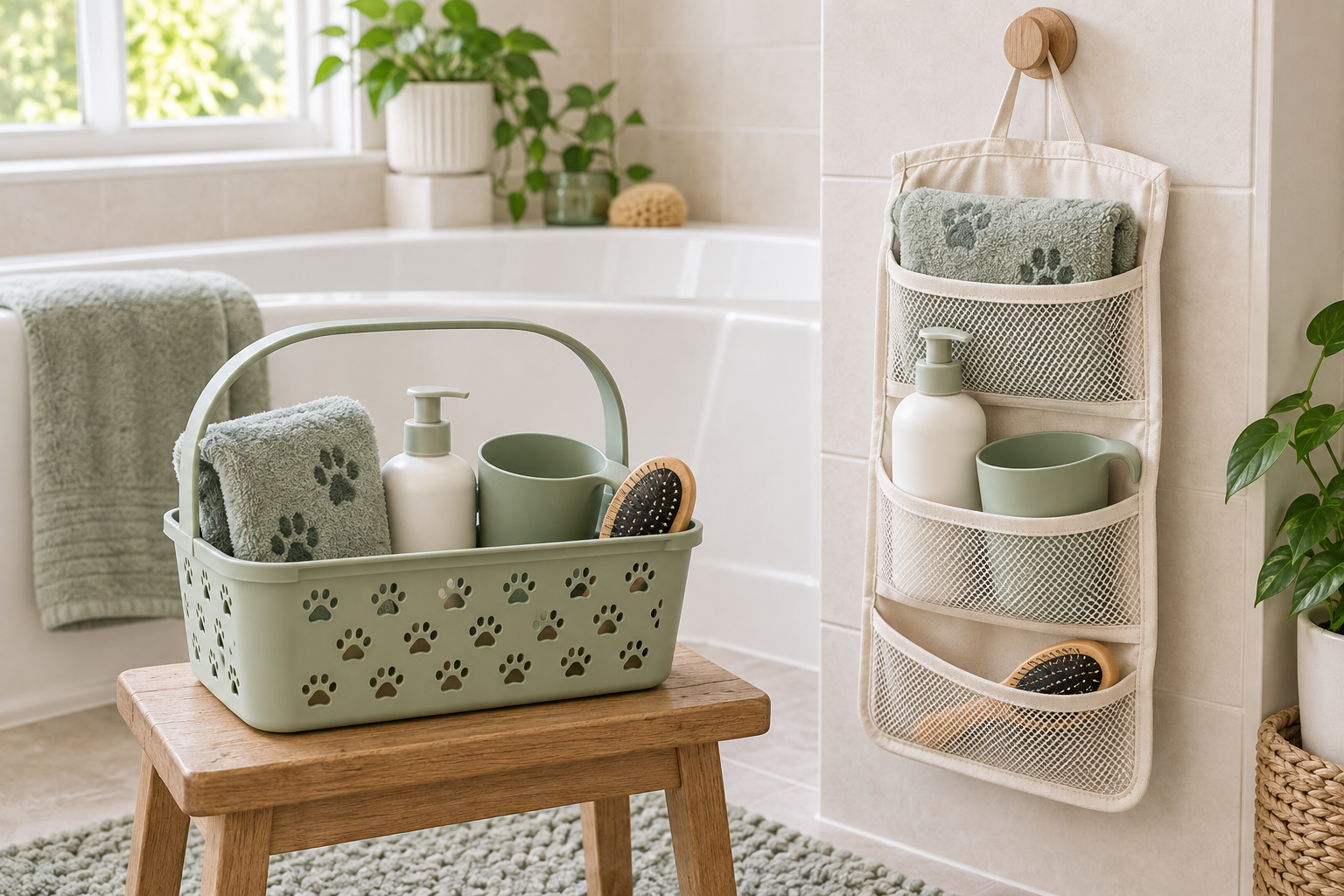
This guide covers storage for ordinary non-medicated supplies such as a pet-appropriate shampoo used according to its label, a rinse cup, clean towels, and simple brushes. It does not cover bathing technique, restraint, skin conditions, or medicated products. Ask a veterinarian about persistent itching, sores, pain, unusual hair loss, or whether bathing is appropriate for a pet with a health concern.
Quick Comparison
A handled basket makes the whole kit portable. It works well when the bathroom is shared, supplies belong in a closed cabinet between uses, or the pet is bathed in more than one location. Its tradeoffs are counter or floor footprint, lifting a loaded container, and finding a separate open place for damp items to dry.
A hanging organizer creates a fixed vertical station. Pockets can keep light items visible while freeing a shelf, but the mounting point, hanger shape, door movement, wall permission, pocket depth, and loaded clearance all matter. Fabric and seams may take time to dry, and an open organizer can leave supplies within a pet's reach. If you are not sure the category earns space at all, start with the hanging pet bath organizer worth-it test.
Neither format guarantees drainage, dry storage, stability, comfortable carrying, secure mounting, or pet-proof access. Those depend on the specific construction, placement, load, care instructions, condition, and household routine.
Measure the Supplies and the Bathroom
Start with the smallest useful kit rather than buying around every grooming item you own. Measure the tallest closed bottle, rinse cup, folded towel, and guarded brush. Note which items stay dry, which become wet, and which must return to inaccessible storage immediately.
- Usable space: compare interior or pocket dimensions, not just the outside width and height.
- Access: allow room to lift tall bottles and reach pockets without pulling the organizer off its support.
- Clearance: check faucet, shower-curtain, cabinet, door, and walking clearance in the loaded position.
- Placement: keep the organizer away from toilet splash, direct shower spray unless the maker permits it, and curious pets.
- Drying: plan where the emptied organizer, wet towels, brushes, and rinse cup can dry fully after use.
A shared bathroom often favors a kit that can leave the room. A dedicated pet-washing area may suit fixed storage, provided the mounting surface and organizer are compatible and the supplies remain inaccessible when unsupervised.
When a Handled Basket Fits Better
A handled basket fits a routine in which clean supplies start in a closet or cabinet, travel together, and return after everything is dry. Look for a flat base, a handle with enough hand clearance above the contents, smooth reachable corners, and openings that do not let small tools fall through. Follow any stated load and cleaning guidance.
Open plastic or coated baskets may be straightforward to wipe or rinse, but confirm the actual care instructions. Drainage cutouts help water leave only when they stay unobstructed; they do not dry towels or padded tools. Inspect for cracks, rough edges, a distorted base, or a damaged handle and retire a basket that no longer carries its intended load reliably.
Skip a large basket that encourages storing every bottle beside the tub. A smaller, lighter kit is easier to move and makes it clearer which wet items need separate attention.
When a Hanging Organizer Fits Better
A hanging format fits a light inventory and a stable, permitted mounting point. Compare over-door hooks, wall hooks, rails, or built-in loops only with the surfaces and hardware the maker identifies. Check whether the organizer interferes with a closing door, shower curtain, cabinet, towel bar, or the pet's movement through the room.
Mesh pockets make contents visible and may allow more airflow than solid pockets, while solid pockets can retain small items. Neither automatically dries wet supplies. Check seams, pocket openings, hanger attachments, and any removable support panels. Follow the organizer's stated load limit and do not improvise mounting that the maker does not support.
Renters should confirm mounting permission before adding hooks or hardware. An over-door format can avoid wall holes, but only if the hooks fit the door and frame without preventing full, smooth closure.
Plan a Separate Wet-Item Routine
Remove wet towels, brushes, cups, and leaking packages after the bath. Follow each item's care directions, open pockets and compartments, and provide enough airflow for every surface and seam to dry fully before repacking. Do not seal damp items inside a basket, pocket, cabinet, or closed bag.
A handled basket can carry used items to the laundry or drying area, but keep clean supplies separate. A hanging organizer can remain open to dry if its care instructions and location allow, though wet textiles are usually better spread out on a suitable rack. For the tub-side floor layer, compare a washable bath mat and folded towel as a separate cleanup decision.
Who Should Skip Each Format?
Skip a handled basket when carrying the loaded kit is awkward, the base blocks the narrow bathroom route, or the basket has nowhere secure to live. Skip a hanging organizer when there is no compatible permitted mounting point, a door cannot close freely, pockets sag around the actual items, or pets can reach the contents.
Skip both when a dry shelf or existing secure bin already holds the small kit near the only place it is used. Neither open format is appropriate for medication, blades, concentrated cleaners, pest products, cords, or anything else that needs locked or inaccessible storage.
Related Decisions
For more ways to organize a compact routine, use the small-bathroom grooming organizer guide. If the whole setup must move between rooms, compare pet supply caddy formats. Keep bath storage focused on ordinary supplies rather than treating an organizer as a health or safety solution.
Bottom Line
Pick a handled basket when portability and return-to-cabinet storage solve the real problem. Pick a hanging organizer when light supplies can remain at a compatible fixed station without blocking the room or becoming accessible to pets. In either case, buy for the measured inventory, keep hazardous items elsewhere, separate wet items, and follow the product's mounting, load, cleaning, and drying directions.