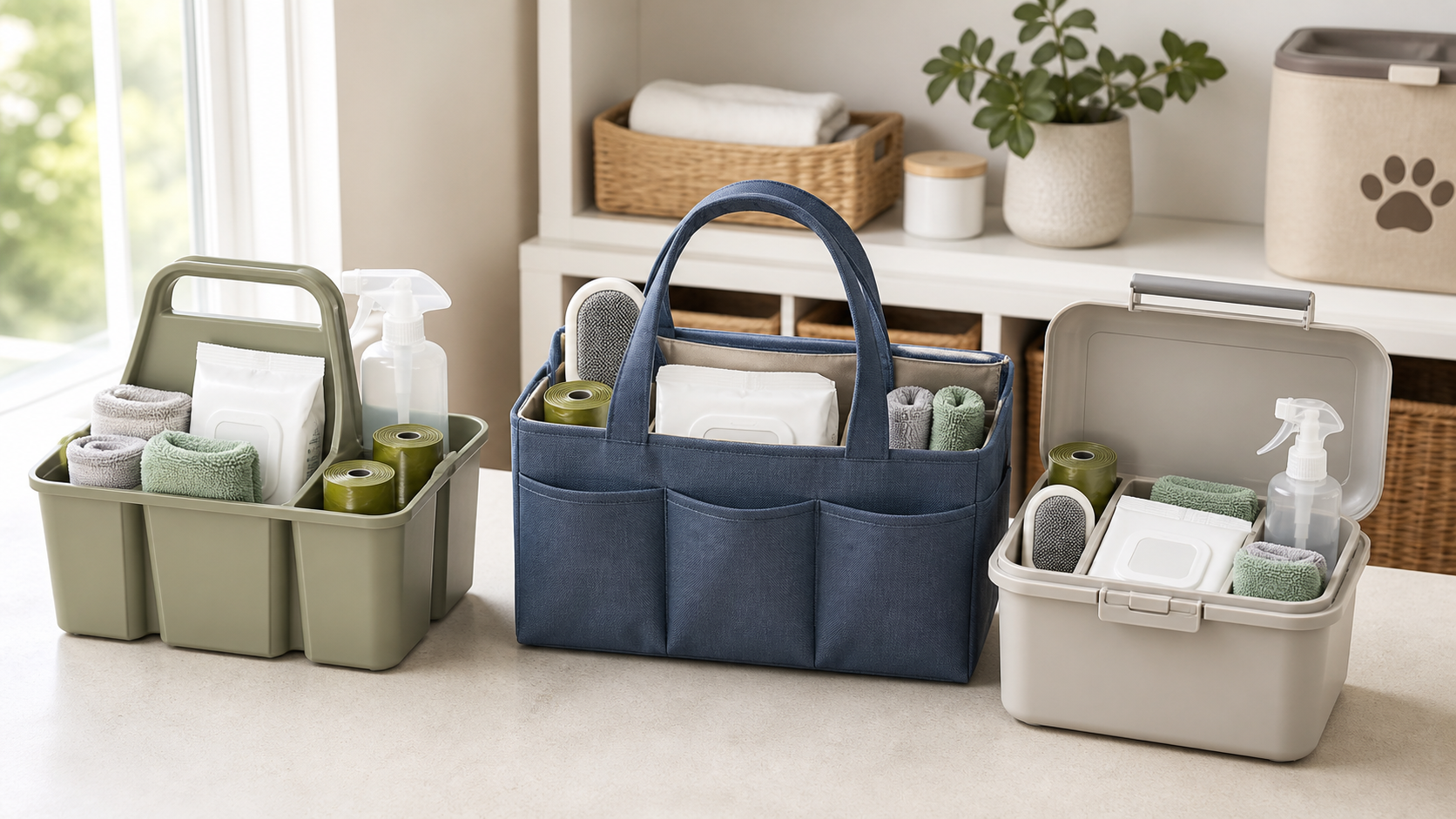
This is a category buying framework, not a hands-on ranking. A caddy is an organizer for routine non-medical supplies; it is not secure storage for medication, concentrated cleaners, sharp grooming tools, or emergency items.
Quick Comparison: Match the Caddy to the Routine
Rigid divided caddy: best for damp, wipe-clean routines
Molded plastic is the simplest fit when a damp cloth or small drip is likely. Dividers help keep a reusable bottle upright and separate clean cloths from used items. Check the bottom for narrow corners that trap debris, and lift a loaded caddy before assuming the handle is comfortable.
Soft washable tote: best for light, flexible loads
A fabric tote suits dry supplies such as folded cloths, waste-bag rolls, lint tools, and sealed wipes. Exterior pockets make small items visible, while flexible sides fit shelves more easily. The tradeoff is weaker spill containment and less protection from curious pets.
Lidded carry box: best for contained storage
A lidded box keeps loose rolls and wipe packets together and can reduce casual access when stored properly. A lid does not make household cleaners pet-safe or childproof. Check that the latch stays shut when carried and that the box can be opened without setting a heavy load on the floor.
Selection Criteria That Matter
- Measured capacity: List the supplies you move and measure the tallest bottle before choosing dimensions.
- Handle and balance: A centered, rounded handle is easier to carry than a thin edge, especially with an uneven load.
- Compartments: Separate clean cloths, used items, bag rolls, and upright containers.
- Material: Rigid plastic wipes clean; coated fabric handles small damp spots; ordinary canvas needs laundering and drying.
- Leak management: Keep every liquid in its original, closed container and follow its label.
- Storage fit: Measure the shelf, cabinet, or closet, including handle height.
- Pet and child access: Store wipes, cleaners, bags, and small tools securely; a lid alone is not a safety lock.
- Cleaning: Prefer smooth interiors, removable dividers, washable fabric, and construction that dries fully.
What Belongs in a Room-to-Room Cleanup Caddy?
A simple load might include clean microfiber cloths, a sealed pet-wipe packet used according to its label, waste-bag rolls, a lint brush, paper towels, and one closed everyday cleaner in its original labeled container. Keep used cloths in a separate washable bag rather than returning them to the clean compartment.
Do not mix medications, first-aid supplies, concentrated chemicals, pest products, grooming blades, food, or treats into the organizer. A smaller purpose-built caddy is usually better than one large bin that becomes too heavy or poorly organized.
Who Should Skip a Portable Caddy?
Skip this purchase if one cleanup station already serves the whole home, if you need locking chemical storage, or if carrying a loaded organizer is uncomfortable. A small basket of dry cloths plus secure cabinet storage for liquids may be simpler.
Also skip open caddies if a pet chews cloths, steals wipe packets, or noses into waste bags. Store supplies behind a closed door or in a secure cabinet instead of relying on supervision or a decorative lid.
Build a Practical Cleanup Route
If you have narrowed the choice to an open portable organizer, use the rigid versus soft-sided caddy comparison to decide by loaded shape, base support, cleaning, drying, and empty storage. For a fixed spot by the entrance, use the pet doorway cleanup station guide. For vehicle-only supplies, compare car organizers for dog-walking and cleanup gear. If muddy paws are the main problem, see pet wipes for quick paw cleanup and paw cleaners for muddy walks.
The Bottom Line
Choose a rigid divided caddy for damp, wipe-clean work; a washable tote for light dry supplies; or a lidded box when contained storage matters. Keep the load small, balanced, easy to clean, and limited to ordinary cleanup items that can be stored safely.