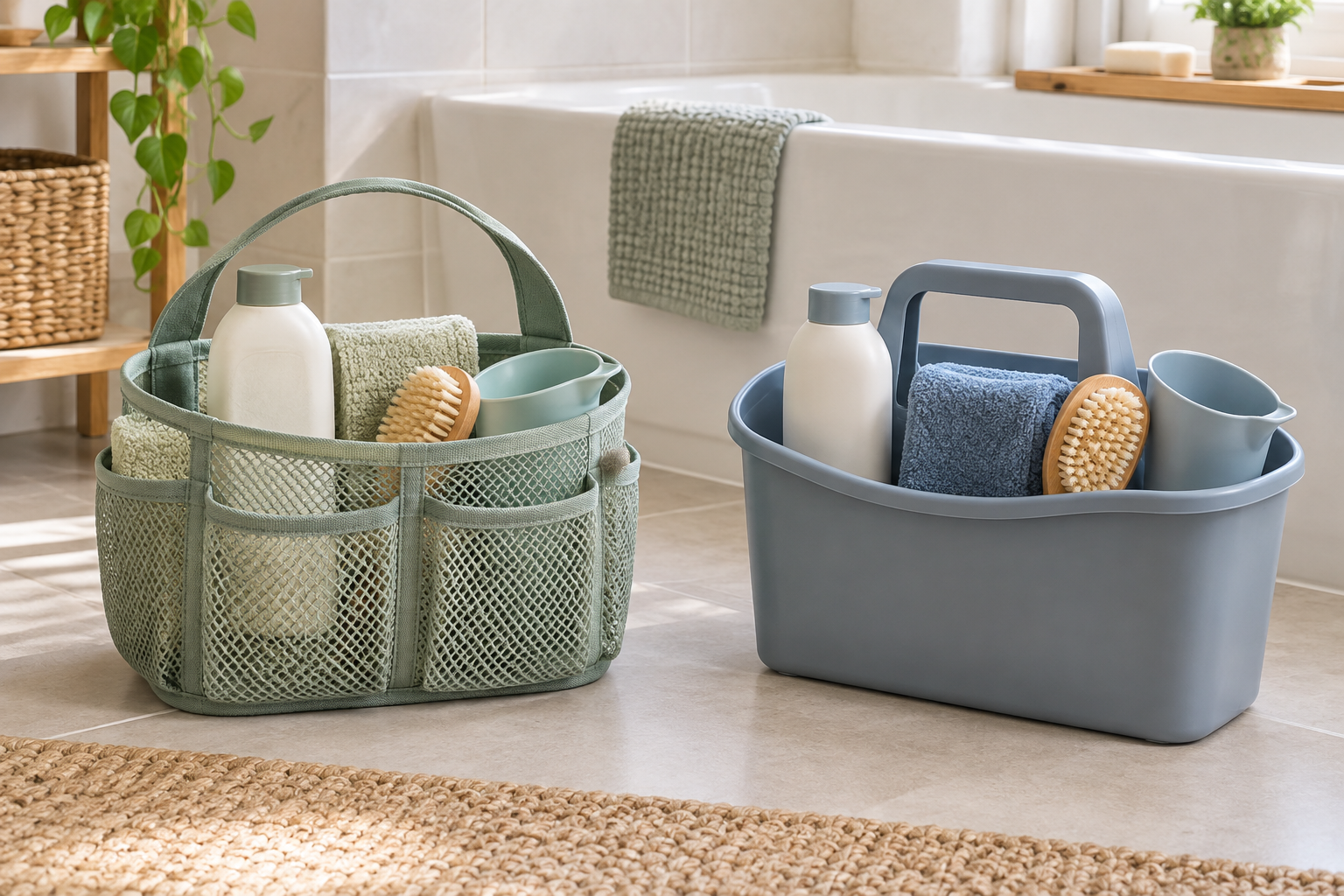
This comparison is for ordinary, non-medicated pet bath supplies such as a pet shampoo chosen for the animal, a rinse cup, towels, and simple grooming tools. It does not cover treatment products, bathing technique, skin conditions, or medical grooming. Ask a veterinarian about persistent itching, sores, pain, unusual hair loss, or whether bathing is appropriate for a pet with a health concern.
Quick Comparison
Mesh caddies expose more of the contents to air and let water pass through. That makes dampness easier to notice, but it can also leave drips on the floor and allow narrow items to poke through an opening.
Solid caddies use continuous walls and a base to retain bottles, caps, and small tools. They can catch small drips during carrying, but pooled water and hidden residue need prompt cleaning and complete drying.
The useful distinction is not “breathable” versus “waterproof.” Actual performance depends on the fabric, seams, openings, molded shape, and care directions. Treat any unverified marketing label as a prompt to inspect details, not a guarantee.
Measure the Load and the Route to the Tub
List only what belongs in the bath routine, then measure the tallest bottle, widest brush, and folded towel. Compare those dimensions with the caddy's usable interior and compartment openings. A large outside footprint can still have narrow pockets or a handle that competes with bottle tops.
- Carry path: check doorways, shelves, hooks, and where you can set the caddy without blocking the room.
- Handle: look for current maker guidance and inspect attachment points, seams, or molded joints before every loaded carry.
- Base: choose a shape that sits flat on the intended dry surface without relying on a stability claim.
- Load: avoid overfilling; use a separate trip for bulky towels or heavy bottles when the caddy flexes or the handle feels strained.
When a Mesh Caddy Fits Better
Mesh fits a routine where damp tools need to stay visible on the way to a dedicated drying location. Open panels can reduce trapped water inside the container, and a soft caddy may collapse for storage if its construction is designed for that. It does not make contents dry on its own.
Compare opening size with bottle caps, comb handles, nail tools, and other narrow pieces. Use internal pockets only when items stay fully contained. Skip a loose mesh format if a pet can reach through it, chew it, pull out a tool, or snag a tag or claw on damaged material.
When a Solid Caddy Fits Better
A solid base can keep small drips and loose items together while you move through the home. Molded dividers may also hold bottles upright when their shapes match the compartments. High walls are useful only if you can still see, remove, and clean around everything inside.
Check corners, seams, handle joints, and divided pockets for places that retain water or residue. A caddy that catches drips still needs to be emptied after use; it is not a storage tub for wet towels and it does not make a leaking bottle safe to keep.
Compare Cleaning and Drying Work
Follow the caddy maker's care directions. Mesh may need rinsing or laundering plus enough open time for seams and binding to dry. Solid plastic may be easier to wipe, but grooves and the underside need attention too. Do not close either format in a cabinet while it or its contents are damp.
Remove hair and product residue after the bath, clean spills promptly, and dry each bottle and tool as its maker directs. Retire a caddy with tearing mesh, sharp plastic, spreading cracks, a loose handle, unstable feet, or residue that cannot be removed.
Plan Secure Storage Before You Buy
An open carrying caddy is not secure storage. Keep shampoos, cleaners, sharp tools, cords, loops, and small pieces where pets and children cannot access them. If a lockable or high closed cabinet is required, measure that space with the loaded caddy before choosing a handle height or rigid footprint.
Separate medication and treatment items from routine supplies, retain original labels, and follow professional instructions. Do not transfer products into unmarked containers just to make them fit a compartment.
Who Should Skip Each Format?
Skip mesh when the route crosses floors where dripping is hard to manage, the openings do not retain your smallest tools, the fabric cannot be cleaned as needed, or your pet can reach or chew it.
Skip solid construction when the rigid footprint will not fit its dry storage spot, the interior has hard-to-clean corners, or you are likely to leave damp towels pooled inside. Skip buying either one if a washable household caddy already holds the correct supplies, carries comfortably, cleans fully, and can be stored securely.
Bottom Line
Choose mesh for visible drainage and a lighter, flexible carry format when you already have a plan for drips and full drying. Choose a solid wipe-clean caddy for contained carrying and small-item retention when you will empty and dry it after every wet use. Measurements, intact handles, cleanable construction, and inaccessible storage matter more than the label on the format.
For the wider organizing decision, compare pet grooming organizers for small bathrooms. If towels are the real bottleneck, see whether a dedicated pet towel hamper would solve that separate laundry problem.