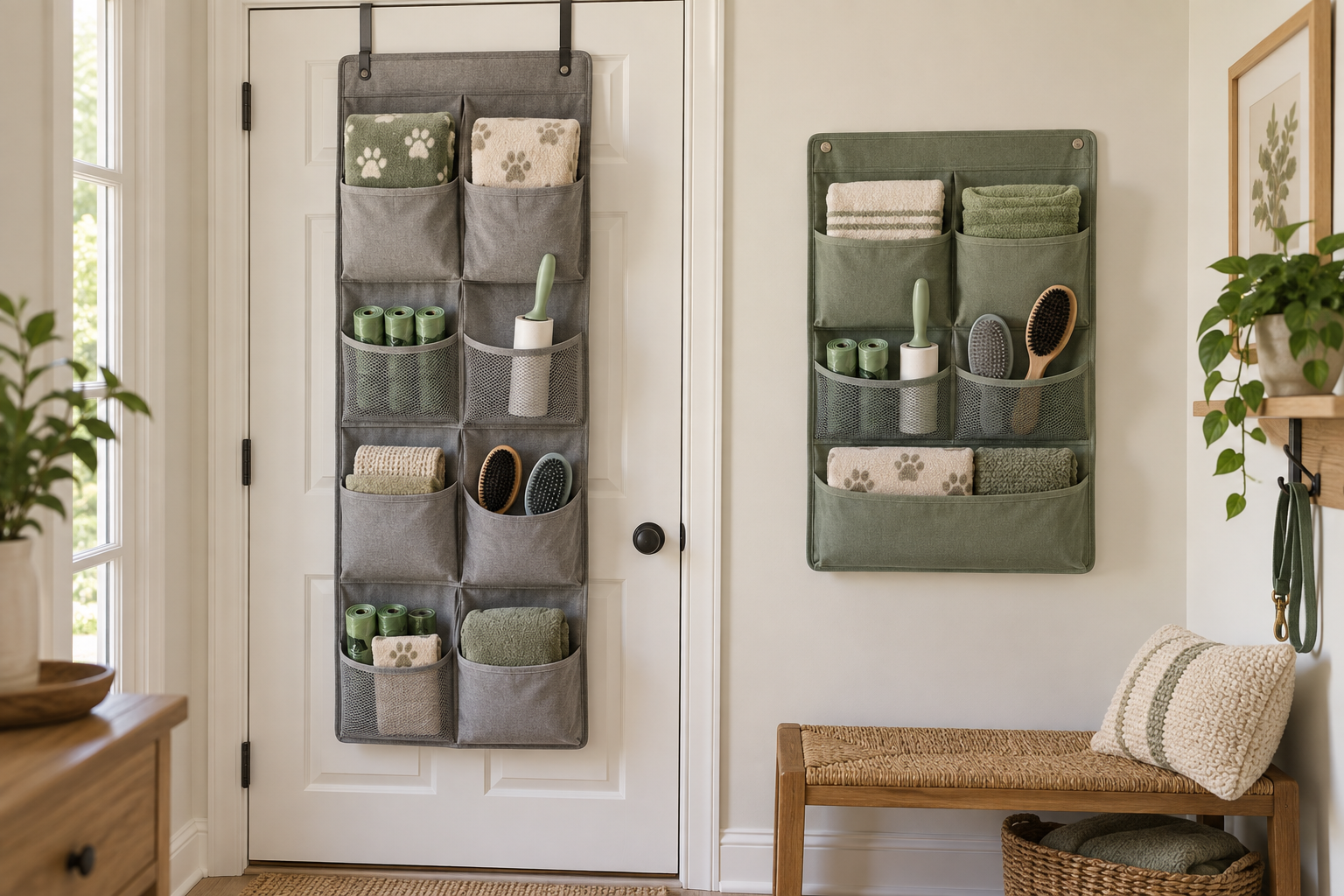
This comparison covers storage for ordinary lightweight supplies such as clean towels, sealed waste-bag rolls, lint rollers, and soft brushes. Neither format is locked storage. Keep medicines, pest products, cleaners, sharp grooming tools, cords, and anything hazardous in its original packaging inside secure inaccessible storage.
Quick Comparison
An over-door organizer uses an existing door instead of a separate patch of wall. It can be removed or moved with less wall work, but the hooks must fit the door and trim without interfering with closing, seals, hinges, handles, or the door's normal use.
A wall-mounted organizer can sit at a chosen height without adding thickness to a door. It requires a suitable mounting surface, the correct hardware and installation method, and acceptance of wall holes or repairs. Its position is less flexible once installed.
Neither format guarantees secure attachment, safe loading, pet-proofing, easy washing, or damage-free installation. Those depend on the specific organizer, hardware, surface, load, care instructions, and daily use.
Measure the Location and the Actual Inventory
- Organizer footprint: compare overall height, width, and loaded depth with the available door or wall area.
- Pocket fit: measure the tallest and widest routine items; do not count on fabric pockets stretching safely.
- Working height: keep frequently used items reachable for the owner but inaccessible to pets and children.
- Clearance: check door swing, top gap, trim, adjacent walls, switches, handles, hooks, shelves, and walking space.
- Load: follow stated load guidance and distribute lightweight items instead of filling one pocket with heavy bottles.
Make a short inventory before shopping. If the proposed organizer has unused pockets after the real routine is mapped, a smaller wall basket, drawer, or existing cabinet may be simpler.
When an Over-Door Organizer Fits Better
Over-door storage fits renters or rooms where drilling is undesirable and the door has generous, verified clearance. It is most useful when the door normally stays in a position that keeps the pockets reachable and when the loaded organizer does not strike a wall, block a handle, or interfere with movement.
Check the exact hook width against the door thickness and top trim. Protective pads may help only when the maker supplies or permits them; do not improvise a fit that prevents the door from closing normally. Inspect hooks, seams, pockets, and the top edge regularly for shifting, wear, or rubbing.
When a Wall-Mounted Organizer Fits Better
Wall-mounted storage fits a stable routine with one useful location and enough clear wall area. The height can be chosen around the adult user and nearby surfaces, and the door remains unobstructed. It may be the clearer choice when every suitable door is opened frequently or lacks top clearance.
Use the installation method and hardware specified for both the organizer and the wall construction. If the surface, concealed utilities, hardware, or load is uncertain, ask a qualified installer rather than guessing. Recheck mounting points after loading and stop using the organizer if it pulls away, sags unexpectedly, or develops damaged fasteners.
Setup, Cleaning, and Ongoing Maintenance
Load either organizer with clean, dry items and keep damp towels or used cleanup cloths in a separate washable container. Read the care label: some fabric organizers are spot-clean only, while removable inserts or pockets may have different instructions. Empty pockets before cleaning and allow every layer and seam to dry fully before reloading.
Do a quick monthly fit check and another after any load change. Confirm that hooks and fasteners remain seated, seams are intact, pockets are not overfilled, and nothing dangles within a pet's reach. Door-mounted storage also needs a check after the door is slammed or adjusted.
Who Should Skip Each Format?
Skip an over-door organizer when the door binds, the hooks do not match its thickness, trim prevents a flat hang, the loaded pockets strike a wall, or opening the door makes supplies awkward or unstable. Skip a wall-mounted organizer when the mounting surface or hardware is uncertain, wall repairs are not acceptable, the only location puts pockets within pet reach, or the routine changes rooms frequently.
Skip both for heavy bottles, damp supplies, medication, cleaning chemicals, sharp tools, or anything that needs child-resistant or locked storage. Also skip a purchase when an existing cabinet or a portable rigid or soft-sided caddy already serves the routine safely.
Related Decisions
Use the starter pet supplies pillar to tie storage to a real routine before buying. For a fixed entryway, compare the main wall-mounted organizer varieties. If the goal is only leash storage, choose between wall hooks and a freestanding leash rack instead of buying a larger pocket system.
Bottom Line
Choose over-door storage for a compatible door, removable setup, and light inventory. Choose wall-mounted storage for an independent fixed location and carefully planned installation. In either case, measure first, follow the maker's load and care directions, keep hazardous supplies elsewhere, and stop using damaged or shifting hardware.