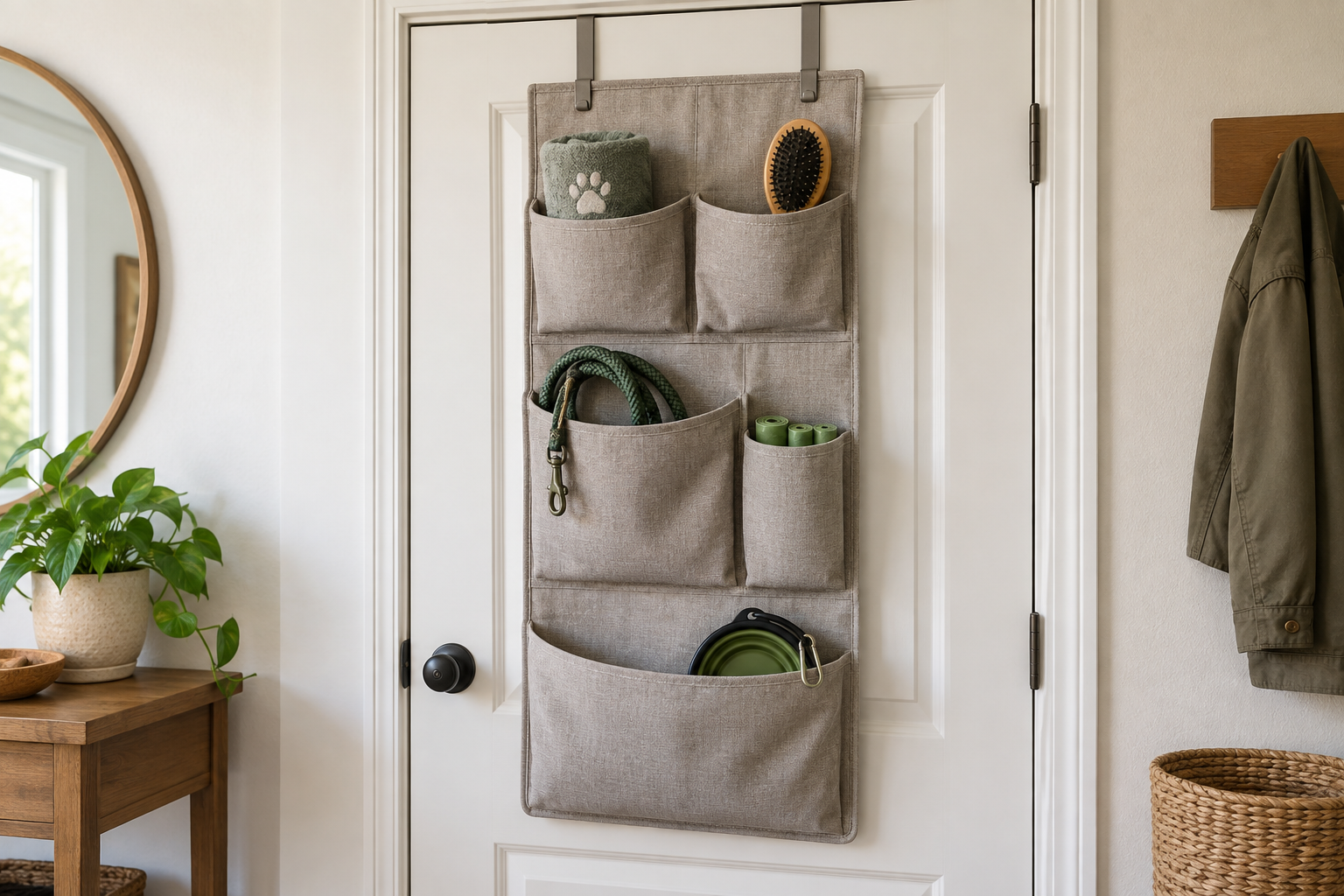
This guide covers optional storage for ordinary lightweight supplies such as clean towels, leashes, sealed waste-bag rolls, and soft brushes. An open organizer is not secure storage. Keep medicines, pest products, cleaners, sharp grooming tools, cords, food, and small hazards in their original packaging and in suitable inaccessible storage.
When an Over-Door Organizer Is Worth It
The purchase can make sense when the same modest inventory is used near one door, existing storage repeatedly creates clutter or extra trips, and the door has verified top and swing clearance. The organizer should make each item easier for an adult to reach without inviting a pet to pull, chew, or climb toward it.
It is particularly useful in a small or rented home when drilling is undesirable and the door normally stays in a usable position. It is less useful on a busy passage door, a door that must close tightly, or a room where the supplies routinely travel elsewhere.
Run a Door and Inventory Audit
- Inventory: lay out only the lightweight everyday supplies that truly need this station, then measure their height, width, and depth.
- Door fit: measure door thickness, top gap, trim, panels, hinges, handle position, and the space between the open door and nearby wall.
- Loaded depth: include the fullest pocket, not only the empty organizer, when checking walls, furniture, walking space, and door operation.
- Pocket access: make sure items lift out without snagging while the lowest pockets remain inaccessible to pets and children.
- Load: compare the complete planned load with the maker's guidance and distribute it as directed; do not infer capacity from pocket count.
- Routine: note whether the supplies are actually used at that door or would be carried to another room anyway.
Mock up the organizer's width, height, and loaded depth with paper or painter-safe markers before ordering. Open and close the door through its full normal path. If the planned station conflicts with a switch, hook, furniture edge, traffic route, or pet area, choose another location or storage format.
Cost, Setup, and Maintenance Tradeoffs
You are paying for vertical capacity and removable installation, but you also add hook fitting, door-clearance checks, pocket cleaning, and periodic hardware inspections. A low-cost organizer is poor value if its pocket geometry does not fit the actual supplies or if the door becomes awkward to use.
Fabric pockets can flex around light items but may be spot-clean only and can collect hair or dust. Clear or coated pockets show contents differently but may crease or have seams that need wiping. Follow the current care label, empty every pocket before cleaning, and let all layers dry fully before reloading.
Inspect the hooks, top edge, seams, pocket bottoms, and door finish after installation and after any load change. Stop using the organizer if the door binds, hooks shift, seams stretch, hardware develops sharp damage, or the unit rubs the door or frame. Do not improvise extra load or alter the hooks contrary to the maker's directions.
Try Existing Storage or a Caddy First
Use a suitable drawer, cabinet shelf, or basket for a week and count the times it actually slows the routine. If the supplies stay organized and easy to retrieve, another product adds little. Choose a rigid or soft-sided portable caddy when the kit moves between rooms, and keep unsuitable open-storage items in a secure cabinet.
If unused space is the real constraint, compare under-bed and over-door storage before committing the door. If vertical storage is still the best answer, the over-door versus wall-mounted organizer comparison explains when fixed wall placement is worth installation. The new-pet essentials pillar helps separate useful routine supplies from extras before you allocate more storage.
Red Flags Before You Buy
- No exact hook range, overall dimensions, usable pocket dimensions, care directions, or stated load guidance.
- Hooks that do not match the measured door thickness or conflict with top trim and seals.
- A plan that depends on forcing, bending, padding, or modifying hardware outside the maker's instructions.
- Loaded pockets that strike a wall, cover a handle, narrow a walkway, or make normal door use awkward.
- A lowest pocket that places tempting items within pet reach.
- Medication, cleaners, pest products, sharp tools, cords, food, or small hazards planned for open storage.
- Torn seams, stretched loops, bent hooks, rough edges, or a door that begins rubbing or binding.
Who Should Skip an Over-Door Pet Supply Organizer?
Skip it when the inventory is tiny, existing secure storage works, the supplies move between rooms, or the only available door is frequently opened, tightly fitted, damp, narrow, or within pet reach. Also skip it when the hooks cannot be verified against the door or the loaded organizer would interfere with the door's intended operation.
Delay the purchase until you have measured the actual items, door, trim, and full swing path. Choose wall storage only with a suitable surface and installation method. Ask a qualified installer or property manager when the door, mounting, lease, or building constraints are uncertain rather than guessing.
Bottom Line
An over-door pet supply organizer is worth buying when a real lightweight inventory needs one fixed home, a measured door accepts the specified hooks, loaded pockets clear the room, and the contents stay inaccessible to pets. Repurpose existing storage first, choose a caddy for moving routines, and skip the organizer when it creates more door and maintenance friction than it removes.