The Quick Answer
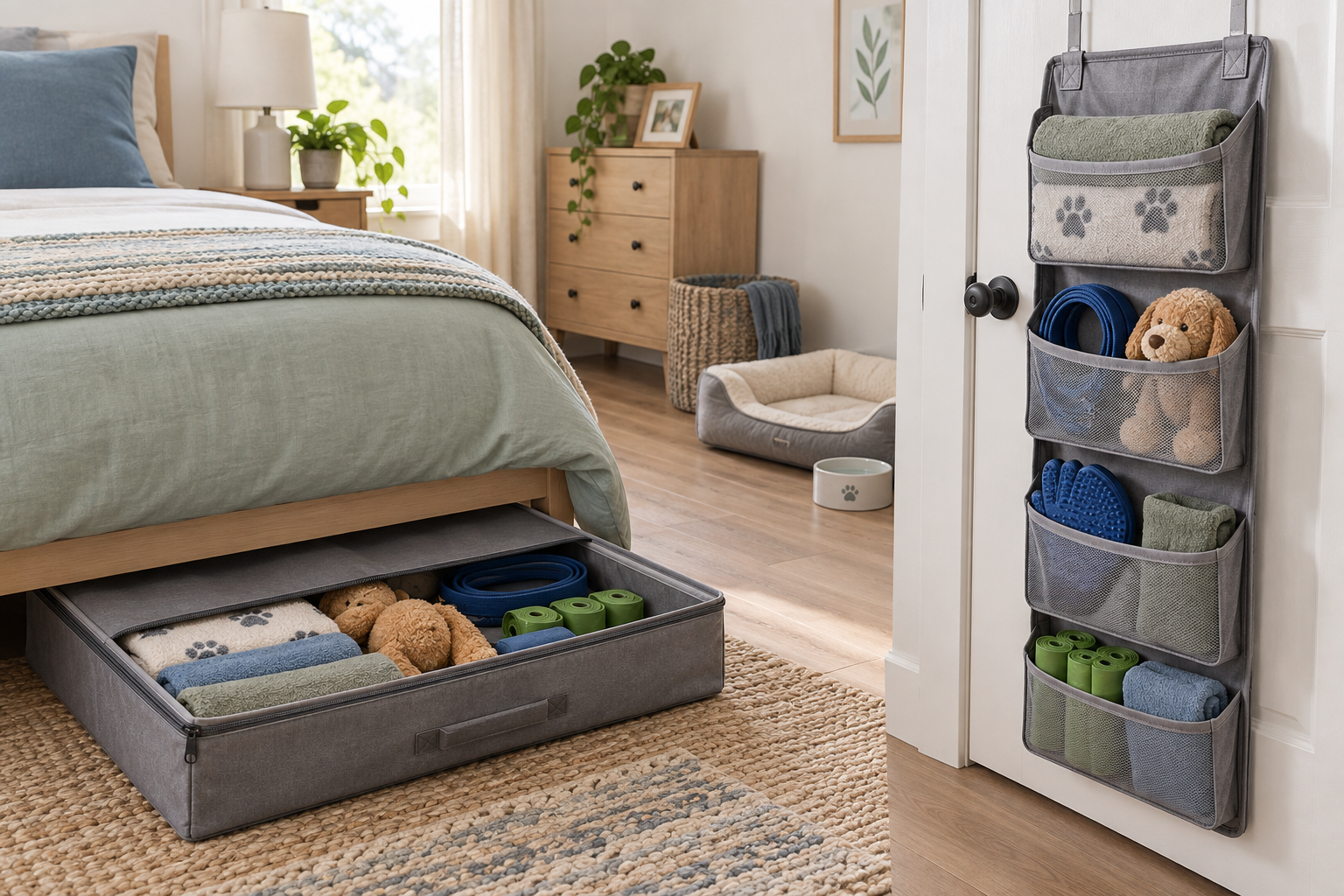
Under-bed storage usually fits a larger, flatter load and keeps visual clutter down, but retrieving it requires floor access, pulling, and sometimes bending. Over-door storage makes small items easier to see and reach, but it uses a working door and adds hook, swing, loaded-depth, and pet-reach constraints.
Start with the routine rather than the advertised capacity. If you use the supplies weekly or less and can pull a case out cleanly, under-bed storage is often the calmer fit. If you reach for a few light items daily beside one compatible door, pockets can be more convenient. A small inventory that already has a secure home needs neither.
Measure the Full Access Path
- Under the bed: measure at the lowest obstruction, including rails, center supports, slats, fabric, and floor irregularities—not only the visible outer frame.
- Pull-out route: allow room for the full case plus your grip and any nearby rug, wall, nightstand, or walking path.
- At the door: measure door thickness, top gap, trim, panels, handle location, hinge side, and clearance to the wall or furniture through the full swing.
- Loaded dimensions: compare the bulging or filled depth, not just empty-product measurements.
- Actual inventory: group only the clean, lightweight, nonhazardous supplies that need this location, then measure their combined size.
Use a cardboard or painter-safe tape outline to test the footprint and retrieval motion before buying. Product dimensions are not a substitute for room measurements, and pocket count is not a load rating.
When Under-Bed Storage Fits Better
Choose the under-bed format when folded towels, spare washable covers, soft toys, or an empty travel accessory create a shallow but broad load. A closure can help keep the group together, while a clear panel or label pocket can reduce the need to open several cases. Handles on more than one side may help if the case must change orientation.
The tradeoffs are floor dust, possible snagging, lifting or bending, and forgotten contents. Soft cases can compress but may be hard to slide when overfilled. Structured or wheeled formats need exact clearance and a floor that suits their contact points. Follow current care directions, empty the case before cleaning, and dry every part fully before reloading.
When Over-Door Storage Fits Better
Choose an over-door organizer when a short list of light supplies is used near one door and visibility helps the routine. Pockets can separate a leash, folded towel, grooming mitt, or sealed waste-bag rolls without taking floor space. Check the usable pocket opening and depth against each item, rather than assuming every pocket is interchangeable.
The door must still open, close, latch, and clear adjacent surfaces as intended. Compare the hook range and installation directions with the measured door, and keep the lowest stored item beyond pet and child reach. Inspect hooks, seams, pockets, and the door finish after loading. Stop using the organizer if the door binds, hardware shifts, seams stretch, or rough damage develops.
What Belongs in Either Format?
Good candidates are clean, dry, low-value and lightweight supplies that tolerate the chosen environment: folded washable towels, spare covers, soft toys, an empty leash, a grooming mitt, or sealed waste-bag rolls. Keep damp fabric out until it has been handled according to its care label.
Do not use either open-access format for pet food, treats, medication, supplements, cleaners, pest products, first-aid supplies, sharp grooming tools, cords, batteries, breakable items, choking hazards, or anything that needs controlled temperature or secure access. Use suitable closed storage and original packaging for those items.
Cleaning, Maintenance, and Renter Constraints
Under-bed storage brings the case into contact with the floor, while an over-door organizer brings hardware into contact with a working door. Vacuum or wipe the storage area on a routine that matches the room, and follow the product's material-specific care directions. Do not assume a fabric is machine washable or a coated surface tolerates every cleaner.
Renters should check lease or property rules before attaching pads, clips, fasteners, or altered hooks. An over-door product can still mark trim or interfere with a tight seal; an under-bed case can still rub floors or catch on furniture. When the door or floor finish is uncertain, use a different location rather than relying on a damage-free claim.
Who Should Skip Both Formats?
Skip under-bed storage when clearance varies, the pull path stays blocked, floor-level access is impractical, or pets can reach and damage the case. Skip over-door storage when the door is tightly fitted, frequently used, damp, narrow, required to close in a particular way, or within reach of a climbing or chewing pet.
Skip both when the inventory is tiny, moves between rooms, already fits secure storage, or includes unsuitable items. A portable pet supply caddy may fit a moving routine better. For a broader setup audit, use the new-pet essentials guide before allocating more storage.
Bottom Line
Under-bed storage favors larger, less-frequent loads and a clear pull-out path. Over-door storage favors a small, frequently used lightweight kit and a compatible door. Measure the occupied space, access motion, and actual supplies; protect normal door and floor use; keep hazardous or sensitive items elsewhere; and choose no new organizer when existing secure storage already works.