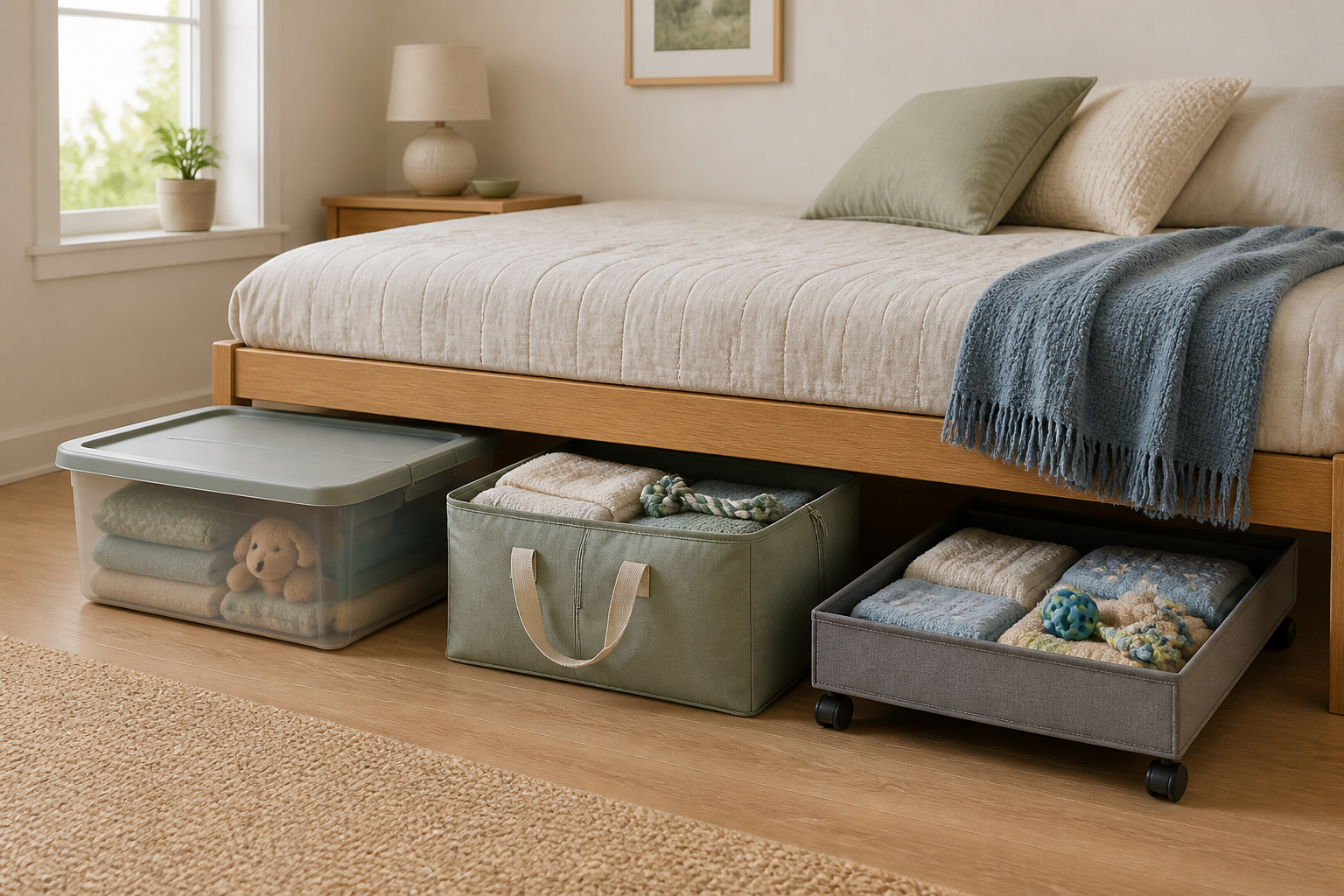
This guide compares product varieties and buying criteria; it does not rank named products or claim hands-on testing. Under-bed storage is most useful for clean, dry, non-urgent supplies. Keep pet food, medication, first-aid items, chemicals, and anything needed in an emergency somewhere more appropriate and accessible.
Quick Comparison: Which Format Fits Your Routine?
Rigid lidded bins: best for dust protection
A shallow rigid bin protects folded blankets, spare crate covers, and seasonal soft goods from dust while keeping a predictable shape. It works best when the lid can open after the bin is pulled out and the handles do not add surprise height. The tradeoff is weight and wasted space if a sloped bed frame prevents the full footprint from sliding underneath.
Zippered fabric bags: best for light linens
A fabric bag suits washable blankets and towels that do not need a hard shell. Flexible sides make it easier to maneuver in a tight room, but overfilling can create a hump that catches the bed frame. Look for a wide zipper opening and reinforced handles; skip flimsy seams if you expect to pull a heavy bag across the floor.
Rolling drawers: best for frequent access
A shallow drawer on wheels can make sense for toys or linens used several times a week. Wheels reduce dragging, but they also consume clearance and may move poorly on thick carpet. Open drawers collect more dust, so a fitted cover or closed design is more practical for supplies that must stay clean.
Selection Criteria That Matter
- Real clearance: Measure at the lowest frame rail, center support, and any sagging fabric—not just beside the bed. Leave room for the lid, handles, wheels, and your fingers.
- Usable dimensions: External measurements decide whether it fits; internal measurements decide whether blankets and toys fit without forcing the closure.
- Access direction: Check whether a wall, nightstand, rug, or narrow walkway blocks a long bin from pulling straight out.
- Dust and moisture control: Lids and zippers reduce dust but do not make a container waterproof. Store only fully dry, clean textiles and check the area for dampness.
- Floor compatibility: Wheels work differently on wood, tile, rugs, and carpet. Hard edges can scratch floors; rough fabric bottoms can collect grit.
- Cleaning: Smooth plastic wipes clean easily. Fabric needs care instructions that match the likely mess and enough airflow to dry completely.
- Pet access: Closures should keep curious pets from pulling out toys or chewing handles, fabric, zippers, or loose labels.
- Load and handling: Split heavy items between smaller containers if one full bin would be awkward to lift or drag.
What Belongs Under the Bed—and What Does Not
Good candidates include clean spare pet blankets, dry towels, seasonal crate covers, backup washable bed covers, and supervised toys that are rotated out of daily use. Separate toys from clean linens if the toys carry outdoor dirt, saliva, or strong odors.
Do not use this spot for pet food or treats, which need appropriate food-storage conditions and can attract pests. Medication, first-aid supplies, cleaning chemicals, batteries, and emergency gear need safer, more deliberate storage. Damp towels and recently washed items should dry fully before being enclosed to avoid trapped moisture and odor.
Who Should Skip Under-Bed Storage?
Skip it if reaching the floor is uncomfortable, the bed must be moved to access the container, the room has recurring moisture or pests, or your pet can crawl underneath and chew the container. A reachable closet shelf or handled caddy may be a better everyday choice.
Also skip wheels when the floor slopes, the drawer can roll into a walkway, or the casters do not suit the floor. If a bed has moving or adjustable parts, follow its manufacturer guidance and keep storage clear of mechanisms, wiring, vents, and required open space.
Build a Small-Home Storage System
Use under-bed space for quiet backup inventory, not every pet item you own. If you are deciding which unused space to claim, first compare under-bed and over-door storage by clearance and access frequency. Keep a small daily-use basket where the routine happens, then rotate clean toys and linens from under the bed. Our small-living-room toy bin guide covers visible daily storage, while the grooming organizer guide is better for bathroom tools.
Label the short end of each container so you can identify it before pulling it out. Review contents when you wash bedding or rotate toys; that keeps the space useful instead of becoming a hidden holding area for worn or forgotten supplies.
The Bottom Line
Choose a rigid lidded bin for dust protection, a zippered fabric bag for light washable linens, or a rolling drawer for frequent access. Measure the whole path, store only clean and dry non-food supplies, and pick the simplest format you can pull out and clean comfortably.