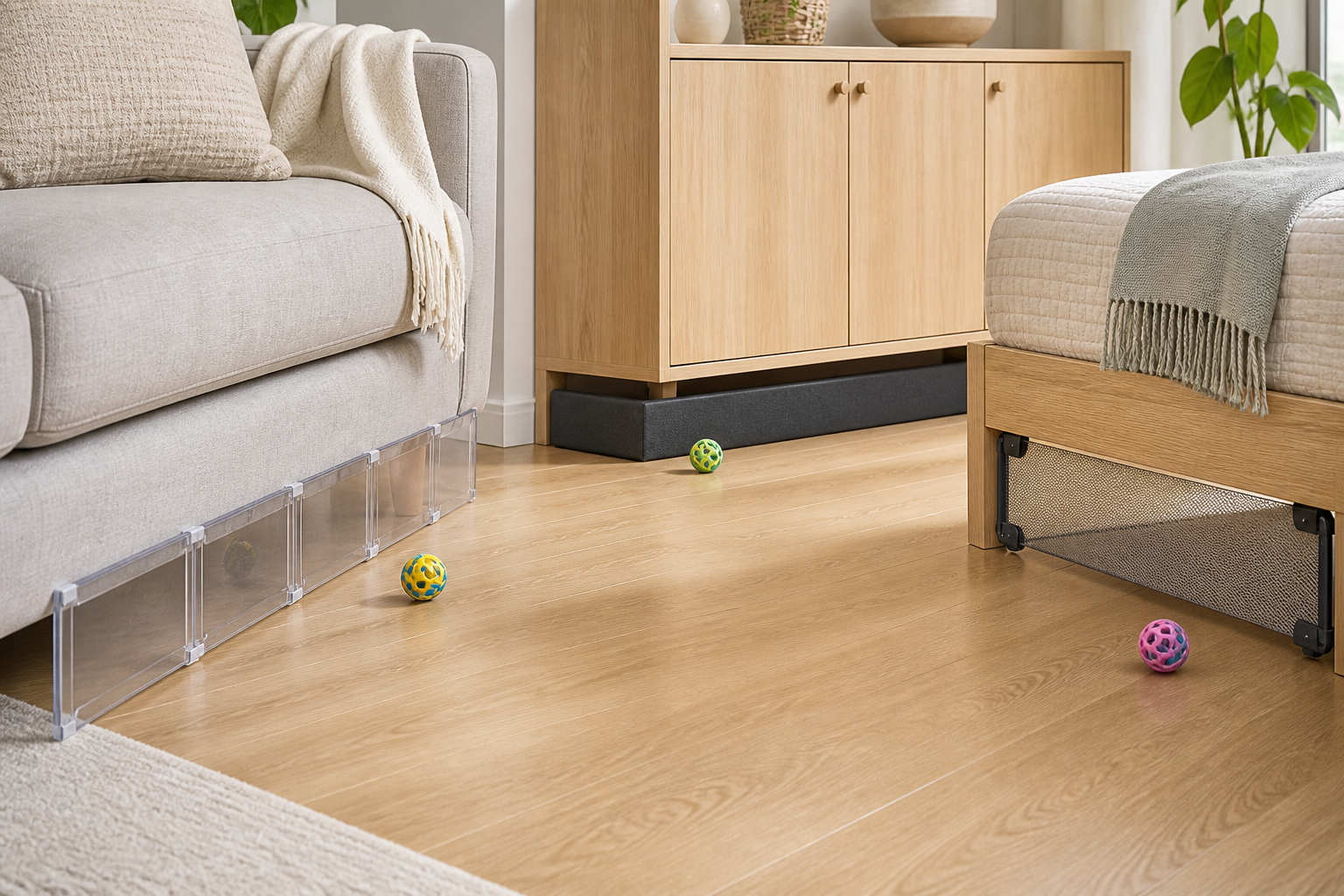
This guide is about keeping ordinary balls and small toys within reach during supervised play. A gap blocker is not childproofing, a pet gate, a restraint, or a safety-certified barrier. It should never block a vent, moving mechanism, electrical access, or an animal's route out of an enclosed space.
Quick Comparison: Match the Barrier to the Gap
Clear modular guards: tidy but measurement-sensitive
Rigid panels make the barrier easy to see without adding a dark visual band beneath the sofa. They work best along a straight run with a consistent gap. Compare panel height, total joined length, connector shape, and how the system stays upright around furniture legs.
Cut-to-fit foam: simple for low openings
Dense foam can fill a shallow opening without several connectors. It is most useful when the floor and furniture base are even enough to hold it in place. Check how it is trimmed, whether the cut face stays neat, and whether the material attracts hair or can be pulled loose.
Anchored mesh: flexible across long runs
Mesh can span between legs while preserving airflow and bending aside for planned retrieval. Its weak point is tension: sagging fabric, loose hooks, or dangling ties can become more interesting than the toy. Use only an attachment method the furniture surface can accept and inspect it regularly.
Measure Height, Length, and Interruptions
Measure the gap at several points because floors, rugs, upholstery, and furniture rails may not be level. Record the smallest height so a rigid panel does not bind and the largest height so toys cannot pass over it. Measure each open run between legs rather than only the furniture's overall width.
List every interruption: center legs, recliner hardware, drawers, robot-vacuum paths, floor vents, power strips, and baseboard clearance. Do not install a barrier where it could interfere with moving furniture parts or conceal something that needs routine inspection.
Selection Criteria That Matter
- Gap-height range: Close the toy path across both the lowest and highest measured points.
- Run length: Add separate openings between legs and allow only the overlap described by the maker.
- Attachment: Match friction fit, clips, straps, or listed adhesive use to the furniture finish and floor.
- Floor compatibility: Check for sliding, trapped grit, moisture, discoloration, or pressure against the surface.
- Furniture compatibility: Avoid moving upholstery, vents, fragile veneer, and mechanisms unless explicitly permitted.
- Pet access: Avoid chewable edges, loose ties, sharp cut panels, or connectors a pet can mouth free.
- Cleaning access: Choose a format you can remove or open to clean hair and dust from both sides.
- Retrieval plan: Keep a deliberate access point; do not create a permanently sealed dust pocket.
Install, Clean, and Check for Detachment
Clean and dry the floor and furniture surface as directed before setup. Cut only where the instructions allow, remove offcuts immediately, and keep connectors facing away from your pet. After installation, press gently along the full run to find loose ends or sections that bow into the room.
Check the barrier during ordinary vacuuming and after furniture is moved. Remove trapped hair and toys, look for cracked panels, crumbling foam, stretched mesh, lifted adhesive, loose clips, or rub marks, and stop using any damaged or repeatedly detached section. Never assume an adhesive will release without residue.
Who Should Skip an Under-Furniture Blocker
Skip a blocker when retrieving an occasional toy with a long tool is easier than maintaining another installed product. It may also be a poor fit for reclining furniture, adjustable beds, floor vents, robot-vacuum routes, fragile finishes, irregular gaps, or rooms where a pet persistently chews and pulls at barriers.
If your pet repeatedly crawls under furniture to hide, seems distressed, or suddenly changes play or resting behavior, do not simply close the space without understanding why. Ask a licensed veterinarian about possible health concerns and a qualified behavior professional when fear or distress may be involved.
The Bottom Line
Choose by the measured gap and maintenance routine: clear panels for straight visible edges, cut-to-fit foam for low even gaps, or taut mesh for longer openings that need airflow and planned access. Any format should stay secure, remain inspectable, and never interfere with the furniture.
For the toys themselves, compare durable dog balls for supervised fetch, cat toy baskets for rotation, or closet toy-rotation bags.