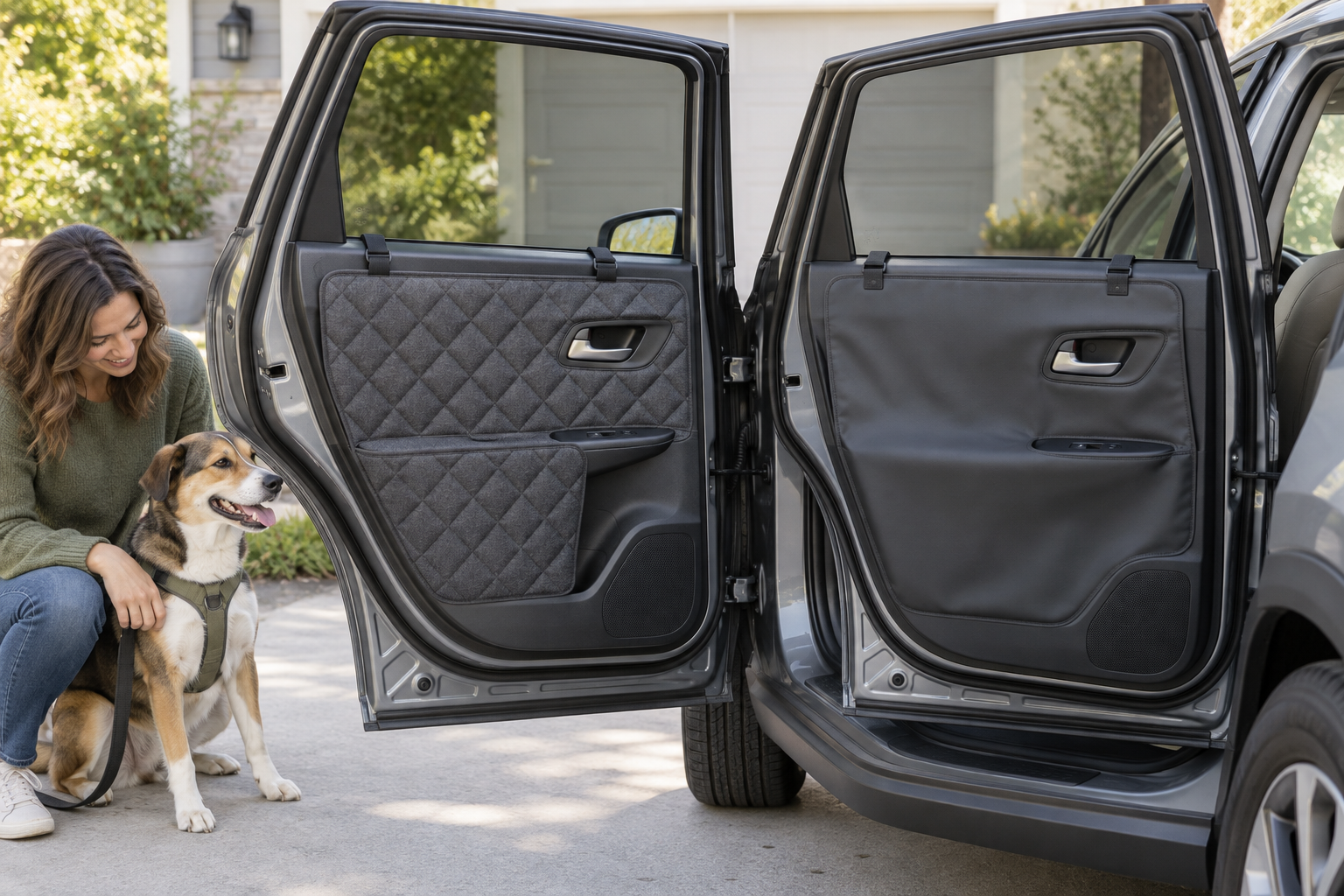
A pet car door protector is a cleanup accessory. It is not a restraint, crash-protection device, behavior tool, or guarantee against scratches, moisture, color transfer, or vehicle damage. Arrange an appropriate riding and restraint setup separately and follow vehicle and restraint-maker instructions.
Quick Decision
- Choose washable fabric when the reachable panel regularly gets broadly muddy, the care label permits your laundry routine, and a second cover or drying window is practical.
- Choose wipe-clean coating when messes are mostly light surface marks and you want to reset the panel without a wash cycle.
- Skip both when door contact is rare, the seat or cargo floor is the real mess zone, or no protector fits without obstructing the door.
Fit Comes Before Cleaning Method
Park the vehicle, open the rear door, and measure the usable vertical panel beneath the window ledge. Record the handle, lock, window switch, speaker, pocket, latch edge, weather seal, and any marked safety equipment. Compare those measurements with the current listing; “universal” is not a measurement.
Review the attachment separately. Window-channel tabs must suit the seal and permit normal glass movement. Suction cups need appropriate clean glass and may limit how far the window opens. Fitted shapes must match the exact door. Remove any design that shifts, rubs, bunches, blocks a control, or conflicts with vehicle guidance.
Washable Fabric: Laundry Reset, Longer Turnaround
Quilted or woven fabric can collect a broader layer of dried dirt and damp contact before the whole protector is removed. That can suit frequent muddy outings, but only when the maker clearly states how it may be washed and dried. Confirm whether inserts, hooks, tabs, or stiffeners must be removed first.
Fabric construction may hold moisture longer than a smooth face. Check beneath it after a wet trip, remove loose grit before washing, and dry it fully according to its label before reinstalling. Dark or saturated material can also raise color-transfer questions, so review product and vehicle-interior guidance rather than assuming every fabric suits every panel.
Wipe-Clean Coating: Faster Reset, More Edge Inspection
A smooth coated face can be practical for paw smears and light damp contact that lifts with the cleaning method named by the maker. Remove loose grit first so wiping does not drag particles across the cover or exposed trim. Avoid guessing which cleaners a coating or vehicle surface tolerates.
Wipe-clean does not mean sealed. Moisture can reach stitching, cutouts, attachment points, or the lower edge. Inspect the protector and panel after messy rides, and let both dry. Skip material that cracks, peels, remains tacky, develops sharp edges, or cannot be cleaned without residue.
Drying, Storage, and Turnaround
Think through the time between outings. A washable protector may need a drying window or spare set. A coated protector may be ready sooner, but still needs a ventilated place to dry if its seams or backing become damp. Fold or roll only as the maker allows, and secure the removed cover so it does not become loose cargo.
If passengers regularly use the same door, prioritize quick, repeatable removal and reinstallation. A low-maintenance material is not helpful if the attachments are fiddly, the folded protector is bulky, or the control openings need constant adjustment.
Pet Access and Inspection
Keep loose edges and attachments out of chewing or pawing reach. Inspect tabs, cups, seams, binding, and backing before each use. Remove a damaged or shifting protector. Do not use a panel cover to manage a dog who moves freely around the cabin or is distressed during travel.
If car travel causes persistent distress or makes secure travel difficult, the protector is not the remedy; ask a veterinarian or qualified trainer for situation-specific guidance.
Who Should Skip Each Format?
Skip washable fabric if laundering and full drying will not happen often enough, if hardware is not removable as required, or if the material crowds controls. Skip a coated protector if its cleaning directions do not match the mess, the surface or edges are damaged, or dampness repeatedly reaches behind it. Skip the category when a measured seat cover, cargo liner, or secured cleanup kit addresses the actual problem more directly.
Bottom Line
Washable fabric suits a full laundry reset after broad recurring messes; wipe-clean coating suits faster attention to lighter surface dirt. The better door protector is the one that matches the real mess, fits the measured panel, keeps every control available, follows a realistic cleaning and drying routine, and stays secure around the pet.
Compare attachment varieties in the dog car door protector buying guide, then continue to the pet outing kit pillar.