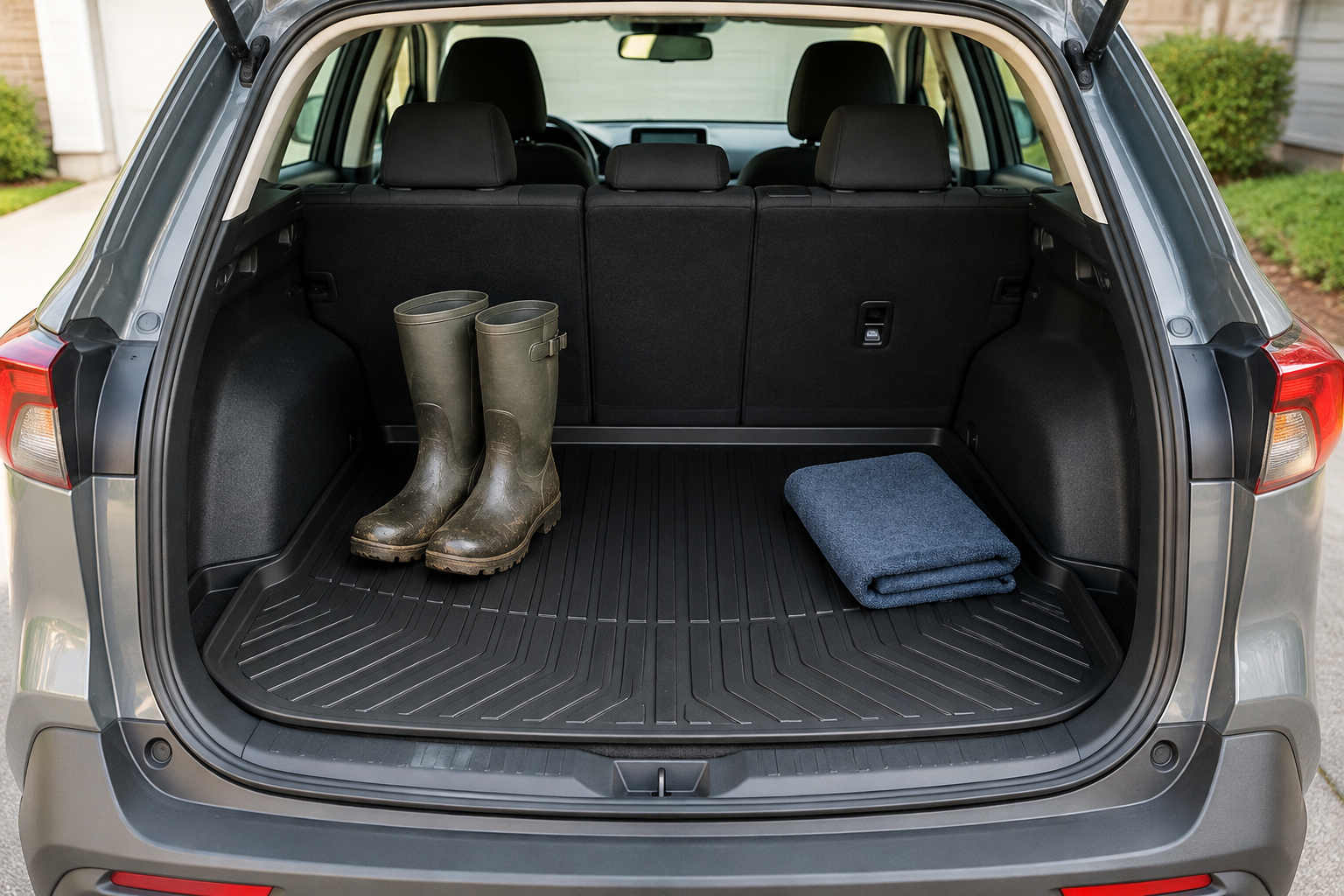
 Universal rubber cargo mats
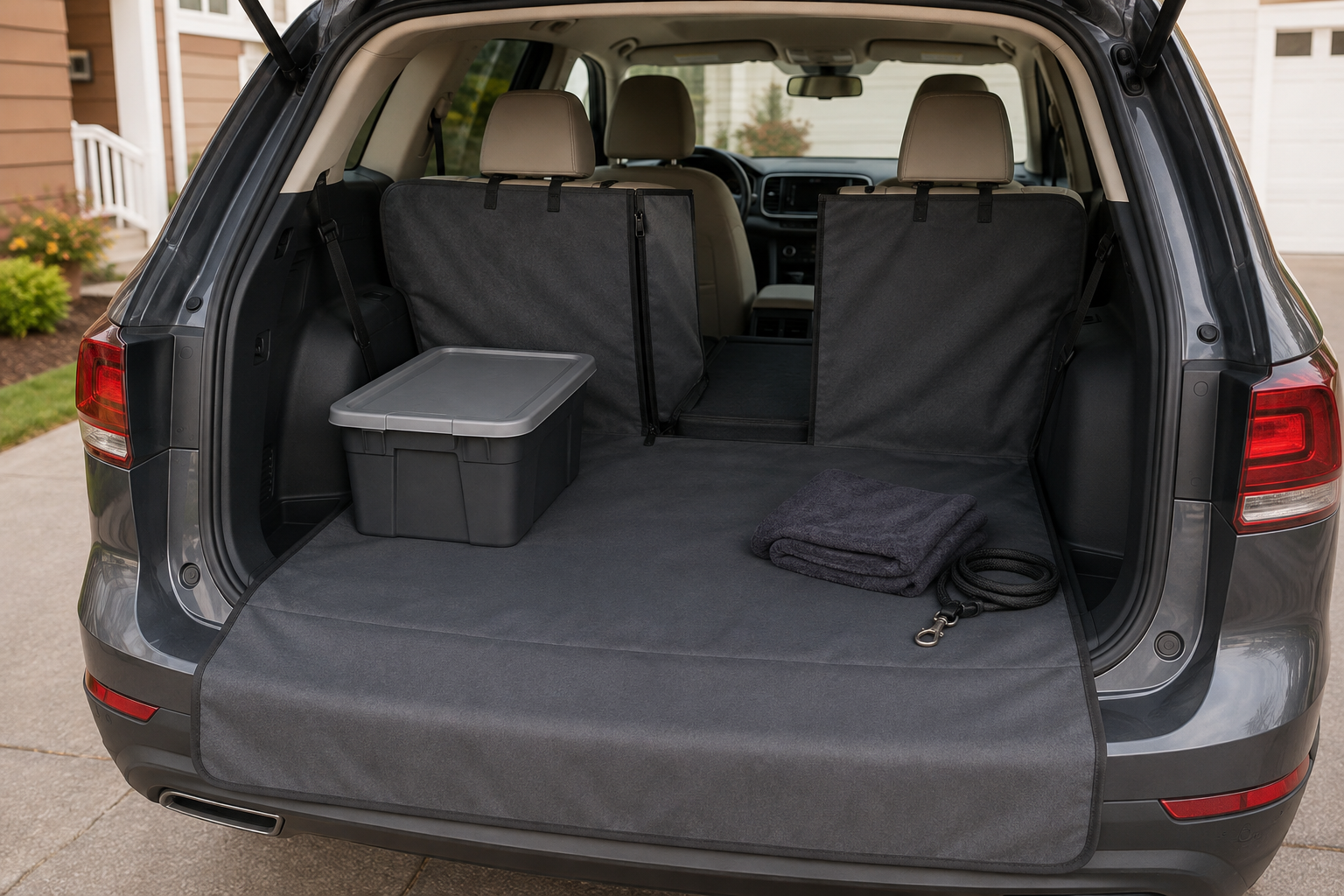 Foldable liners with bumper flaps
A trunk liner is a cleanup accessory, not a pet restraint and not a cargo-securing system. This guide is for carrying dog gear in the cargo area. Keep pets in a vehicle-appropriate secured travel setup, and secure bins and other loads according to the vehicle and product instructions.
Choose by the mess and coverage zone
A rubber mat works well when most mess stays underneath a boot tray, gear bin, or folded towel. Its defined edge can contain small amounts of tracked grit, and the simple surface is usually easier to lift out than a full fabric cover. It does not protect the seat backs or cargo side walls.
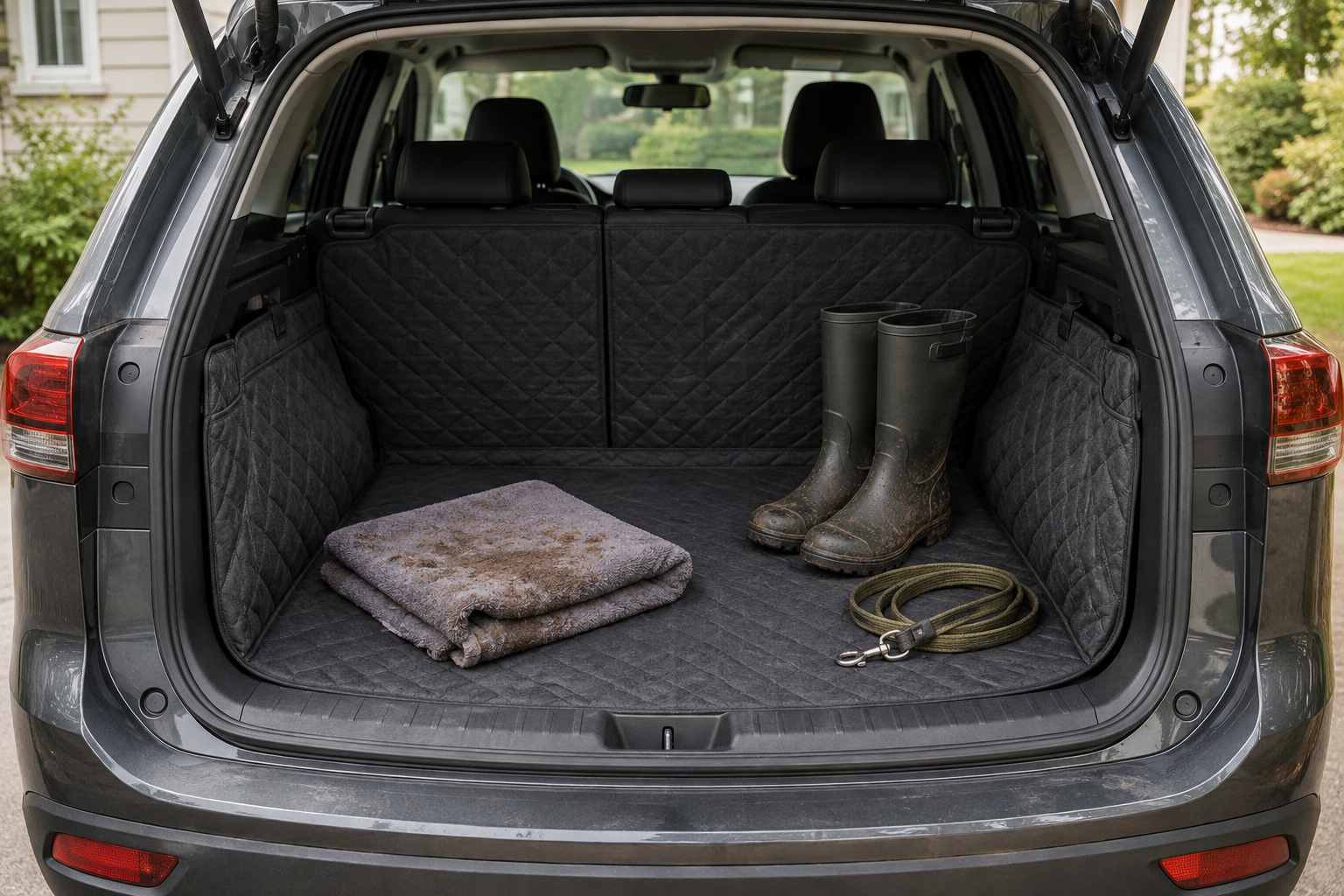
A fitted quilted liner covers more surfaces and can make sense when tall crates, folded chairs, or bulky bags brush the sides and rear seats. More coverage also means more attachment points, seams, and fabric to clean. A foldable cover with a bumper flap targets a different problem: loading dirty objects over a painted bumper. Fold the flap away and secure it before driving if the maker directs you to do so.
Measure the cargo area before comparing listings
Park safely, empty the trunk, and measure the usable floor from the closed hatch line to the seat backs, then between the narrowest wheel-well points. Note curves, rails, subfloor handles, tie-downs, power outlets, the hatch latch, and the way the rear seats split and fold. If a listing names a vehicle, confirm model year, body style, seating configuration, and whether the measurements refer to seats up or down.
A too-small mat leaves the carpet exposed where wet gear lands. A too-large mat can curl at the hatch, interfere with the latch, or cover equipment you need to reach. “Universal” describes a broad format, not proof that it fits every cargo floor.
Quick comparison framework
- Fitted quilted liner: best starting format for broader floor, side, and seat-back coverage when compatibility is explicit.
- Universal rubber mat: best simple format for floor-only mess and fast wipe-downs in a reasonably rectangular cargo area.
- Bumper-flap liner: best for repeated loading of muddy bins, boots, folded crates, or other gear across the rear bumper.
- Rigid vehicle-specific tray: worth comparing when raised edges and a precise floor shape matter more than folding or side coverage.
- Existing washable blanket or boot tray: often enough for occasional light mess when it stays flat and does not slide into the latch.
Selection criteria that matter
- Documented fit: compare actual dimensions and vehicle notes rather than relying on “SUV size” or “universal.”
- Coverage: decide whether you need the floor only, rear seat backs, wheel-well sides, hatch sill, or a temporary bumper flap.
- Seat access: check zippers or hook-and-loop splits against your seat-fold pattern, headrests, and release controls.
- Attachment: use only the straps, hooks, fasteners, and anchor locations described by the liner and vehicle makers.
- Material wording: treat “water-resistant,” “waterproof-backed,” and “waterproof” as different claims. Seams and uncovered edges may still allow moisture through.
- Backing: inspect textured or nonslip backing for floor compatibility, and test a small hidden area if the vehicle maker advises it.
- Cleaning: check whether the liner wipes, rinses, hand-washes, or machine-washes and where a large wet liner can dry fully.
- Storage: a folding cover saves space only if its dirty surface can be contained before it reaches clean luggage or seats.
- Access and visibility: never cover the latch, lights, sensors, vents, emergency equipment, or the driver's required view.
A practical muddy-gear routine
Put small wet items in a washable bin or tray on top of the liner rather than spreading them around the trunk. Keep the clean towel separate from the used one, close all bottles, and use the vehicle's specified cargo-management points for heavier objects. A measured car organizer can separate dry walking supplies, but it does not secure heavy cargo by itself.
After the outing, lift loose grit before wiping so it is not rubbed across the liner or vehicle trim. Follow the care label, dry every layer fully, and occasionally remove the liner to check the carpet and seams underneath. A cover can hide trapped dampness as easily as it hides dirt.
Who should skip a dedicated trunk liner
Skip one if muddy gear is rare and a small washable tray or existing towel handles the real mess. Also skip any liner that cannot lie flat, preserve the latch and equipment access, or attach as directed. Owners who regularly reconfigure seats may find a rigid mat simpler than a multi-panel fabric cover.
If the intended use is transporting a dog loose in the cargo area, a liner is the wrong solution. It does not establish safe placement or restraint. Follow vehicle and restraint-maker guidance, and ask a veterinarian or qualified trainer for help if travel distress or handling makes secure transport difficult.
The bottom line
A fitted quilted liner is the strongest first comparison for broad, vehicle-matched coverage. A universal rubber mat is simpler for floor-only mess, while a bumper flap earns its space when loading dirty gear repeatedly. Measure first, verify every opening and attachment, contain wet items, and skip any format that complicates safe cargo access.