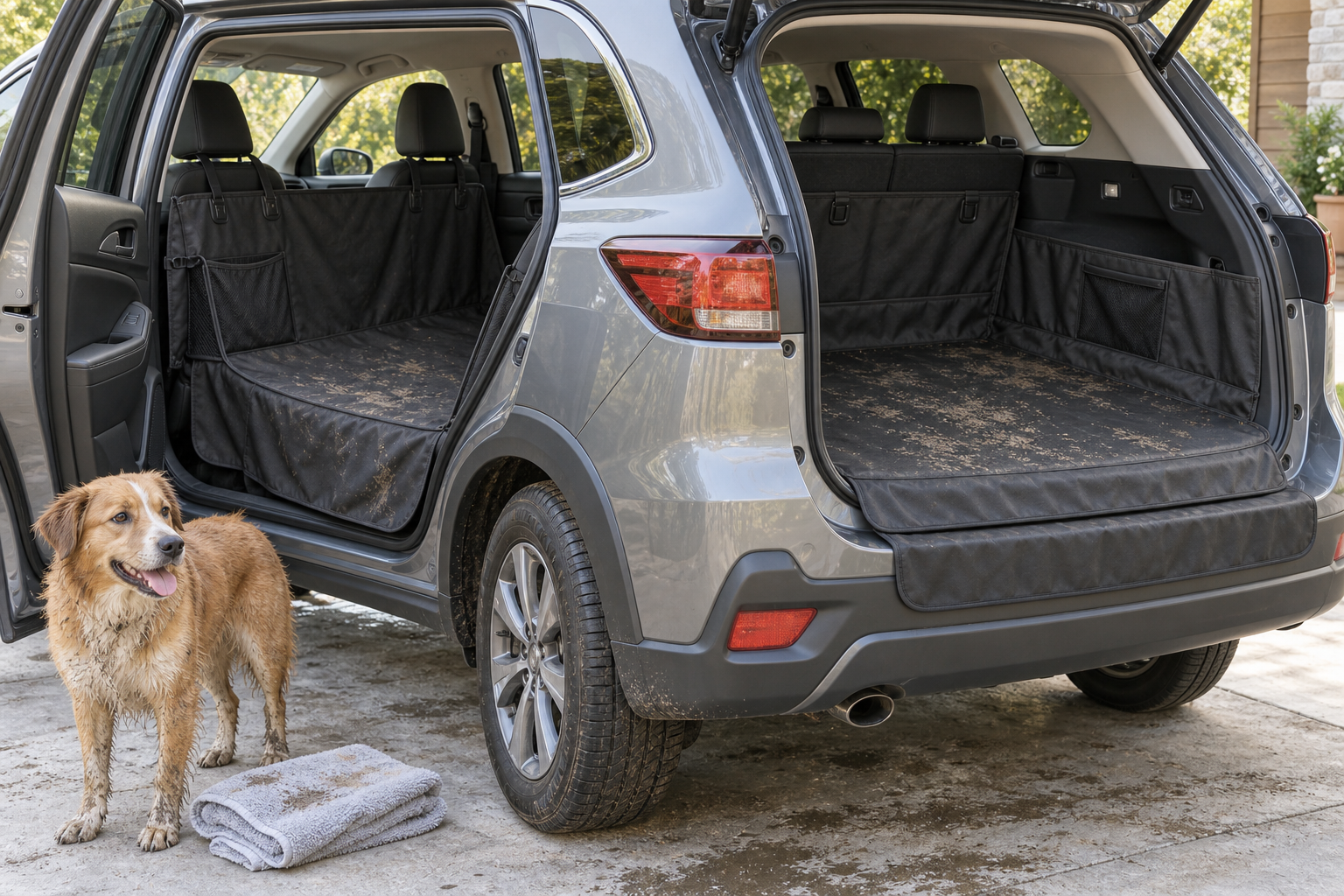
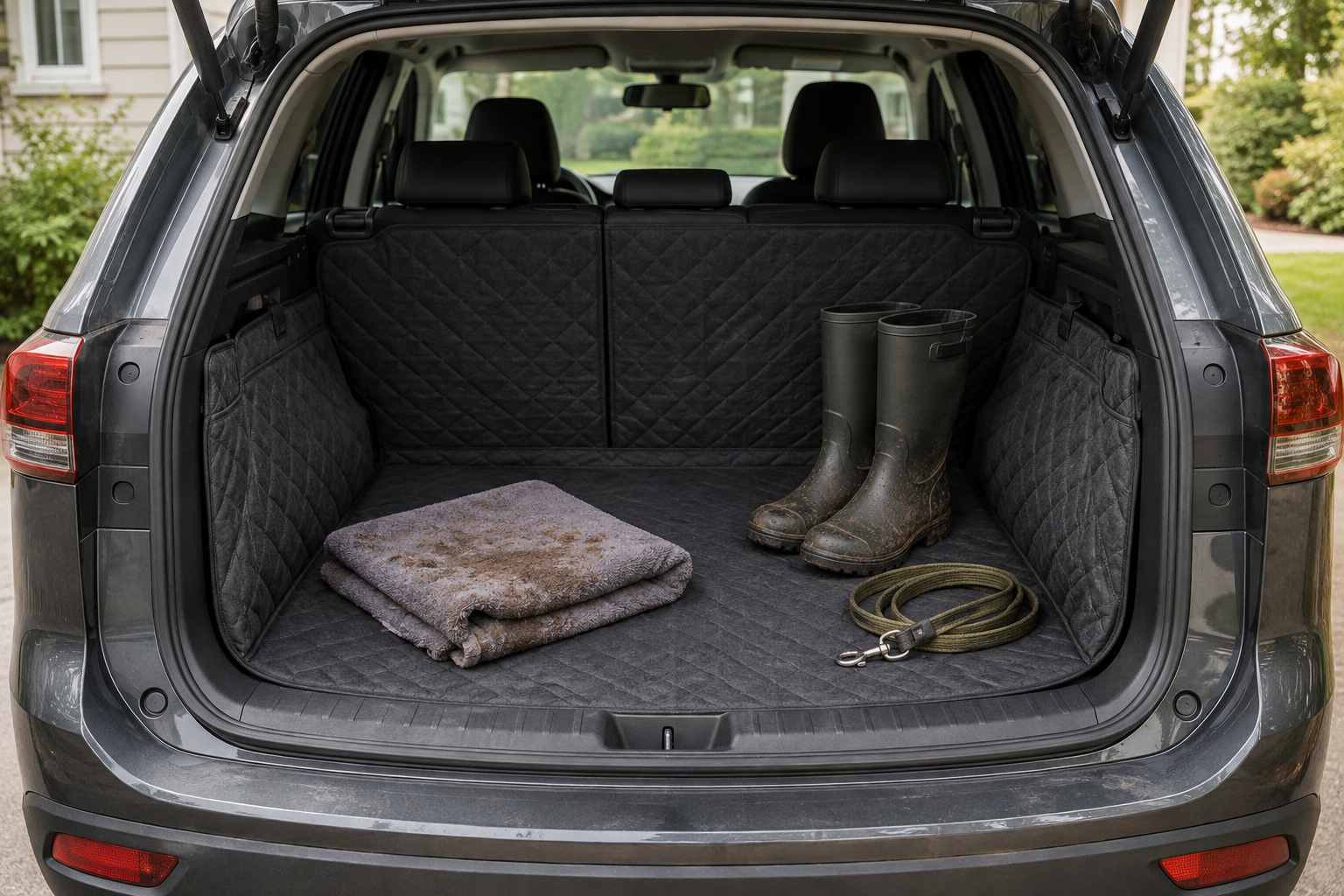
 Fitted quilted cargo liners
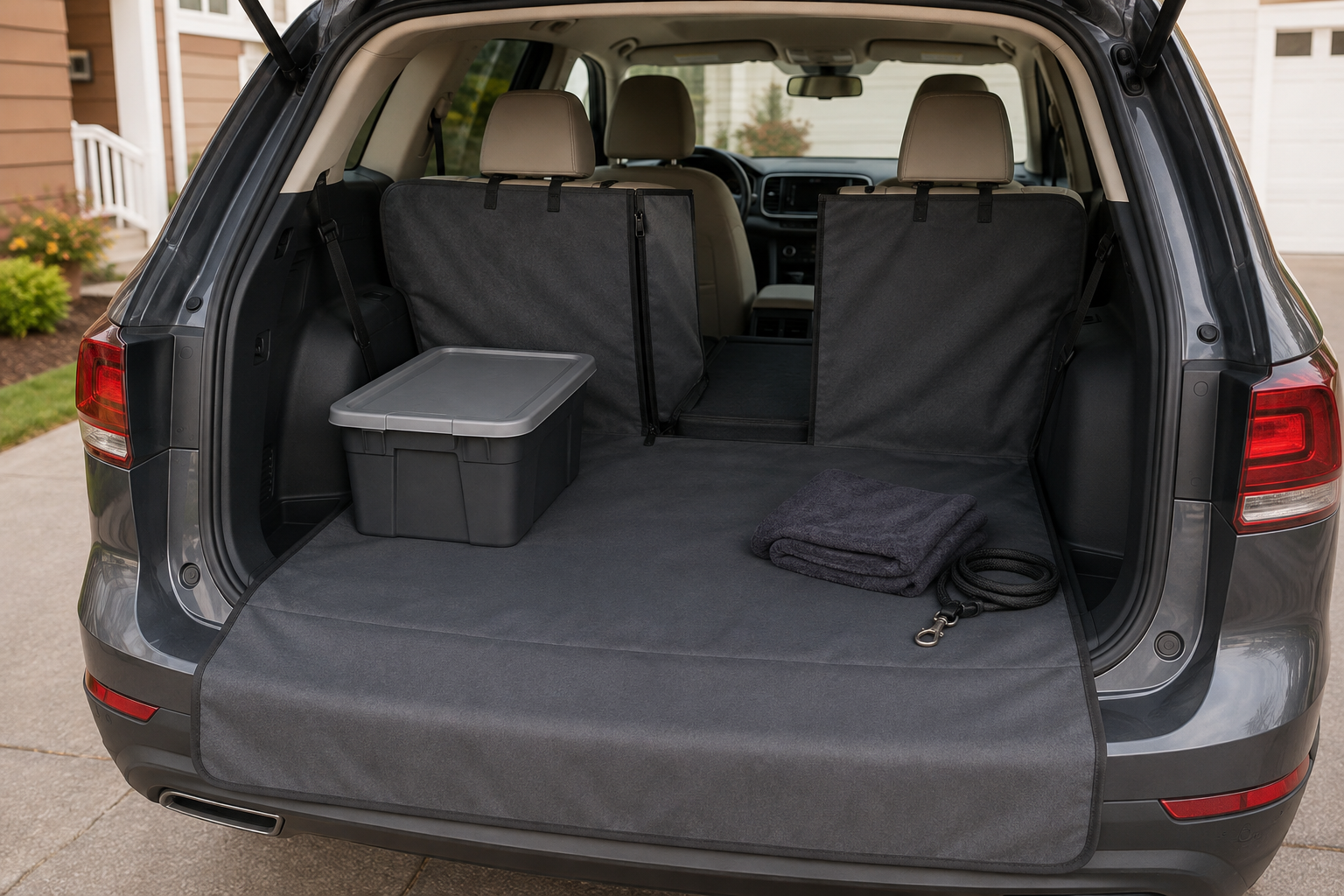 Cargo liners with bumper flaps
This comparison is a buying framework, not a finding that either location is safe for every dog or vehicle. Follow the vehicle, carrier, crate, barrier, and restraint makers' current directions. Do not treat a fabric liner, hammock panel, zipper, or headrest strap as crash protection. If travel causes panic, pain, vomiting, breathing trouble, or sudden refusal, pause the product decision and contact a veterinarian or qualified behavior professional.
Quick decision: hammock or cargo liner?
- Choose a hammock when the established travel position is the rear seat, you need to preserve cargo space, and measured buckle or restraint access remains usable.
- Choose a cargo liner when the cargo area is suitable under all relevant instructions, the dog travels in an appropriate setup there, or the liner mainly carries muddy crates and gear.
- Choose neither yet when you have not resolved safe placement, restraint compatibility, vehicle fit, ventilation, or a travel-distress problem.
Compare the vehicle zones before the fabric
A hammock spans the rear bench and usually rises toward the front headrests, creating a fabric bridge over the footwell. That can catch grit and help keep paws away from the seat fronts, but it may complicate passenger access, child-seat use, buckle openings, or a split-folding bench. Measure the seat width, headrest spacing, door openings, and every access point the setup must preserve.
A cargo liner protects a different geometry: cargo floor, rear seat backs, lower side panels, hatch sill, and sometimes the bumper during loading. Measure with the seats in the positions you actually use. Note the hatch latch, vents, lights, sensors, outlets, tie-downs, emergency equipment, subfloor handle, and seat-release controls.
Hammock tradeoffs on muddy trips
A rear-seat hammock suits owners who load through a side door and want one removable layer under a dog already traveling appropriately in that zone. Side flaps can help during entry; a zip or split panel may allow a human passenger, but only if the remaining cover lies flat and the required seat and restraint hardware stay accessible.
The harder parts are door clearance, bunching, damp fabric, and reconfiguration. Confirm whether the cover wipes, spot-cleans, or machine-washes, and where it can dry fully. Check its underside against the vehicle maker's upholstery guidance. Remove loose grit before it rubs into either surface.
Cargo-liner tradeoffs on muddy trips
A fitted cargo liner can cover more hard-to-clean surfaces and keep muddy towels, boots, a folded crate, and cleanup gear together. A bumper flap helps during rear loading, but it must deploy and stow without blocking lights, sensors, the latch, or required visibility. Side panels and seat-back sections only help when their attachments match the vehicle.
The cargo area is not automatically an appropriate place for a dog. It may be unsuitable because of vehicle design, airflow, temperature, crumple-zone considerations, lack of compatible restraint points, or product instructions. A liner does not resolve those questions. It can still be useful for gear even when the dog rides elsewhere.
Fit and access checklist
- Dimensions: compare measured usable width, depth, height, flap reach, and product dimensions rather than labels such as universal or SUV size.
- Attachments: use only described straps, anchors, hook-and-loop panels, and vehicle locations.
- Restraint access: keep every required buckle, carrier, crate, barrier, or restraint connection reachable and correctly oriented.
- Vehicle functions: preserve airbags, child-seat hardware, doors, windows, seat controls, vents, lights, sensors, latches, and emergency equipment.
- Surface stability: reject covers that curl, slide, bunch, expose hard edges, or reduce usable space around the dog or travel equipment.
- Entry route: account for side-door or hatch loading height and the dog's comfortable, controlled way in and out.
Cleaning, drying, and storage
Shake or vacuum loose grit before wiping. Follow the cover maker's temperature, detergent, rinsing, and machine-wash directions; “water-resistant,” “waterproof-backed,” and “waterproof” are not interchangeable promises. Dry the cover and the vehicle surface underneath completely before reinstalling.
A hammock usually folds smaller but can transfer dirt as it is unclipped and moved for passengers. A full cargo liner can contain a larger mess but takes more room to wash and dry. Keep a clean towel separate from used items, and place dripping gear in a compatible washable tray or bag rather than relying on seams to contain liquid.
Who should skip both?
Skip both when an existing washable blanket or small tray handles rare light mess without sliding or blocking equipment. Also skip any cover whose fit is uncertain, whose attachments conflict with the vehicle, or whose cleaning burden means it will stay damp in place. Solve travel distress, unsafe loading, unreliable restraint, or medical concerns before shopping for upholstery protection.
Build the rest of the muddy-trip setup
If the rear seat is the right zone, compare hammock, bench, and other dog car seat-cover formats. If the cargo area mainly carries supplies, compare trunk liners for muddy dog gear and a car-ride cleanup kit. Door contact can be handled separately with measured dog car door protectors.
Bottom line
A hammock is the practical choice for an appropriate rear-seat setup when it preserves restraint and passenger access. A cargo liner fits a suitable cargo-zone setup or gear-hauling routine when it preserves vehicle functions and loading access. Decide the riding zone first, measure it, verify every instruction, and treat the cover only as a cleanup layer.