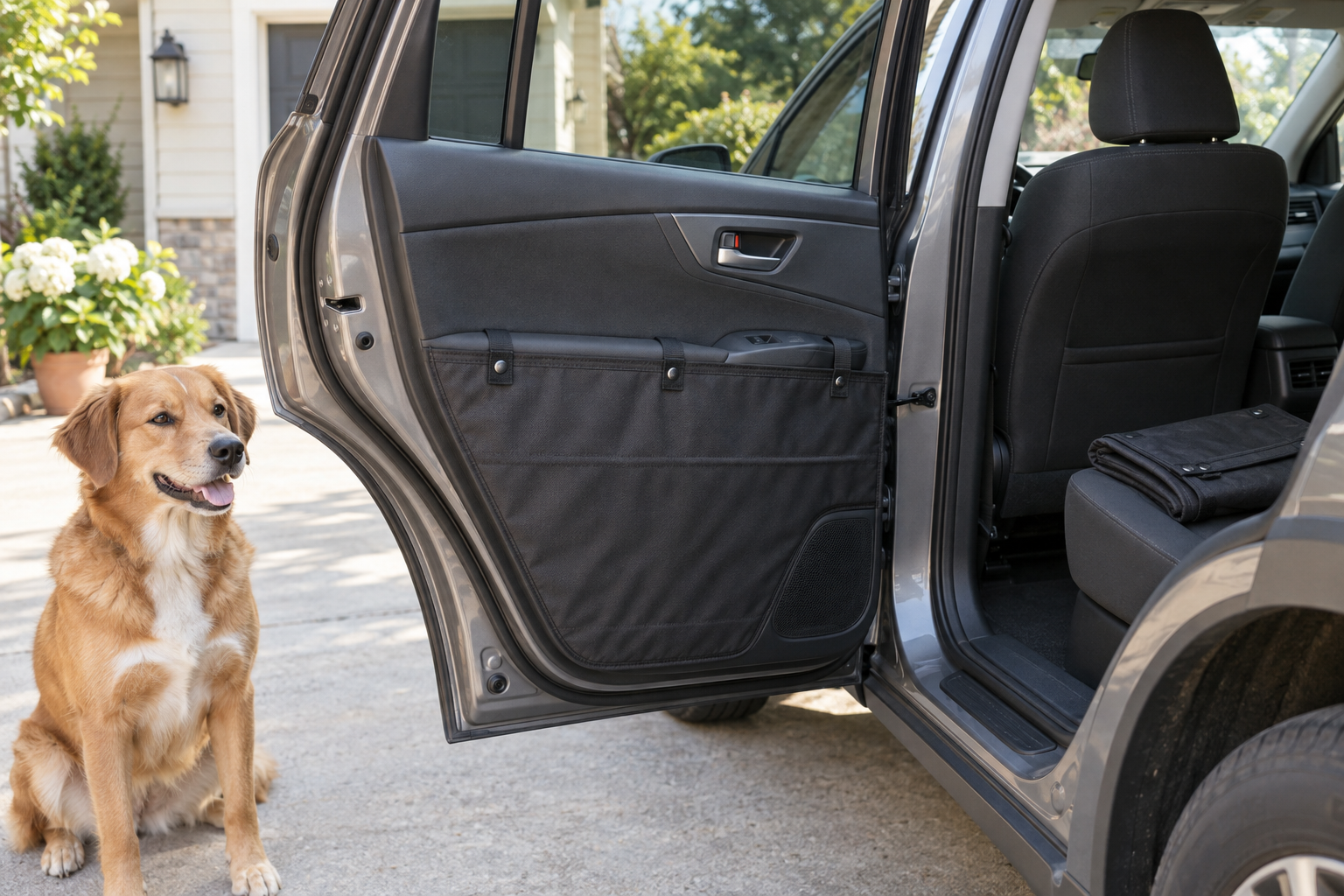
A car door protector is a cleanup and wear-management accessory. It is not a pet restraint, crash-protection device, behavior solution, or guarantee against vehicle damage. Use an appropriate travel and restraint setup separately, following the vehicle and restraint makers' instructions.
Quick Decision: Buy, Repurpose, Adjust, or Skip
Buy a dedicated protector when repeated contact is limited to a measurable door-panel zone and a compatible cover can remain secure. Repurpose a washable layer only for cleanup before or after travel, not as a loose hanging panel around controls. Adjust the setup when the seat or cargo area is the true mess source. Skip when contact is rare, the fit is uncertain, or an attachment conflicts with the door.
The Seven-Part Worth-It Test
- Frequency: Does the same door need cleanup after most trips or only occasionally?
- Contact zone: Can you identify and measure the panel area the dog reaches?
- Door fit: Does the listed width and height fit without bunching at the latch or seal?
- Control clearance: Will the handle, lock, switch, speaker, pocket, glass, and marked safety equipment remain unobstructed?
- Attachment: Is the specified tab, cup, strap, or fitted shape compatible with the vehicle maker's guidance?
- Cleaning: Do the material and care directions match the mess and time available between trips?
- Storage: Can the removed, damp, or dirty cover travel and dry without becoming loose cargo?
Confirm the Door Is Actually the Problem
Look at the vehicle after a normal trip before shopping. Paw marks low on the vertical panel suggest a door protector may address the right surface. Mud across the bench, hammock, or cargo floor points instead to a measured seat cover or a cargo liner for gear.
Do not add a cover merely because the product category exists. If a towel wipe after occasional outings already handles the panel, permanent hardware may add installation, washing, and storage work without solving a recurring problem.
Measure Coverage and Every Obstruction
With the vehicle parked and the door open, measure only the usable vertical panel beneath the window ledge. Record the distance to the handle, lock, window switch, speaker, storage pocket, latch edge, weather seal, and any side-airbag or manufacturer markings. Compare those measurements with a current product diagram; “universal” is not a measurement.
A cover that is too small misses the contact zone. One that is too large may fold near the latch, cover a control, interfere with the glass, or leave a loose edge within reach. Verify normal door and window operation after installation while the vehicle is stationary, and remove the accessory if it shifts, binds, rubs, or obstructs anything.
Attachment Determines Whether It Belongs
Window-channel tabs may offer broad removable coverage, but they are unsuitable when the seal cannot accept them or the vehicle maker advises against inserting accessories. Suction cups require clean smooth glass and may limit window movement. Fitted protectors depend on exact door compatibility. Adhesive-assisted designs add surface and residue questions.
The dog car door protector guide compares these formats after you decide the category is warranted. Choose on documented attachment and measured fit, not on a vague promise that one design works in every car.
Cleaning and Drying Are Part of the Purchase
A wipe-clean coating can shorten the reset after light mud, while a machine-washable fabric may suit broader dirt if its label permits the planned wash. Neither description establishes that seams contain liquid or that the vehicle panel stays dry. Check beneath the cover after messy trips and follow both product and vehicle interior-care directions.
Remove loose grit before wiping so it is not dragged across the panel. Dry the protector fully according to its care label, and secure it in storage rather than leaving a damp sheet loose in the cabin.
When a Seat Cover or Simple Cleanup Kit Is Better
If the dog mainly occupies the rear bench, a properly fitted cover with compatible side flaps may address the seat and part of the door edge in one setup. If the dog and supplies travel in a cargo area permitted by your vehicle and restraint setup, a door-panel accessory may be irrelevant. For rare messes, a secured car cleanup kit can be the lower-maintenance choice.
Do not improvise a hanging towel or loose fabric over the door during travel. It can slip, cover controls, become chewable, or interfere with normal operation. Repurposing is sensible only when the material is used for cleanup or is secured in a way explicitly compatible with the vehicle and travel setup.
Skip Criteria and Safety Boundaries
Skip a protector when dimensions, attachment instructions, material, or care guidance are missing; when it conflicts with a window seal, control, latch, marked safety equipment, or vehicle instructions; or when the dog paws, mouths, or pulls at it. Also skip when the purchase would distract from arranging appropriate restraint and a suitable riding area.
Inspect attachments, seams, and edges before each use. Remove damaged or shifting accessories. If a dog is distressed, frantic, or difficult to secure in the vehicle, a door cover is not the remedy; ask a veterinarian or qualified trainer for situation-specific guidance.
Bottom Line
A pet car door protector is worth it when the same measured interior panel takes repeated contact, the cover fits the exact vehicle without blocking anything, and the cleanup routine is easier than wiping the bare panel. Buy for that documented pattern—not for a generic fear of damage—and skip it when a seat cover, cargo setup, or simple cleanup kit better matches the real mess.