An apron is a clothing-protection convenience, not pet restraint, professional grooming equipment, or a health solution. Stop an at-home bath if handling becomes unsafe or highly distressing. Ask a qualified groomer about routine handling help, and contact a veterinarian about pain, wounds, persistent itching, unusual hair loss, skin changes, or whether bathing is appropriate for a pet with a health concern.
Quick Picks by Bath Routine
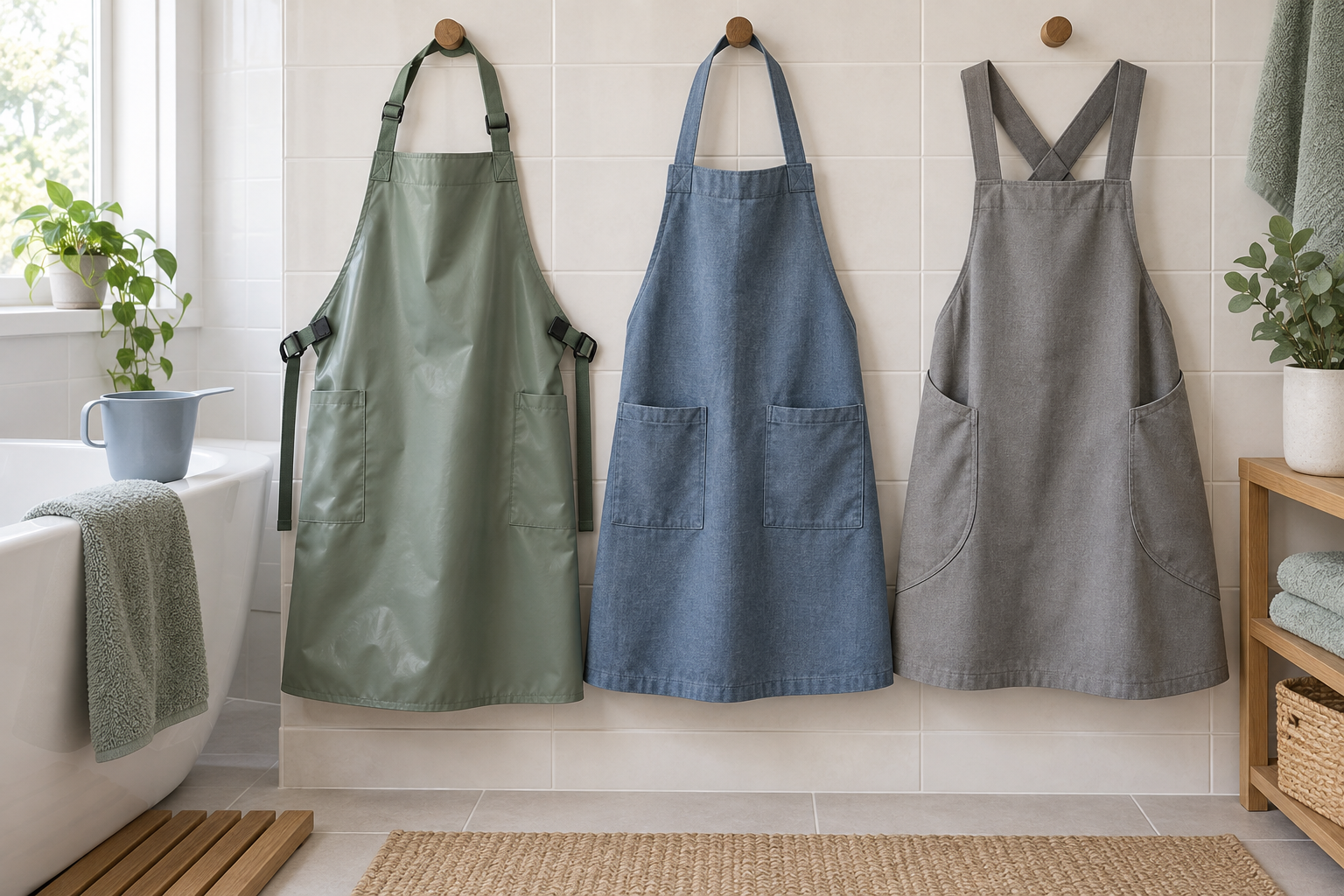
Choose a full-coverage coated apron when broad splash coverage and a wipeable surface fit the maker's directions. Choose washable fabric when a familiar laundry routine and softer construction matter more than a coating. Choose cross-back straps when you prefer to distribute strap contact across the shoulders and can manage the fastening layout. Skip a dedicated apron if baths are rare, old washable clothing works, or any straps and loose ends complicate handling.
Measure Coverage While You Can Still Move
Measure the apron body itself, not the total strap length. Note width across the chest and hips, body length, and where the lower edge lands when you bend or kneel. More fabric is not automatically better: an apron that catches under a knee, drags against the tub, or restricts your reach is a poor fit.
Compare the maker's size range and adjustment instructions with the clothing you normally wear underneath. If more than one person handles bath cleanup, check whether the adjustment is simple enough to reset between users without leaving long dangling straps.
Material Labels Need a Care Check
Coated surfaces may shed routine splashes, while woven fabric can feel more familiar and may fit an ordinary laundry load. Neither label tells you how the item should be cleaned, whether it can go in a washer or dryer, or how it will feel after repeated care. Follow the current product label.
Check seams, pocket openings, binding, and the back of the apron as well as the main panel. Water can reach clothing around open sides and armholes even when the front panel has a resistant finish. Do not treat marketing terms as a guarantee that clothing will stay dry.
Neck Loop, Waist Ties, or Cross-Back Straps?
- Neck loop: fast to recognize, but comfort depends on the strap width, adjustment, apron weight, and how long the routine lasts.
- Waist ties or buckles: can hold the panel closer to the body; check closure location, adjustment range, and loose strap management.
- Cross-back straps: move contact away from a single neck loop, but can take longer to put on and may create more strap length to organize.
Choose the simplest closure you can put on and remove without losing track of the pet or leaving a reachable loop. Keep straps, buckles, and apron edges away from chewing and tangling opportunities, and store the apron securely after it has dried.
Pockets Are Optional, Not a Workbench
Low, open pockets can collect water or catch on the tub edge. High pockets may keep a cloth or simple non-sharp item within reach, but they also add seams that need cleaning and drying. Check whether pockets drain, invert for cleaning, or remain damp at the corners.
Do not carry scissors, clippers, medication, concentrated cleaners, or open bottles in an apron pocket during a pet bath. Keep any product in its original labeled container and follow its directions. A stable caddy placed out of pet reach is usually a clearer home for supplies.
Cleaning, Drying, and Storage
- Empty every pocket and close fasteners as directed.
- Clean the apron according to its material and care label; do not assume a coated apron is machine washable.
- Open the panel, pockets, straps, and folds so they can dry as directed.
- Choose a hook or hanger that supports the item without stretching its straps.
- Store it away from pets only after it is clean and fully dry.
Inspect coating, seams, strap anchors, buckles, and ties during routine care. Replace an apron when damage creates sharp edges, unstable closures, peeling material, or loose pieces that cannot be secured.
Who Should Skip a Grooming Apron?
Skip one when existing washable clothes handle the occasional bath, your bathroom has no workable drying spot, or the apron would add straps and bulk to an already difficult routine. Also skip any format without usable dimensions or clear care information. If the main problem is controlling an anxious, struggling, painful, or aggressive pet, an apron does not solve it; pause and seek appropriate professional help.
Build the Rest of the Bath Cleanup Path
Choose the hand-held drying layer with the pet bath towel guide. For the floor, compare a dedicated mat and folded towel by coverage, backing, door clearance, laundering, and storage. For bottles, brushes, and rinse tools, use the bath-caddy comparison and keep restricted items securely out of reach.
Bottom Line
Choose a full-coverage coated apron for broader front coverage, a washable fabric apron for a familiar laundry path, or a cross-back apron when that strap layout fits your body and routine. The useful option has verified dimensions, manageable closures, sensible pockets, clear care directions, and a safe drying location. If washable clothing already handles the job, skip the extra product.