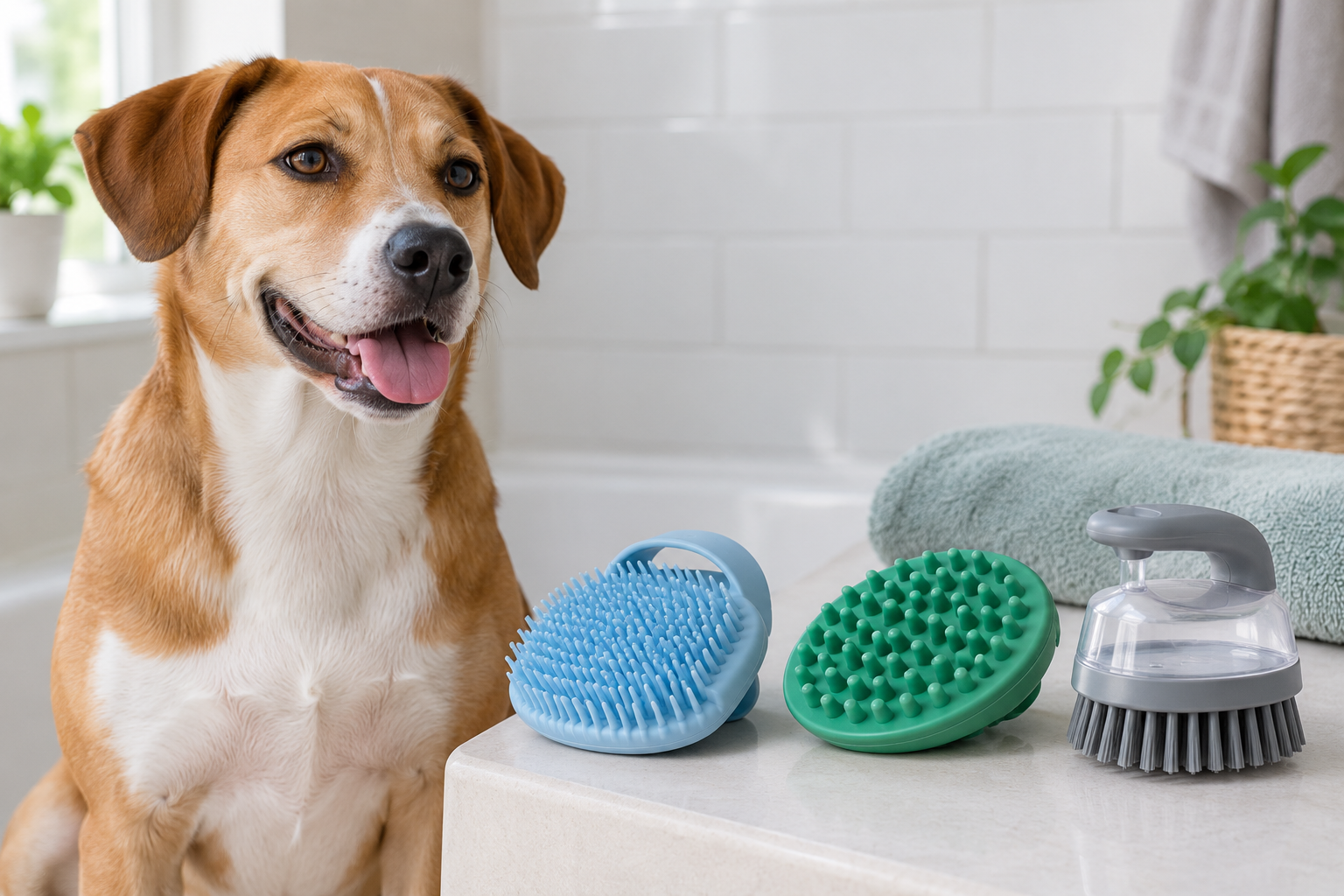
Quick Comparison
Choose a silicone palm brush when close hand control and a compact flexible tool suit the listed coat type. Choose a handled rubber brush when you prefer a distinct grip and contact head. Consider a dispensing brush only if filling, controlling, emptying, rinsing, and drying the reservoir would simplify your real routine. Skip a dedicated brush when your hands already manage the bath comfortably.
A bath brush is a convenience tool, not a skin treatment or substitute for professional advice. This guide does not set bathing frequency, choose shampoo, or recommend brushing over mats, sores, irritated areas, or unexplained coat changes.
Selection Criteria That Matter
- Current coat guidance: confirm that the maker identifies dogs and the relevant coat length or texture; do not infer fit from a photo.
- Contact material: look for an identified flexible material and smooth rounded contact points. Inspect for rough seams, stiff edges, splits, or loose pieces.
- Working dimensions: compare the head with your hand and the areas you can comfortably reach. Broad heads can be awkward around legs and contours.
- Wet grip: check strap or handle dimensions, adjustment, and texture. You should be able to hold the tool lightly without squeezing harder when wet.
- Contact depth: short flexible nubs may suit surface contact, while longer points need closer coat guidance and pressure control. More depth is not automatically better.
- Cleaning and drainage: follow current care instructions and check grooves, strap anchors, seams, and hollow areas where water or product can remain.
- Dry storage: choose a format you can rinse, open or disassemble as directed, and leave to dry away from pet access.
- Return terms: verify them before wet use, especially when hand fit, head size, or material firmness is uncertain.
Palm, Handle, or Reservoir?
A palm brush keeps the contact head close to your hand. The tradeoff is fit: a loose strap can shift, while a tight one can be uncomfortable and hard to remove with wet hands. Measure as directed and check whether the opening adjusts.
A separate handle keeps your palm away from the contact surface and may be easier to set down between steps. Check whether it remains controllable from different angles without forcing your wrist or increasing pressure. A dispensing model reduces bottle-to-brush movements, but the reservoir creates more parts and drying work. When precise product measurement or special shampoo directions matter, a separate labeled container may be clearer.
Contact Surface and Coat Access
The brush should move through wet coat without scraping, snagging, or requiring force. Compare the listed coat guidance with your dog’s actual coat rather than assuming every silicone or rubber tool works alike. Dense, long, curly, double, sparse, and smooth coats can interact differently with the same head shape.
Do not use a bath brush to work out tight mats. Wetting can make some tangles harder to assess, and repeated scrubbing can hide discomfort behind bath activity. Ask a qualified groomer or veterinarian when the coat cannot be handled gently.
Use, Rinse, and Dry the Tool
Let the dog inspect the dry brush before the bath. During washing, keep pressure light, follow the maker’s directions, and avoid eyes, ears, nose, mouth, genital area, wounds, and any place the dog guards or pulls away from. Stop if posture stiffens, the dog repeatedly turns toward the tool, tries to escape, vocalizes, snaps, or otherwise shows the routine is no longer manageable.
Afterward, remove trapped hair, empty any reservoir, and clean every component as directed. Open seams, straps, lids, and removable pieces so they can drain and dry. Store the tool only when dry and out of pet reach. Replace it if the contact surface cracks, edges roughen, a strap tears, a handle loosens, or reservoir parts no longer close as intended.
Who Should Skip a Dog Bath Brush?
Skip the purchase if occasional baths already work with your hands, the tool lacks usable dimensions or coat guidance, or you have no practical drying location. Skip reservoir models when extra disassembly would make cleanup less likely, and skip any format you cannot hold securely with light pressure.
Pause home bathing when a dog is highly distressed, difficult to handle safely, or showing pain. Do not brush over redness, sores, swelling, unusual odor, unexplained hair loss, persistent itching, or other skin or coat changes. Contact a licensed veterinarian about those concerns, medicated products, or whether bathing is appropriate. A qualified groomer can help with routine coat handling and tool selection when no medical concern is present.
Build a Simpler At-Home Bath Setup
If clothing protection is the next problem, use the at-home grooming apron guide. For supplies that move in and out of the wash area, compare a handled basket and hanging organizer. For drying, choose by measured towel size, laundry capacity, dog tolerance, and storage in the pet bath towel guide.
Bottom Line
A silicone palm brush offers close hand control, a handled rubber brush separates grip from the contact head, and a dispensing brush combines soap storage with the brush. Choose only after confirming coat guidance, dimensions, contact material, wet grip, cleaning, drainage, and return terms. The right tool should make an already manageable home bath simpler; it should never push through distress, pain, matting, or a skin concern.